





There are many ways to support your colleagues and make the industry more inclusive, writes ICE President David Porter.
In engineering, we rightly place a strong emphasis on technical excellence.
However if we are to deliver infrastructure that genuinely meets society’s needs, we must place greater value on understanding the communities we build for.
One of the best ways to do this is to ensure that project teams are diverse and represent a wide variety of perspectives.
To achieve this, we must continue to foster diversity and inclusion across the profession, which is where allies come in.
We need to recognise that we all have a role to play in creating an environment where people feel supported, where opportunities are accessible, and where different perspectives are welcomed.
That responsibility doesn’t sit with one group, network or initiative. It's something we all can help to support.
Allyship can be in the small things
Sometimes, being an ally is about seemingly small, but very often important interventions.
I remember sitting on a committee where we were considering nominations for a particular role.
The list was entirely made up of male candidates. I suggested that we pause and take another look at the potential pool of people being considered.
That doesn’t mean the outcome must change. It could well be that, in a particular scenario, an all male list genuinely reflects the most qualified candidates.
But what is important is the willingness to pose the question and to challenge – constructively and professionally – rather than simply accepting the status quo.
Equity vs equality: do you understand the difference?
While the terms equity and equality are often used interchangeably, they are fundamentally different concepts.
Explore moreEncouraging one another
In other situations, being an ally is about encouragement.
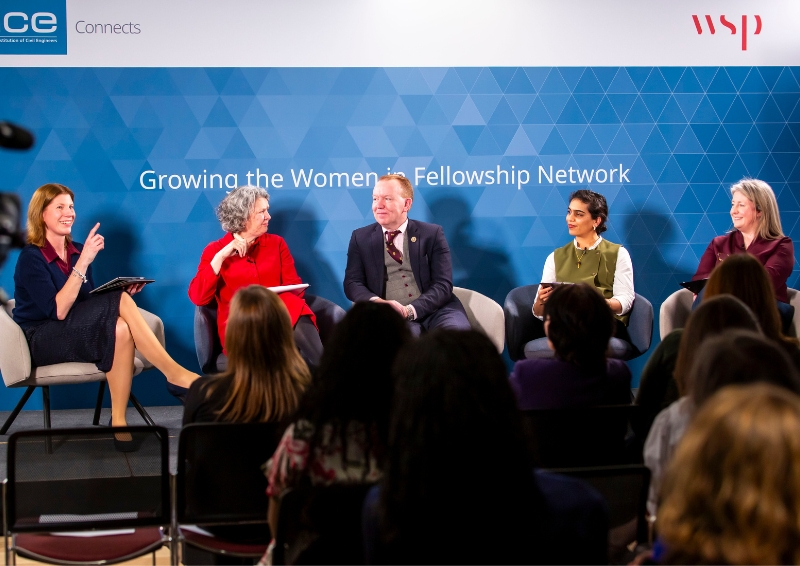
Recently, I’ve had the opportunity to speak at events with the ICE Connects: Women in Fellowship network.
The initiative is increasing the number of female Fellows as this group of members is currently underrepresented at this grade.
The network and its volunteers have almost doubled the amount of female ICE Fellows since work started in 2021 – from 5.25% of all Fellows, to 9%, and they’re not stopping there.
They’re doing a fantastic job of sharing insight, addressing barriers and encouraging women to put themselves forward.
Achieving Fellowship isn’t just a personal milestone. It shows other what’s possible and strengthens diversity and representation at the highest levels of the profession.
Recognising that allyship takes different forms
One of the things I’ve learned is that being an ally does not look the same for everyone.
For some, it will mean challenging decisions directly. For others, it may be about mentoring, encouraging, or creating opportunities, often behind the scenes.
For some, it will be very visible, attending parades and speaking up to raise awareness. For others, it will be supporting initiatives that widen participation in the profession.
The important point is not everyone needs to take the same approach, but that we are all intentional in how we support others.
That said we do need to be careful about ‘tokenism’.
True allyship isn’t about meeting quotas or just being seen to do the right thing. It’s about fairness, opportunity and ensuring that everyone is able to contribute.
The role of leadership
For those in senior positions, allyship carries an added responsibility.
Leadership isn’t just about making decisions. It’s about setting the tone.
It's important that people can see pathways into civil and infrastructure engineering and ways to progress within our industry. That includes access to education, professional development and leadership opportunities.
As leaders, we have a responsibility to create environments where people from different backgrounds feel welcome and able to succeed.
Finding your place in the ICE
One of the most effective ways to put allyship into practice is by getting involved in professional networks.
There are many opportunities to do this at the ICE, from regional events and the Early Careers Network, to groups focused on equity and inclusion, such as the ICE Fairness, Inclusion and Respect (FIR) Committee.
These spaces create opportunities to listen to different perspectives, to support others in their development, and to challenge thinking in a constructive way.
In my own experience, the more you engage with the institution, the more you’re exposed to the diversity of thought and experience across our profession.
That, in itself, helps build understanding and empathy, which are fundamental to being an effective ally.
It also reinforces that allyship is not something that sits outside our day-to-day work.
It should be how we engage with colleagues, how we contribute to discussions, and how we support the development of others.
It’s not just about grand gestures
Ultimately, being an ally is not just about the grand gestures.
It’s about consistent actions: asking questions, offering support, encouraging others, and being prepared to challenge where necessary.
If our goal is to engineer a world where people and the planet can thrive, then we must also be serious about creating a profession where everyone can contribute.
What if we told you that you're already an ally?
Being an ally means you are conscious of someone else’s individual lived experiences and can amend behaviours or attitudes to make sure everyone feels included.
You have likely done this before and therefore are already on your way to becoming an effective ally.
4 steps to practise it daily
Sustainable Development Goals:
You may also be interested in

- Type
- News
RAEng names 4 leading ICE members as Fellows
The Royal Academy of Engineering (RAEng) has announced 75 individuals who are making outstanding contributions to the profession.

- Type
- Awards and competitions
Accessibility-first railway revamp wins at the ICE London Awards 2026
Held on 30 September 2026 at the ICE headquarters, One Great George Street, the awards recognised impactful infrastructure projects across the city.

- Type
- ICE Community blog
When every consultancy looks the same, where does innovation go?
There’s no shame in making a name for yourself in a consolidated industry, writes Steven Yule, ICE country representative for the UAE.