





Diagnosis isn't the finish line, explains engineer Richard Lang – it's the start of a new journey.
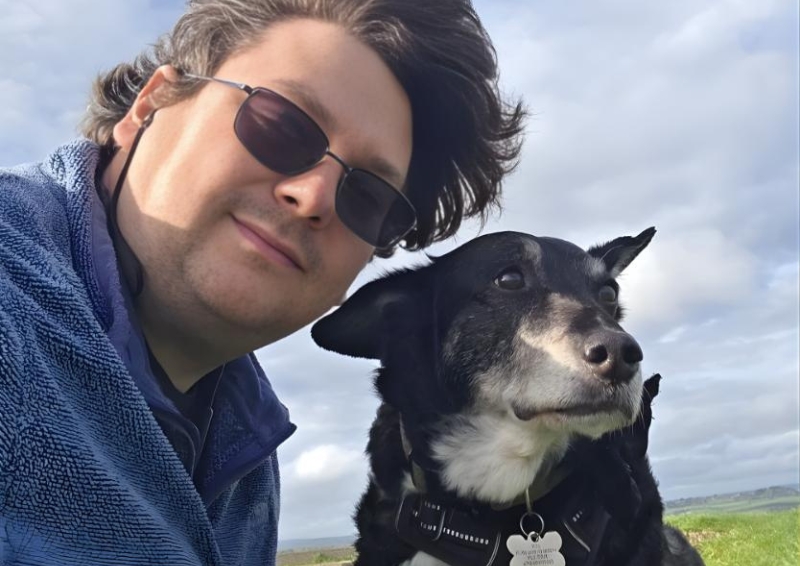
I've always wanted to be an engineer.
A career that, on paper, suits how my brain works: problem-solving, systems thinking, and a focus on delivering complex projects that matter.
But for most of my life, through education and employment, it never felt that simple.
At the age of 34, I was diagnosed with autism and ADHD. I was also told I had traits of dyspraxia and dyslexia.
At the time, that diagnosis was a turning point.
It helped me make sense of so many aspects of my life.
My experience in education, my career, and the constant feeling that I was working differently and at more cost than others just to keep up.
It was a hugely validating, if sometimes challenging experience, but it wasn’t the end of the story.
Understanding didn’t stop with that first diagnosis
In the years since, I’ve continued to learn more about how my brain works.
What I initially understood as 'traits' of dyslexia has since been recognised more clearly as dyslexia itself.
That additional diagnosis filled in gaps I didn’t even realise were still there.
It explained why written communication could feel inconsistent.
Why sometimes words flowed, and other times they didn’t.
Why reading dense information could be exhausting.
Why I often relied on systems, structure, or memory tricks to compensate without fully understanding why.
Looking back, it’s obvious these challenges were always there. I had just normalised them.
My career: the hidden costs
I’ve built a career in engineering and infrastructure that I’m proud of. I’ve worked on complex projects, taken on responsibility, and developed expertise in my field.
But what people didn’t always see was the cost behind that.
The late nights re-reading documents because information wouldn’t stick the first time.
The anxiety around writing, be it emails, reports, anything where clarity and speed were expected.
The mental load of trying to stay organised, focused, and on top of competing demands.
ADHD made consistency difficult. Autism made certain social and communication expectations harder to navigate. Dyslexia made processing and expressing information more taxing than it appeared for others.
Individually, each of these comes with challenges. Together, they often amplified each other.
There were times I questioned whether I was in the right career at all.
Not because I lacked ability, but because of how hard it felt to keep up performance in environments that weren’t designed for how I think.
Seeing my past through a new lens
Getting diagnosed as an adult doesn’t just affect your present. It reshapes your past.
Like many people diagnosed later in life, I’ve found myself reinterpreting earlier experiences.
Things that were once labelled as lack of effort, distraction, or inconsistency now make more sense.
That’s certainly been true for me.
What I once saw as personal shortcomings were often the result of navigating environments that weren’t designed for how I think and process information.
The workplace: strengths and friction
Working in engineering and infrastructure has highlighted both sides of neurodivergence.
On one hand, attention to detail, problem-solving, pattern recognition, and the ability to hyperfocus can be real strengths.
On the other, workplaces often rely on fast-paced communication, heavy written workloads, and unspoken social expectations.
That mismatch between capability and expectation is where a lot of the struggle sits.
Getting support – and accepting it
One of the most important parts of my journey since diagnosis has been recognising that I don’t have to manage everything alone.
Support from the ICE Benevolent Fund has been a key part of that.
Through them, I’ve been able to access help that I likely wouldn’t have sought out otherwise – whether that’s wellbeing support, guidance, or simply having a place to turn to when things feel overwhelming.
That support has made a real difference.
Not because it 'fixed' anything, but because it helped me better understand how to work with how my brain functions, rather than constantly fighting against it.
And, it gave me access to a network of like-minded peers.
It also made something else clear: asking for help isn’t a weakness. In many cases, it’s what enables you to keep going.

Diagnosis isn't the finish line
One of the biggest misconceptions (other than it's easy to access and available/right for all!) is that diagnosis is the end point. That once you have a label, everything falls into place.
In reality, it’s the start of a different kind of journey.
Understanding how autism, ADHD and dyslexia interact has taken time.
It’s meant unlearning coping mechanisms that weren’t sustainable, and developing new ones that actually work for me.
It’s also meant becoming more open about what I need, and recognising that requiring adjustments isn’t a weakness.
Why this matters
There’s growing awareness of neurodiversity, but many adults are still going through the same process I did: reaching their 30s (or later) before getting answers.
Even now, access to assessment and support can be limited, and many people continue to struggle in silence.
That’s why sharing experiences like this matters.
Not because everyone’s journey is the same – it isn’t – but because someone reading this might recognise parts of their own experience.
And if they do, they might start asking questions sooner.
Diagnosis didn't change who I am
Being diagnosed didn’t change who I am. It changed how I understand myself.
Adding dyslexia into that picture didn’t complicate things. Rather, it clarified them.
It gave me a more complete view of how I think, how I work, and why certain things have always felt harder than they 'should'.
I’m still the same engineer. The same person. But now, I have the context I didn’t have before and the support to navigate it.
Most importantly, it’s helped me move from questioning myself to understanding myself.
And that’s made all the difference.
Get support
The ICE Benevolent Fund offers a range of services to help members with autism and dyslexia.
Find out what's on offer
You may also be interested in

- Type
- News
RAEng names 4 leading ICE members as Fellows
The Royal Academy of Engineering (RAEng) has announced 75 individuals who are making outstanding contributions to the profession.

- Type
- Awards and competitions
Accessibility-first railway revamp wins at the ICE London Awards 2026
Held on 30 September 2026 at the ICE headquarters, One Great George Street, the awards recognised impactful infrastructure projects across the city.

- Type
- ICE Community blog
When every consultancy looks the same, where does innovation go?
There’s no shame in making a name for yourself in a consolidated industry, writes Steven Yule, ICE country representative for the UAE.