





Resilient Transport
Join industry leaders in Manchester this September to explore practical solutions for building stronger, more adaptable networks.
Be part of the shift

The long-awaited rail programme is at the heart of the government’s vision for economic renewal.
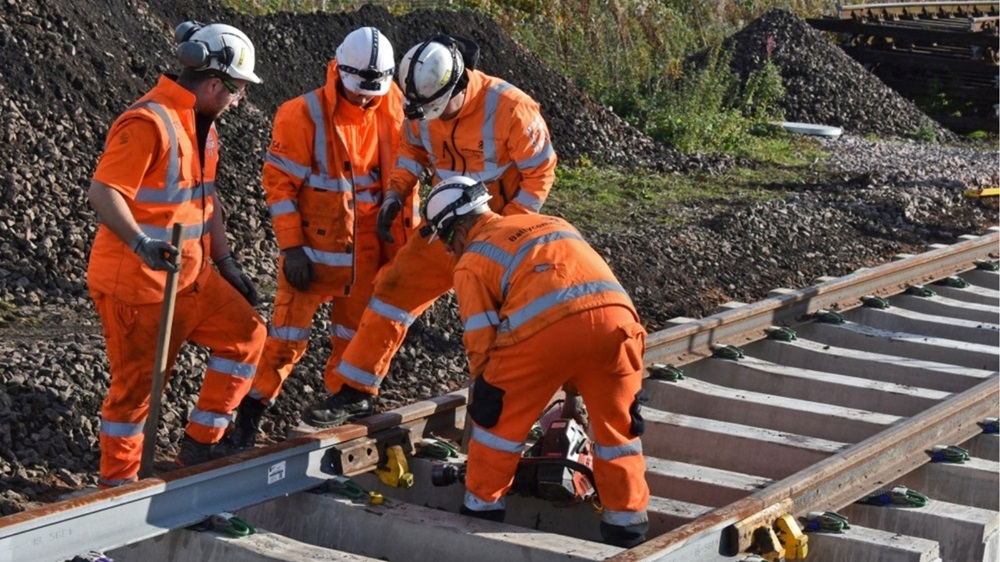
The UK government has put a long-promised rail programme at the heart of a new strategy to improve economic growth in the north of England.
In discussion for over a decade, Northern Powerhouse Rail (NPR) promises to transform east–west connectivity across the North and enhance the region’s economic potential.
Now at the heart of the government’s Northern Growth Strategy, NPR looks set to finally materialise. But were the plans worth the wait?
NPR is a major scheme designed to improve rail capacity and connectivity throughout the North East, North West, and Yorkshire. It isn’t a single project, but rather a programme made up of many different projects.
First announced in 2014, NPR has since undergone many changes and encountered its fair share of hurdles.
The original vision promised transformational investment in the region. However, In 2021, the government’s Integrated Rail Plan for the North and Midlands (IRP) scaled back the scheme significantly.
A 2022 ICE insights paper agreed that both NPR and High Speed 2 (HS2) were integral to the North’s future rail network. It suggested that the government should plan them not in isolation, but as part of the wider network.
The cancellation of HS2’s northern leg in 2023 undermined this ambition.
The North is home to 16 million people, supports 8.1 million jobs, and contributes one fifth of the UK’s Gross Value Added (GVA).
But productivity and growth rates remain below the national average. The decline of heavy industry hit the region hard, and historic underinvestment has further worsened living standards.
Ministers estimate that boosting growth in the North could inject as much as £40 billion per year into the UK economy.
Transport is fundamental to this aspiration. It connects businesses and markets, provides access to jobs and services, and balances economic activity across regions.
Improving transport links in the North could be economically transformative not just for the region, but for the whole of the UK.
The government has committed up to £45 billion for NPR, with funding to be allocated at future spending reviews. This figure is a cap, not a formal cost estimate.
The Northern Growth Strategy outlines three phases for NPR:
In the long term, the government also intends to deliver a new line between Birmingham and Manchester to ease capacity constraints on the West Coast Main Line.
However, the government stresses that “this is not a reinstatement of HS2”. The schedule and specifications for the new line have yet to be determined.
This week’s announcements breathe new life into a decade-old programme – but the government isn’t rushing to deliver it.
Instead, it promises to learn lessons from HS2 and apply them across its major portfolio, including NPR.
NPR’s status as a programme of projects – rather than a single megaproject, like HS2 – allows the government to be “far more dynamic and measured” in its development and delivery.
But the government also acknowledges that the cost of rail projects in the UK is substantially higher than in many other countries.
Rather than rushing to deliver NPR, it commits to driving down costs and taking the time to “get this right”.
The government’s commitment to delivering Northern Powerhouse Rail is welcome and long overdue.
If the government realises its vision for the North, it could be transformative for the whole UK. But it must learn lessons from previous projects.
The Northern Growth Strategy highlights the recommendations from the Stewart Review, which aligns strongly with the ICE’s 2024 report on HS2.
The government must be clear on the purpose of the project and who’s in charge. It must strengthen capability and understanding in the right government departments. And it must develop the project sufficiently before spades hit the ground.
Gratifyingly, the strategy acknowledges this. It’s a strong statement of strategic intent.
The ICE is ready to work with the government to turn this intent into reality.


The Royal Academy of Engineering (RAEng) has announced 75 individuals who are making outstanding contributions to the profession.

Held on 30 September 2026 at the ICE headquarters, One Great George Street, the awards recognised impactful infrastructure projects across the city.

There’s no shame in making a name for yourself in a consolidated industry, writes Steven Yule, ICE country representative for the UAE.