





Winnie Lai, chair of ICE Caring Engineering (ICarE), shares how inclusive, people-centred STEM experiences can empower special educational needs (SEN) learners.
Engineering has always been about solving problems that matter to people.
For centuries, engineers have designed systems, structures and innovations that make communities safer, more resilient and more connected.
Because engineering plays such a central role in public life, everyone should have the chance to understand, explore and participate in it.
STEM outreach helps open that door, giving young people a glimpse into how engineering shapes the world around them. Yet these opportunities are not always accessible.
Many young people with special educational needs (SEN) are just as curious and imaginative as their peers, but traditional STEM activities often overlook their learning needs.
Making STEM inclusive is therefore not only about education. It’s about ensuring engineering genuinely reflects the communities it serves.
Meet ICarE
This is where ICE Caring Engineering (ICarE) comes in.
Since its establishment in 2011 under the ICE Hong Kong Association, ICarE has brought volunteer engineers together to improve local communities.
ICarE runs STEM outreach with organisations such as the Salvation Army, introducing young people to the profession through demonstrations and hands-on activities.
Building on this experience, ICarE has developed adapted STEM sessions for SEN students so these opportunities are accessible, inclusive and confidence-building for all.
Why SEN-inclusive STEM matters
SEN students often process information differently, but that doesn’t limit their creativity or capability.
Many have simply never encountered engineering in a format that feels accessible, whether that’s because of sensory sensitivities, abstract explanations or fast pacing.
Inclusive STEM gives SEN learners the space to demonstrate abilities that traditional formats may not reveal.
How we design inclusive workshops
Designing workshops for SEN students begins well before the first activity.
Our volunteers work closely with the NGO partner early in the planning stage to co-create a suitable programme and set a theme that aligns with the students’ interests and needs.
As the event approaches, our on-day volunteers join a detailed briefing session with the NGO, where they learn about the students’ communication preferences, learning styles and support requirements.
This preparation helps ensure every volunteer feels confident and every student feels understood from the moment the workshop begins.
Being mindful about location
When this work began, our sessions were intentionally held in a location familiar to the students so that they could learn in a predictable environment.
As we gained more experience and a deeper understanding of how SEN learners respond, we gradually expanded into real-world field experiences.
Featuring different formats
Our activities mix hands-on exploration, games and gentle competition.
One example is a tower-building challenge where teams design the tallest or most stable structure and test it under a simple simulated earthquake. The focus is on experimentation and teamwork.
As the programme evolved, we saw how strongly many SEN learners respond to tactile exploration.
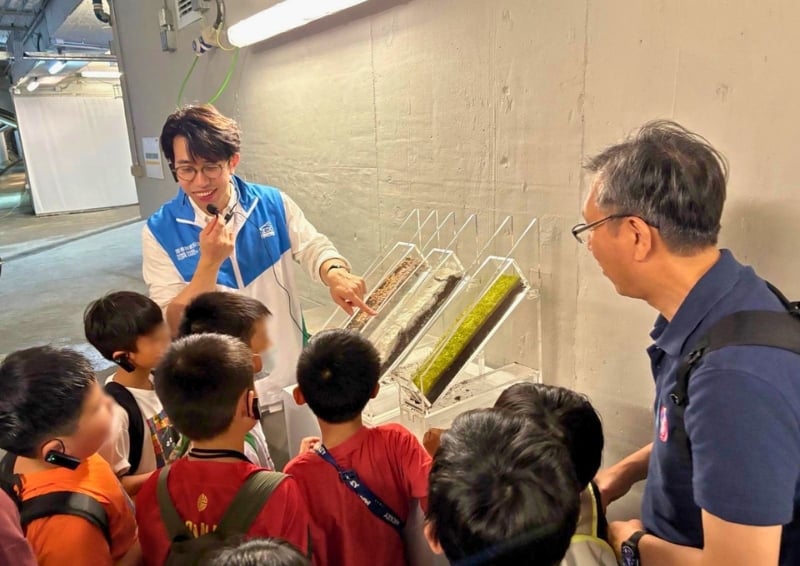
This led us to introduce field trip style sessions to places such as the Po Shan Road Drainage Tunnel and the Construction Industry Council Zero Carbon Park in Hong Kong.
Here, students can observe engineering at full scale, touch tools or materials and connect with their surroundings in ways a classroom can’t replicate.
Together, these elements create learning environments where SEN students feel comfortable, engaged and able to show what they can do.
The shared journey of engineers and SEN learners
These sessions often create moments that stay with the students and volunteers.
At one workshop, a student who’s usually anxious and sensitive to noise worked quietly for nearly 20 minutes, adjusting his structure with deep focus.
At another, a student with ADHD who initially wandered became fully engaged once a particular part of the activity captured his interest.
At a field trip, a student approached a volunteer at the end, said ‘thank you’ and placed a sticker on their hand.
The gesture was small, but it captured something much bigger: the trust, comfort and sense of connection that had formed over the course of the day.
Engineers make strong mentors
Engineers are trained to observe, adapt and break complex problems into manageable steps. These instincts make them strong mentors for SEN learners.
In workshops, these skills become a way of helping students explore ideas at their own pace and gain confidence in trying new things.
Meeting practising engineers also helps students see that engineering is real, human and closer to their everyday life than they might imagine.
The impact goes both ways.
Volunteers learn to explain concepts more simply, listen more closely and appreciate different ways of interpreting the world.
Many find the experience reminds them of why they entered the profession: to help people, to solve meaningful problems and to stay connected to the communities they serve.
Engineering that includes everyone
We have seen how thoughtfully designed activities open doors for students who simply needed space, patience and encouragement.
When more perspectives and lived experiences shape STEM, the profession becomes more imaginative, responsive and better able to create solutions that genuinely support the communities it serves.

You may also be interested in

- Type
- News
RAEng names 4 leading ICE members as Fellows
The Royal Academy of Engineering (RAEng) has announced 75 individuals who are making outstanding contributions to the profession.

- Type
- Awards and competitions
Accessibility-first railway revamp wins at the ICE London Awards 2026
Held on 30 September 2026 at the ICE headquarters, One Great George Street, the awards recognised impactful infrastructure projects across the city.

- Type
- ICE Community blog
When every consultancy looks the same, where does innovation go?
There’s no shame in making a name for yourself in a consolidated industry, writes Steven Yule, ICE country representative for the UAE.