





This Pride month, we dive into the history, evolution and importance of the rainbow flag.
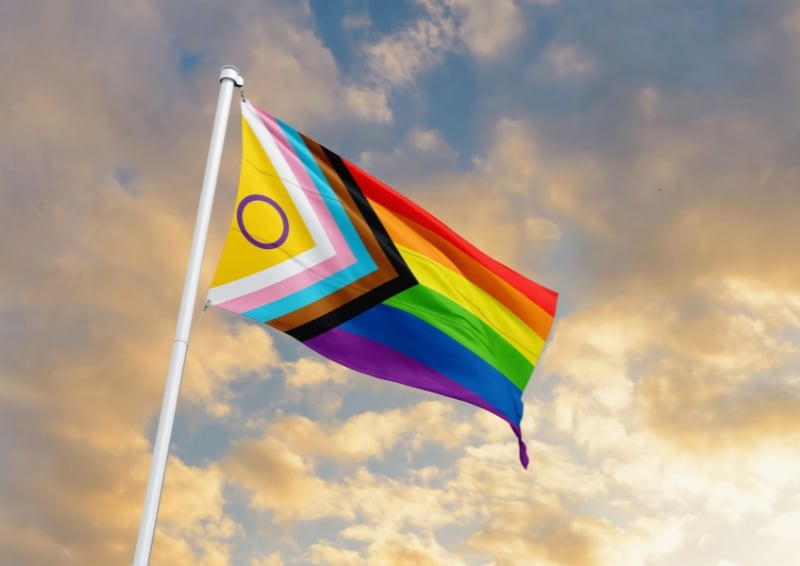
We’ve all become familiar with seeing the rainbow flag, or pride flag, on everything from social media to lanyards and during celebrations such as LGBT+ History Month and Pride.
Each June, Pride month honours the inspiring achievements of those in the lesbian, gay, bisexual, transgender plus community.
As the rainbow flag is a cornerstone of LGBT+ visibility, this month seems the ideal time to dive into its history, meaning, and evolution over the years.
Why we should all be flying the rainbow flag during Pride and beyond

Research has consistently shown that diverse workplaces lead to better outcomes, including increased innovation and productivity.
A study in the Harvard Business Review found that companies with more diverse teams outperform their less diverse counterparts by as much as 45%.
Even if you’re not part of the LGBT+ community, you can show support in many ways during Pride month and beyond – from being an ally to demonstrating equity, diversity and inclusion in your leadership.
Who created the rainbow flag?
Gilbert Baker was an artist, gay activist, and former army medic.
After being taught to sew by friend and fellow activist Mary Dunn, Baker turned his artistic talents to designing costumes and creating banners.
Many of his creations were used at gay rights and anti-war protest marches.
It was in the early 1970s, when Baker befriended Harvey Milk, a gay activist and the first openly gay elected official in California, that the flag’s story began.
In 1977, Milk was keen to establish a symbol that would unite the gay community, acting as a gesture of gay pride and positive representation.
Milk commissioned Baker to bring this design to multi-coloured life.
What do the colours used in the rainbow flag mean?
Along with volunteers, Baker created the rainbow flag.
The original design concept included eight stripes, each with a specific colour that had a unique meaning.
- Hot pink – sexuality
- Red – life
- Orange – healing
- Yellow – sunlight
- Green – nature
- Turquoise – magic
- Indigo – serenity
- Violet – spirit
However, the unavailability of pink fabric meant that hot pink and turquoise were dropped from the flag.
Baker passed away in 2017, leaving behind an incredible legacy.
Engineering diversity
The ICE values diversity and works to create a fairer environment free from harassment and discrimination – one in which everybody feels included and valued.
Learn moreBeyond the rainbow flag: diversity in all its colours
While the rainbow flag is a universal symbol of LGBT+ pride, as the representation of other orientations and gender identities has grown, several new flags have emerged.
There are over 50 flags that represent specific identities within the LGBT+ community.
These are some of them:
- Bisexual flag: introduced in 1998 by Michael Page, the bisexual flag consists of three horizontal stripes – pink, which makes up 40% of the flag and represents homosexuality, 20% purple to indicate a combination of heterosexuality and homosexuality, and 40% blue to represent heterosexuality.
- Transgender flag: designed by American trans woman Monica Helms in 1999, the transgender flag features five horizontal stripes – two light blue, two light pink and a singular white – which embodies the transgender community’s diversity. It was first debuted at a Pride march in Phoenix, Arizona.
- Pansexual flag: this flag emerged when it was posted anonymously on Tumblr in 2010 by Jasper V. It’s made up of three horizontal stripes – pink, yellow and cyan – signifying attraction to all genders without limitations.
- Asexual flag: introduced in 2010, the asexual flag features four horizontal stripes – black, grey, white, and purple – symbolising asexuality, the ‘grey’ area between sexual and asexual, allies, and community visibility.
- Genderqueer and non-binary flag: designed by Marilyn Roxie in 2011, the genderqueer flag consists of three horizontal stripes - lavender, white and dark chartreuse green. These represent androgyny, agender identities, and ‘third identity’ gender, respectively.
- The Progress Pride flag: designed in 2018 by non-binary American artist Daniel Quasar, the ‘Progress Pride flag retains the six-stripe rainbow design as its base but includes black, brown, light blue, pink and white stripes in the shape of an arrow. The black and brown stripes represent people of colour within the LGBT+ community, while the light blue, pink and white stripes symbolise transgender rights and representation. The flag was updated in 2021 to include the intersex community, represented by a yellow triangle with a purple circle in the middle, set over the white of the arrow section.
Looking back, moving forward
In 2003, Section 28 – a controversial clause in the UK’s Local Government Act 1998 that banned the ‘promotion’ of homosexuality in schools – was abolished.
In the 23 years since, there have been significant strides forward, including the legalisation of same-sex marriages in 2014, the implementation of anti-discriminatory laws, and improved representation of LGBT+ individuals across media, sport, politics, and society.
It’s been rumoured that one of Baker’s inspirations behind the rainbow flag was the song Over the Rainbow by Judy Garland, herself a massive gay icon.
Jewish writers Harold Arlen and Yip Harburg penned the song for the film The Wizard of Oz amid a time of antisemitism and persecution.
Did you know?
The Wizard of Oz was prominent in the LGBT+ community as the main character, Dorothy, was seen to have ‘queer’ friends. When identifying as LGBT+ was illegal, people would ask each other ‘are you a friend of Dorothy?’.
Over the Rainbow is often praised for its message of resilience and hope in the face of adversity.
It’s not too much of a leap to see how the song’s expressions of hope could have resonated with Baker and others in the LGBT+ community.

You may also be interested in

- Type
- News
RAEng names 4 leading ICE members as Fellows
The Royal Academy of Engineering (RAEng) has announced 75 individuals who are making outstanding contributions to the profession.

- Type
- Awards and competitions
Accessibility-first railway revamp wins at the ICE London Awards 2026
Held on 30 September 2026 at the ICE headquarters, One Great George Street, the awards recognised impactful infrastructure projects across the city.

- Type
- ICE Community blog
When every consultancy looks the same, where does innovation go?
There’s no shame in making a name for yourself in a consolidated industry, writes Steven Yule, ICE country representative for the UAE.