





As the use of artificial intelligence (AI) accelerates, a panel discussion in Bristol explored why human judgement and oversight remain essential.
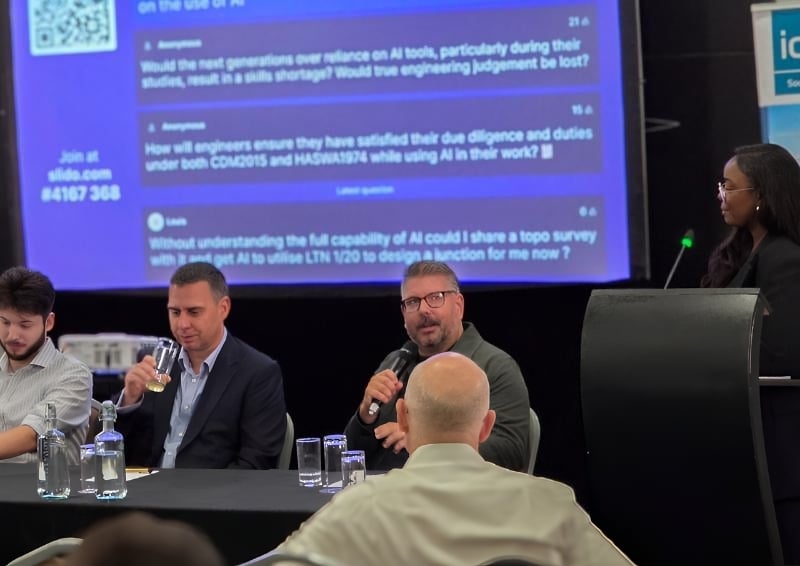
Artificial intelligence (AI) should be viewed as a partner, not a replacement, with engineers retaining skills and a focus on the consequences of their decisions.
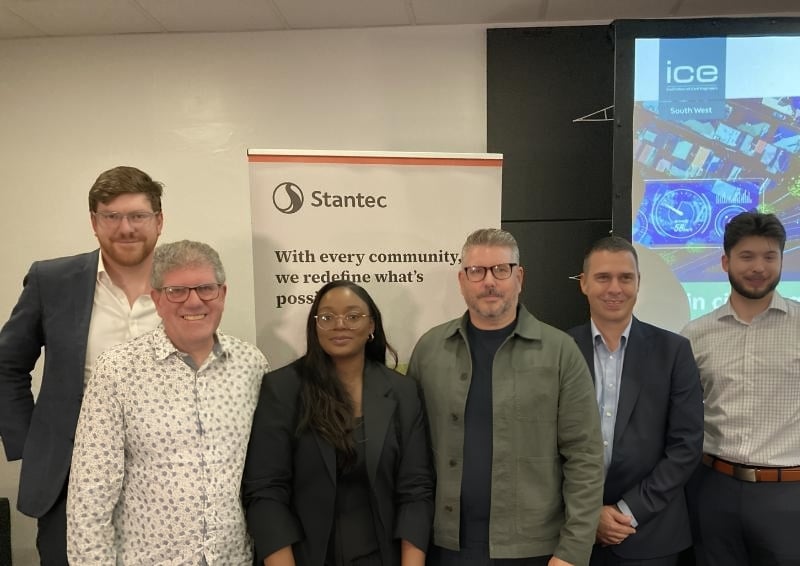
That was the consensus of industry experts speaking at a panel discussion organised by the ICE Bristol city club. The event gathered 180 members across eight regional venues to address the uses of AI within construction and infrastructure, as well as the important issues that greater adoption presents.
AI is already part of the workplace for most. In an audience poll, more than 75% reported using it every day, mainly for writing tasks and analysing data.
But the panellists highlighted some of the emerging opportunities across conceptual design, asset monitoring and decision making, while warning that accountability remains human.
“Don't outsource your professional judgment or your critical thinking,” appealed Dave Roberts, chief digital officer at Stantec.
Harnessing the opportunities
Professor Rob Deaves, who works for Oxa, a technology innovation company, explained how rapidly AI capabilities are advancing in the field of robotics.
He encouraged engineers to focus on understanding the risks and limitations of AI as well as the opportunities, and to build confidence by starting small.
Oliver Kelland, founder of Stealth Startup, highlighted the potential for AI to help engineers tackle increasingly complex challenges and transform the way the industry responds to feedback from infrastructure users.
He made the case for many layers of checks and balances in the use of AI and urged the audience to be “conscious and efficient” in their use of the rapidly evolving technology.
Accountability remains human
However, the discussion repeatedly returned to a central point: responsibility remains human.
Describing himself as “an AI optimist”, Jan Tribble, design and innovation manager with Stantec, sees AI as “a critical friend”.
But he warned: “AI is sometimes wrong. Ultimately as Chartered Engineers it’s your obligation to check that.”
A recurring theme throughout the discussion was that accountability and ethics will become an increasingly important differentiator within the industry.
Dr Tom Bartley, an independent consultant and member of the ICE South West regional committee, believes there are many aspects of civil engineering that AI can never replace, including judgements around impacts on people, landscapes and ecology.
He said: “These are human questions that have values at the heart of them and that’s really hard to delegate to a computer to make that decision for you.”
With over a 100 questions submitted from the audience, the panellists agreed that the industry needs to make it easier for professionals to get support with AI skills and development.
They identified a need for training and support for professionals at all stages of their careers.
“We have to take everyone with us,” concluded Roberts.

Sustainable Development Goals:
You may also be interested in

- Type
- News
ICE Wales Cymru publishes manifesto amid ‘unprecedented and deeply concerning’ flood risks
Flood risk management was a top concern in the new Infrastructure in Wales 2026-2031: prosperity, growth and jobs report.

- Type
- Awards and competitions
‘Show others what can be achieved’: ICE’s Fellowship campaign wins national award
The ICE Connects: Women in Fellowship network took home a prize at the 2026 Inspiring Women in Construction and Engineering Awards.

- Type
- News
New app helps civil engineering students get career ready
The ICE's new mobile app helps undergraduate students plan and navigate their career journey. Download it for free.