





Students and graduates from ICE Hong Kong visited Tokyo, Japan to learn smart solutions for infrastructure redevelopment.

The Japanese engineering sector showcased how to tackle site constraints when building in the heart of Tokyo during a visit from Hong Kong students and graduates.
The 20-strong delegation from the ICE Hong Kong Association (HKA) Graduates and Students (G&S) Division observed that innovative methods and careful planning are essential to build in densely urban environments.
They learned from the Shibuya Station Redevelopment Project, the Ukishima Shaft for the Tama River Tunnel, and the railway elevation project at Tokyo Skytree Station, all located in central Tokyo.
As a bustling, highly-developed city with characteristics similar to Hong Kong – such as limited land, high population density, and a focus on urban regeneration – Tokyo offered unparalleled insights for the delegates.
They explored how phased construction schedules minimised disruptions to surrounding communities, while advanced noise and vibration control techniques reduced environmental impact.
Additionally, the use of prefabricated components sped up assembly in dense urban spaces. These strategies provided valuable lessons on managing construction in highly constrained environments.
Building climate resilience
The delegates also visited the University of Tokyo, where PhD students shared research on how to optimise designs to be resilient against natural hazards like earthquakes and floods.
Ongoing studies included various geomaterial tests: experiments designed to evaluate the mechanical and physical properties of earth materials, such as soil and rock, under different stress conditions.
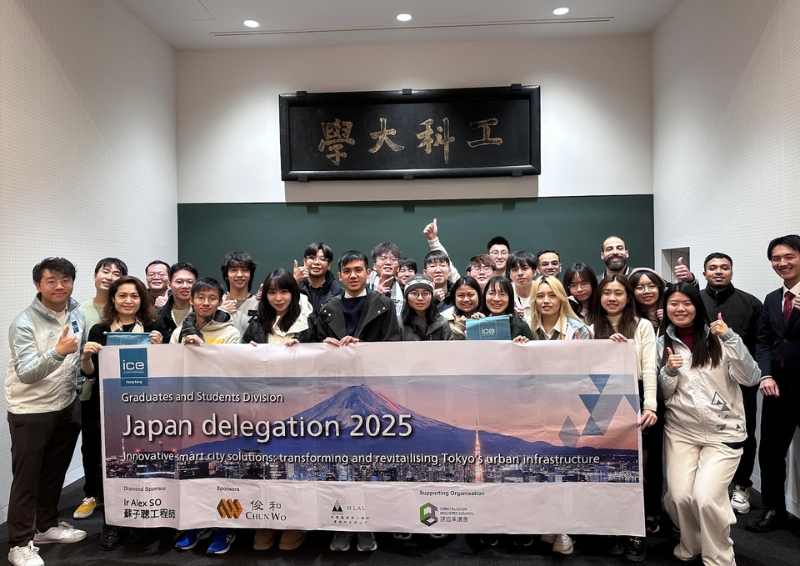
Recent findings revealed innovative approaches to improve soil liquefaction resistance and structural stability, offering valuable insights into disaster mitigation.
It was inspiring to witness the collaborative research efforts among scholars and construction companies, which are driving better engineering designs into real-world practice.
Tunnelling variations
The G&S delegation visited the Kuden Kasama Tunnel near Yokohama, created with a 15.28 meters tunnel boring machine.
Delegates identified different design details compared to those used in Hong Kong, reflecting variations in material preferences and design practices between the two countries.
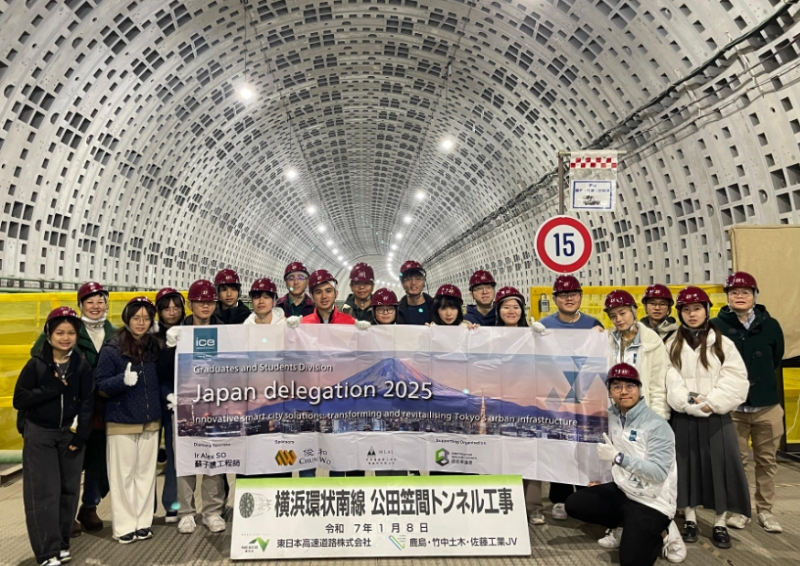
For example, the choice of lining materials, cross-sectional configurations, and waterproofing techniques differed due to the geological conditions and construction standards unique to Japan.
Delegates cherished the opportunity to exchange their tunnelling experiences and insights with practitioners from Kajima Corporation, deepening their understanding of regional best practices.
Public engagement
The trip concluded with visits to the Yamanashi Prefectural Maglev Exhibition Center and Metropolitan Area Outer Underground Discharge Channel. Delegates learned the principles and development of magnetic levitation and stormwater management.
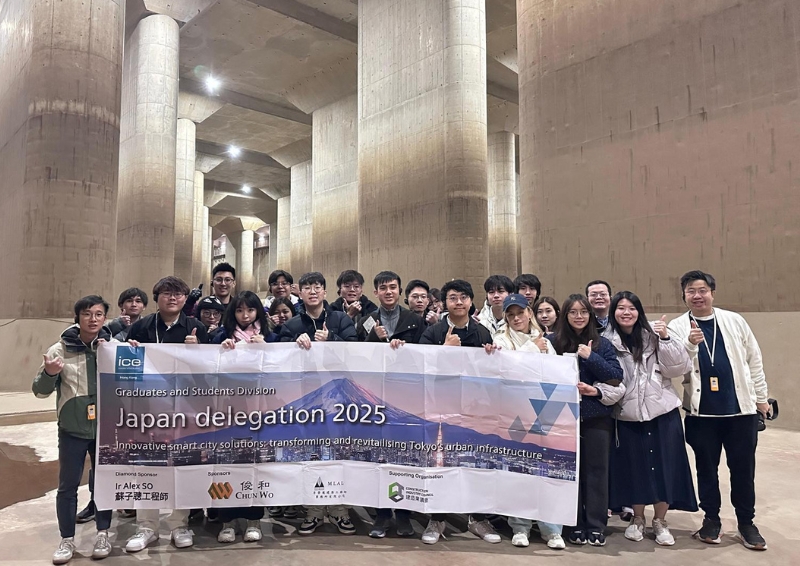
They were also fascinated by Japan’s efforts in cultivating their citizens’ interest and appreciation of their engineering achievements through interactive exhibits and guided tours.
Delegates reflected that Tokyo’s integration of sustainable practices into urban infrastructure and its emphasis on community-centric design were particularly impactful and could be applied in Hong Kong.
For more highlights from the visit, read the delegates' study report.

You may also be interested in

- Type
- Awards and competitions
Future engineers rise to seismic challenge in 2026 Model Building Competition
The ICE Hong Kong Association Graduates and Students Division (HKA G&S) challenged undergraduate student teams to design earthquake-resistant buildings.

- Type
- Awards and competitions
Hong Kong students put structural design skills to the test
Find out who won the ICE Hong Kong Association (HKA) Graduates and Students (G&S) Division Model Building Competition 2024.

- Type
- News
Hong Kong students and graduates explore civil engineering and smart technology in South Korea
The ICE Hong Kong Association (HKA) Graduates and Students (G&S) South Korea delegation 2023 obtained valuable insights about the country.