





The annual award celebrates outstanding ideas, research and best practice.
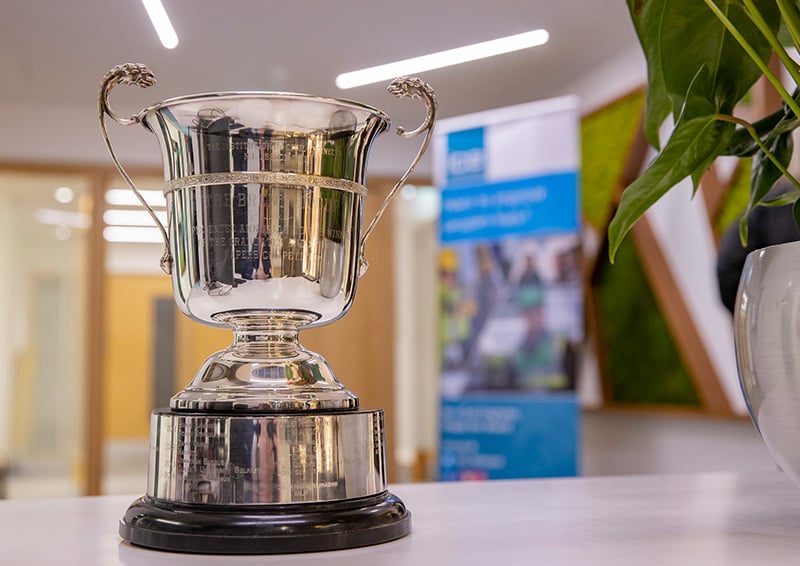
A paper that explores how recycled materials could be used to make concrete more sustainable has been named the 2026 winner of the ICE Princess Royal Award for Emerging Engineers.
The award recognises the communication of outstanding ideas, research and best practice in civil engineering.
The winner, Alex Soles, a civil and geotechnical engineer and lecturer at the Royal School of Military Engineering, represented south-east England at the international final.
His paper looked at the use of recycled fibres in concrete products, including those used in military applications.
The fibres can be made from materials that would otherwise become waste, offering a potential way to reduce the environmental impact of concrete production.
The international final highlighted the breadth of research and ideas being developed by emerging engineers across the institution. It was held on 9 October, with each finalist presenting their paper before a judging panel and audience.
Alex was joined by runners-up:
- Rachel Woodward, ICE Northern Ireland, who presented her paper on Calcined Waste Clays as Low-Carbon Supplementary Cementitious material for Decarbonising Soil Stabilisation; and
- Samuel Szczepanski, ICE East Midlands, who presented his paper on Optimising Cement Stabilised RAP for Low-Carbon Pavement Applications.
Scores were very close this year, but ultimately, Alex took home the cash prize and the Institution Medal in recognition of his achievement.
The award is named after Her Royal Highness, The Princess Royal, the ICE's royal patron and a long-time supporter of the engineering sector.
She is also an Honorary Fellow of the ICE and patron of the WISE campaign.
2026 regional finalists

Samuel Szczepanski, a civil engineering student at the University of Derby, has won the East Midlands heat of The Princess Royal Award for Emerging Engineers.
His winning paper was titled: Optimising Cement Stabilised RAP for Low-Carbon Pavement Applications.
His paper looked at whether reclaimed asphalt pavement (RAP), stabilised with cement, could be a practical low-carbon alternative to conventional pavement materials. RAP is a recycled road material.
Overall, his paper demonstrated that cement-stabilised RAP is a viable sustainable solution for pavement base layers (the main, load-bearing layer of a road) that carry lower levels of traffic, provided it is designed, installed and drained properly.
Runners-up
- 2nd place: Nouvelle Oloo, a graduate civil engineer at Pick Everard, for their paper Closing the Service Delivery Gap in Faecal Sludge Management
- 3rd place: Molly Ferneyhough, a graduate engineer at AECOM, for their paper on Injury Severity Modelling of E-Scooters: An Econometric Approach

Esther Fobi, a graduate civil engineer at Galliford Try, has won the East of England regional award for 2026.
Her paper was titled Built In, Left Out: A Technical Framework for Construction Site Access and Travel.
In her paper, Fobi highlighted that construction projects meticulously model every technical detail, except how workers travel to and from site.
She impressed the judges by clearly explaining sustainability and social impact issues, while offering practical suggestions that showed her commitment to the project.
The study introduced a framework to treat workforce travel as engineered, accountable, and safe
Runners-up
- 2nd place: Szymon Skrzyniarz, for a paper titled Interpreting Non-linear Structural Behaviour in a Level 2 Rail Assessment: The Role of Engineering Judgement
- 3rd place: Haojun Sun, for a paper titled A Unified Framework for the Optimal Design of Columns Against Buckling: From Classical Theory to Elastoplastic Engineering Practice

Tsang Tsz Yeung, a recent graduate from the University of Hong Kong and a graduate civil engineer at the Hong Kong Water Supplies Department, has won the regional final.
His winning paper was titled Alkali-silica Reaction of Foam Glass Aggregates in Lightweight Concrete.
Foam glass aggregate, which is produced by recycling waste glass, can serve as a replacement to natural coarse aggregates, producing concrete that is lightweight and has high thermal insulation.
However, the use of foam glass aggregate is susceptible to a chemical reaction, known as the alkali-silica reaction (ASR), that can break the internal structure of concrete.
Tsang showed how mixing foam glass aggregate with a lithium hydroxide solution can mitigate against ASR by forming a lithium silicate protective layer.
Ultimately, Tsang’s work paves the way for the wider adoption of foam glass aggregate in concrete that not only enables better wall thermal insulation but also lighter weight structures, offering a practical pathway towards reducing building energy consumption and improving structural sustainability.
Runners-up
- 2nd place: Tsui Chi Yu Dominic, for a paper titled Convolutional Neural Network (CNN)-based Machine Learning Techniques for Damage Detection of Bridge Structure Considering Vehicle-Bridge Interaction
- 3rd place: Lui Hoi Hin, for a paper titled Lime Stabilization Limits in Hong Kong Marine Clay: Water Content’s Critical Role in Ultimate Limit State

Tong Hu, a PhD student at Imperial College London, has been named The Princess Royal Award for Emerging Engineers winner for London in 2026.
His winning paper, Rethinking Steel Construction: Optimisation-driven Hybrid Fabrication with Metal 3D Printing, was well received by the judges for showing how targeted use of wire arc additive manufacturing (WAAM) can improve steel construction.
Optimised hybrid T-joints featuring WAAM components showed significant benefits, with stiffness increasing by up to around 2,000% and load-carrying capacity by up to almost 500%.
The approach was then applied to the world’s first full-scale hybrid WAAM steel truss, combining standard members with bespoke WAAM nodes to improve structural efficiency and simplify construction.
His research showed that hybrid steel construction can create stronger, more efficient and more sustainable infrastructure by using advanced manufacturing only where it adds clear value, while maintaining the practicality of traditional steelwork.
Runners-up
- 2nd place: Isaac Lo, for a paper titled Global benchmarking of transit-oriented developments: A data-driven framework for sustainable urban investment
- 3rd place: Suleman Sohail Alvi, for a paper titled From Siloed to Chartered: An AI-powered Route Through the ICE Professional Review

Jesús David De Oliveira, structural engineer at Robert Bird Group in Dubai, UAE, has won the MENA heat of the Princess Royal Award for Emerging Engineers.
His winning paper was titled Influence of Hybrid Manufacturing on the Buckling Behaviour of Slender Beams.
De Oliveira showed how steel 3D printing can be used to strengthen the structural components of buildings more efficiently than traditional methods.
He investigated a hybrid approach, adding wire‑arc additively manufactured (WAAM) steel stiffeners to standard hot‑rolled beams.
This offers a practical alternative to fully printed components, helping to overcome challenges around cost, scale and certification.
His results show that targeted WAAM stiffeners significantly delay buckling and increase moment capacity (how much bending the beam can handle), while using much less material than simply increasing beam size.
Overall, De Oliveira's work highlights how hybrid manufacturing could support more efficient and sustainable structural design in the future.
Runners-up
- 2nd place: Ali Khamees, student (Heriot-Watt University Dubai, UAE), Optimising Urban Traffic Intersection Performance Using Artificial Intelligence: A Reinforcement Learning and Genetic Algorithm Approach in Dubai
- 3rd place: Sara Aljarwan Alshamsi, graduate (Roads and Transport Authority Dubai, UAE), Applying the Movement and Place Framework: Flexible Street Design for Sustainable Urban Mobility in Dubai
- 4th place: Mariam Ehab, graduate (The British University in Egypt, Cairo, Egypt), Life-Cycle Cost and Carbon-Based Decision-Making for Bridge Rehabilitation
- 5th place: Shwetha Ravi, graduate (Parsons Corporation Dubai, UAE), Ticket to Green Gulf: Landscape Strategies for Climate-Resilient Transit Infrastructure

Amy Henderson, a graduate of Newcastle University and geotechnical engineer at JBA Consulting, won the North East Princess Royal Award for Emerging Engineers.
Her winning paper was titled Women in Reservoir Engineering: Strengthening the Future of UK Reservoir Safety.
Drawing on UK professional practice, Henderson’s presentation examined the relationship between skills capacity, gender representation, and reservoir safety outcomes.
It explored regional constraints on specialist availability, the need for active knowledge retention, and the role of early engagement, visible female role models, and alternative entry routes from related disciplines.
Runner-up
- 2nd place: Curtis Jones, graduate structural engineer at Arup, for his paper on Organic-based Enhanced Compressed Earth Brick-masonry Panels Subjected to Seismic Loadings: Experimental Tests and Numerical Simulations
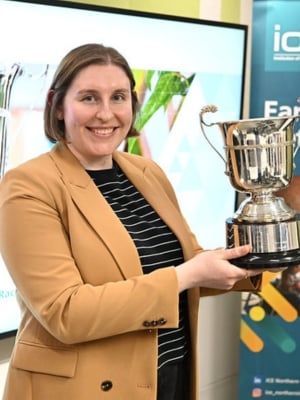
Rachel Woodward, a PhD researcher at Ulster University, has received the Northern Ireland regional Princess Royal Award for Emerging Engineers.
Her paper was entitled Calcined Waste Clays as Low-carbon Supplementary Cementitious Material for Decarbonising Soil Stabilisation.
It explores how waste-derived calcined clay could be used as a low-carbon alternative to traditional cement in deep soil mixing (DSM), a ground improvement technique used to strengthen weak soils for construction projects.
Cement production is one of the most carbon-intensive industrial processes.
Her findings suggest that waste clay materials could provide a sustainable, scalable solution for reducing the carbon footprint of ground engineering while supporting the circular economy.
Runners-up
- 2nd place: Jamie Killough, civil engineer (AECOM) for his paper entitled Developing sustainable solutions - a case study in tackling the wastewater crisis
- 3rd place: Myah McDonald, student (Queen's University Belfast) for her paper entitled An Engineering Comparison of Adsorbent Materials to Mitigate the Ecological and Health Risks of Tetracycline in Wastewater

Aamar Lovell, apprentice civil engineer at Waterman Group, won the North West final of the Princess Royal Award for Emerging Engineers.
Lovell’s winning paper was titled Engineering the 22nd Century Bridge: Materials, Digitalisation and Predictive Intelligence.
His paper proposes that the 22nd century bridge should not be defined by structural form or span length, but by its engineered longevity, material intelligence and predictive capability.
Rather than responding at crisis point, Lovell suggests future bridge infrastructure must be designed to anticipate degradation, reduce maintenance demand and support informed asset-management decisions throughout its lifecycle.
The study examines the role of fibre-reinforced polymer (FRP) composite materials – particularly glass fibre-reinforced polymer (GFRP) bridge decking systems – in addressing long-term durability challenges.
However, Lovell notes that material innovation alone isn't enough.
He explains how digitalisation, structural health monitoring and emerging artificial intelligence techniques can transform bridge asset management from reactive inspection regimes to predictive maintenance systems.
Runners-up
- 2nd place: Jared Harvey (Mott MacDonald), for a paper titled Re-thinking CYCLOPS: An Alternative Layout for Constrained Urban Environments
- 3rd place: Giuliana Kyerematen (Costain), for a paper titled The Future of Innovative Foundation Design? An Insight into the Implementation of 3D Printed Concrete Foundations on a Major UK Project

John Casey, a senior engineer at Farrans Construction, has been named the 2026 Scotland winner of the Princess Royal Award for Emerging Engineers.
His paper, titled Temporary Works Governance in Multi-Contractor Renewable Energy Projects, impressed the judges with his strong commitment to health and safety.
Based on his own experience as the temporary works coordinator on two windfarm projects in Scotland, the study focused on issues in governance between the principal contractor and wind turbine generator contractor.
On his first windfarm project, it was discovered that the turbines delivered were a newer model, unknown to the principal contractor, and unplanned equipment would be necessary to install them.
The paper highlighted the methods Casey took to ensure adequate safety onsite when installing temporary works, including working with an inspector from the Health and Safety Executive to address the governance gap and organising regular meetings between the contractors.
Taking his key findings, he established a framework to improve the health and safety on his next project. This included holding planning meetings before works began and assessing and categorising the risks of each project element.
Casey emphasised that his prize was a result of the support from his mentors, adding: "I came into this industry at such a young age and the most valuable lessons that I have learned is those that come from challenges faced onsite, the problems you have to think your way through and the experience carried forward from one project to the next.
"That process of learning, growing and improving is what drives me. I hope this award encourages more site engineers, especially those early in their careers, to write about issues they tackle every day.
"The knowledge is out there on sites. It just needs to be shared."
Runners-up
- 2nd place: Harvey Leak-Smith for his paper Freeze-Thaw effects of Biopolymer Stabilised Soils
- 3rd place: Sarah Mckee's presentation on Earthworks Design of a Separately Graded Spoil Storage Area for Arisings from the Coire Glas Exploratory Adit to Ensure Material Reusability

Alex Soles, a Pew lecturer (civil and geotechnical engineering) at MKC Training and a student at the University of Greenwich, has been named the 2026 winner for south-east England.
His winning paper was titled The Influence of Recycled Fibres on the Behaviour and Properties of Concrete Products for Military Applications.
Soles' testing showed that concrete mixes with recycled steel, straw, and hessian fibres were strong enough for structural use, and performed better when bent. The fibres helped to control cracking and made the concrete tougher, reducing the risk of brittle failure.
The study shows that recycled fibres can provide a practical, lower-impact alternative to traditional reinforcement in demanding conditions.
Runner-up
- 2nd place: Bethany Sinclair for a paper titled The Mechanical Behaviour of Dry-Stone Interfaces to Validate Sustainable, Low-carbon Repair Strategies for Historic Masonry Arches

Hannah Hart, a civil engineer degree apprentice working at AtkinsRéalis in Bristol, was named South West champion after presenting research highlighting the gap between flooding alerts and public action.
Hart, who also studies at the University of the West of England, came first with her paper titled Evaluating the Effectiveness of Coastal Flood Warning Systems: Bridging the Gap Between Warning Notifications and Public Responses in Newport, South Wales.
Her paper looks at flood warning systems in Newport and whether people act on them.
It finds that while flooding can often be predicted, warnings are sometimes inconsistent or missed, and many residents either don’t fully understand them or ignore them even when they are received.
Hart said: “My research highlighted that improving resilience is not only about predicting risk but communicating them effectively.
“As civil engineers, we must also help people make safer decisions and strengthen community resilience.”
The judges said Hart’s paper demonstrated deep knowledge, strong real-life impact and clever integration of technical, operational and behavioural insights.
They decided to award her first prize in recognition of her clear analysis, sustainability focus, practical relevance and outstanding communication skills.
Runners-up
- 2nd place: Sacha Watson, undergraduate student at the University of Southampton, for a paper titled Appraising the Use of Streetlights in Urban Parks with an Interactive Simulator and Statistical Methods
- 3rd place: Aung Zay Ya, undergraduate student at the University of the West of England, for a paper titled Dynamic Response of a Hybrid Isolation System in Mid-rise Steel Frames Using ETABS

Nishma Patel, a geotechnical engineer at Arup, has won the Wales Cymru heat for the Princess Royal Award for Emerging Engineers.
Her winning paper was entitled Creating Resilient Smart Cities through the Integration of BIM with Cybersecurity Infrastructure.
Her paper critically evaluated existing BIM security standards and frameworks, with a specific focus on BS EN ISO 19650-5:2020.
Patel undertook an assessment of previous cyber-attacks within the architecture, engineering, construction and operations (AECO) sector that led to infrastructure disruption and data breaches.
Runner-up
- Hajer Grira, for a paper titled Engineering with Purpose: A Cultural Perspective on the Derna Floods
Ibraheem Naasr Butt, a civil engineering student at Coventry University, has won the West Midlands heat of the Princess Royal Award for Emerging Engineers.
His winning paper was titled: A Comparative Study of Geogrid Reinforcement on Rutting Performance over Soft Subgrades.
Butt investigated whether geogrid (a mesh material that boosts strength) reinforcement can improve the rutting performance of unpaved roads (how well roads resist developing ruts).
The study showed that geogrid reinforcement significantly improves road's load-bearing capacity and rutting resistance under static and cyclic loading conditions (in other words, constant and repeated loading).Butt states that although the study provides robust laboratory evidence, full-scale field trials are recommended to validate findings and account for environmental variables.
Runners-up
- 2nd place: Cally Pettiford, a graduate site engineer at GRAHAM Group, for their paper Relative Accuracy of High precision Total Stations and DEMEC Gauges for Masonry Structures
- 3rd place: Abdoulie Jobareth, a student at Coventry University, for their paper Comparative Performance of Steel, FRP and BFRP Reinforced Concrete Beams

Shihas Melikkattil Shamsudheen, a graduate of the University of Leeds and an assistant civil structural engineer at AtkinsRealis, has won the Yorkshire and Humber Princess Royal Award for Emerging Engineers.
His winning paper was titled Enhanced Carbon Sequestration in Cementitious Systems Using Solid CO₂ as a Functional Admixture.
Shamsudheen explained that the cement industry is one of the largest contributors to global CO₂ emissions, accounting for about 7%.
To achieve net zero by 2050, new approaches for CO₂ sequestration (trapping) in concrete are being explored.
However, most existing methods require controlled conditions or special equipment, which limits their practical use in construction.
Shamsudheen’s study introduced a simple method for sequestration using solid CO₂ pellets directly added into cementitious systems during mixing. This makes it suitable for ready-mix concrete and on-site applications.
The results showed that solid CO₂ doesn't negatively affect fresh properties such as workability, heat evolution, or setting time. Instead, it improves mechanical and durability properties.
Runner-up
- 2nd place: Farhan Mia, an apprentice civil engineer at Arup, for his paper entitled Beyond the Algorithm: The Impact of AI Assisted Tools on Engineering Judgement and Accountability in Civil Engineering

You may also be interested in

- Type
- Lecture
PIANC UK young professionals seminar 2026
An engaging seminar showcasing presentations from young professionals across the industry, with opportunities to learn, connect and network with peers.

- Type
- Awards and competitions
Future Hong Kong engineers design links for a more connected Kowloon East
The Shaping Our Future City 2026 campaign challenged secondary school students to come up with innovative infrastructure proposals to improve connectivity between Kai Tak and Kwun Tong.

- Type
- Awards and competitions
Future engineers rise to seismic challenge in 2026 Model Building Competition
The ICE Hong Kong Association Graduates and Students Division (HKA G&S) challenged undergraduate student teams to design earthquake-resistant buildings.