





Don't start digging until you're clear on the costs and why they’re worth it, Bridget Rosewell CBE told the Women in Fellowship network.
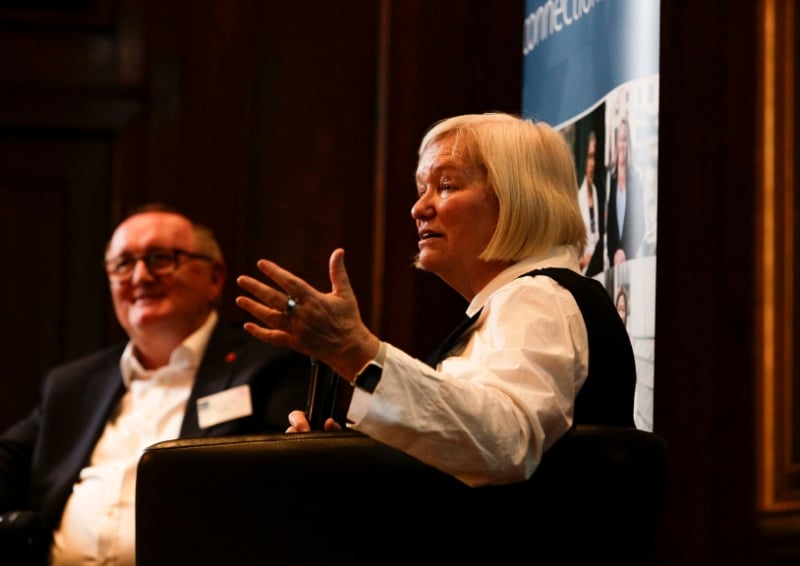
Don’t hide the real costs of infrastructure – instead, demonstrate the benefits that it will bring, Bridget Rosewell CBE told the ICE’s Women in Fellowship network.
“If a project is going to be expensive, be upfront about it. Don’t start digging before being aware of all the potential constraints and costs,” said Rosewell, an ICE Fellow herself.
Rosewell offered her insight from a career that’s brought together engineering – on projects such as High Speed 1, the Northern Line extension and Crossrail – policy and economics.
Asked about how economists and engineers should work together, Rosewell said: “I believe that economists and engineers complement each other.
“The greatest strength of engineers is that they can always find solutions. The strength of economists is to challenge engineers to think about the costs.”
She added that the creative tension between financial planning and engineering had certainly been an important part of her work on past projects.
Spend more time on development
Rosewell shared her top advice for navigating this tension.
“Spend more time on developing schemes and ensure you go back to the principles of the Green Book,” she said, referring to the UK’s guidance on evaluating the costs, benefits, and risks of public infrastructure.
“Set a broader vision and strategy for a project. Evidence real social and economic objectives. Make a real case for why a project is needed, why it matters,” she added.
“Remember that doing nothing is not nothing. There will be impacts. Utilise this narrative in your plans.”
Communicating the benefits of infrastructure
New ICE President David Porter echoed the importance of highlighting the services that infrastructure will provide when communicating with non-technical audiences.
Catch up on his presidential address to find out why it matters.
Government understands how vital infrastructure is
It’s now easier to demonstrate the benefits of projects because the government understands the link between infrastructure and the economy.
Rosewell shared that at the start of her career, that wasn’t the case.
“I was able to challenge the thinking that the economy was independent of infrastructure and would go on anyway – that infrastructure was simply a nice to have,” she said.
By the time she worked on Crossrail (the Elizabeth Line) in the 2000s, infrastructure was starting to be seen as something that would create jobs and bring wider economic benefits to the capital.
All while preventing traffic gridlocks in central London, in the Elizabeth Line’s case.
Optimism for the future of infrastructure
Rosewell has previously served as a commissioner for the UK’s National Infrastructure Commission (NIC), now replaced by the National Infrastructure and Service Transformation Authority (NISTA).
NISTA sits within the Treasury and the Cabinet Office, combining the functions of the NIC and the Infrastructure Projects Authority (IPA). Its aim is to bridge the gap between deciding what to build and how to do it.
Rosewell was interviewed by policymaker, Professor Paul Hammond, who asked for her views on the Treasury acting as finance department and the vehicle to economic growth.
“Splitting the finance and economy roles would be a good thing to do, but it is complicated and unlikely to happen,” she said.
“That is why, devolution is great news. Devolution allows decisions to be made and things to happen in specific areas.”
Rosewell was confident that NISTA is settling down well.
“We are now closer to government, which should allow us to speak the truth to power that enables power to listen.”
“We have a number of challenges today, such as net zero and regulatory frameworks, but we are able to participate in debates about those,” she added.
“Are they resolved yet? No. Can we resolve them? Yes we can!” Rosewell assured.
The ICE Connects: Women in Fellowship network
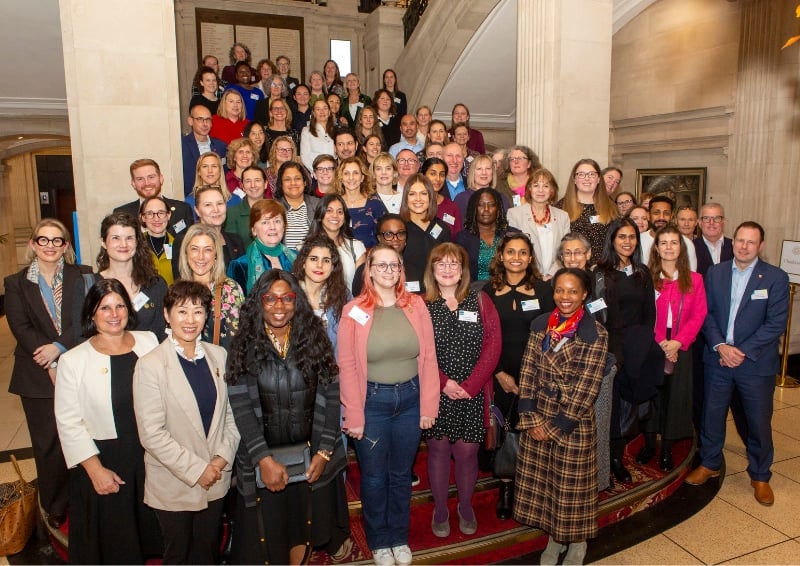
Rosewell addressed an audience of over 90 delegates, including current and potential Fellows, at the ICE’s headquarters in London, One Great George Street.
Introduced in 2021, the ICE Connects: Women in Fellowship network, chaired by Dr Michѐle Dix CBE, has so far resulted in a 72% increase in female Fellows.
On the evening, Dix said: “Every female Fellow adds to the story of the institution and leads the way in their field.
“Their insights and expertise will help us collectively shape the profession and society as a whole.”
She encouraged the prospective ICE Fellows in the room to apply, conveying the importance of continuing to grow the network and work towards accurate representation of senior female civil engineers across the industry.


You may also be interested in

- Type
- Lecture
Design considerations for seismic testing facilities
What does it take to establish a seismic test facility? This presentation explores the key decisions, challenges and considerations involved.

- Type
- Lecture
Beyond Monitoring: Leveraging AI and Space Technology for Resilient Applications of Geosynthetics
Discover how space technology, AI, and satellite data are transforming infrastructure asset monitoring and geohazard risk management. Explore how soil moisture and multi-layer data insights are enabling smarter, more proactive infrastructure resilience.

- Type
- Infrastructure blog
What architecture is getting right about inclusive design
The Royal Institute of British Architects' (RIBA) has shared best practice that the infrastructure sector can apply in its work.