

Year
2010Duration
2 years 8 monthsCost
US$1.6 billionLocation
USAProject achievements
Connected communities
Enables fans to connect and celebrate their sports teams' success
Used engineering skill
Built at an angle so all spectators can have an unobstructed view of the pitch
Area improved
Adapted the stadium to enable it to host the FIFA World Cup final in 2026
A new home for not one, but two football teams
The concept of sports teams sharing a stadium would seem bizarre in many parts of the world.
For fans, a stadium is more than just a venue. It’s a symbol of culture, heritage and identity.
But for over 40 years, two American football teams, the New York Jets and the New York Giants, have shared the same home.
The Giants Stadium opened in 1976 and eight years later they gained a new neighbour – the New York Jets.
But as it approached its 30th birthday, the stadium was fast becoming one of the older venues in the NFL (National Football League).
The two franchises, who both wanted a new stadium to call home, agreed to work together to build it with a view of sharing the ownership and having an equal say in how it’s run.
So, in 2007 construction to build a new state-of-the-art stadium begun, and on April 10, 2010 the MetLife stadium opened its doors for the first time.
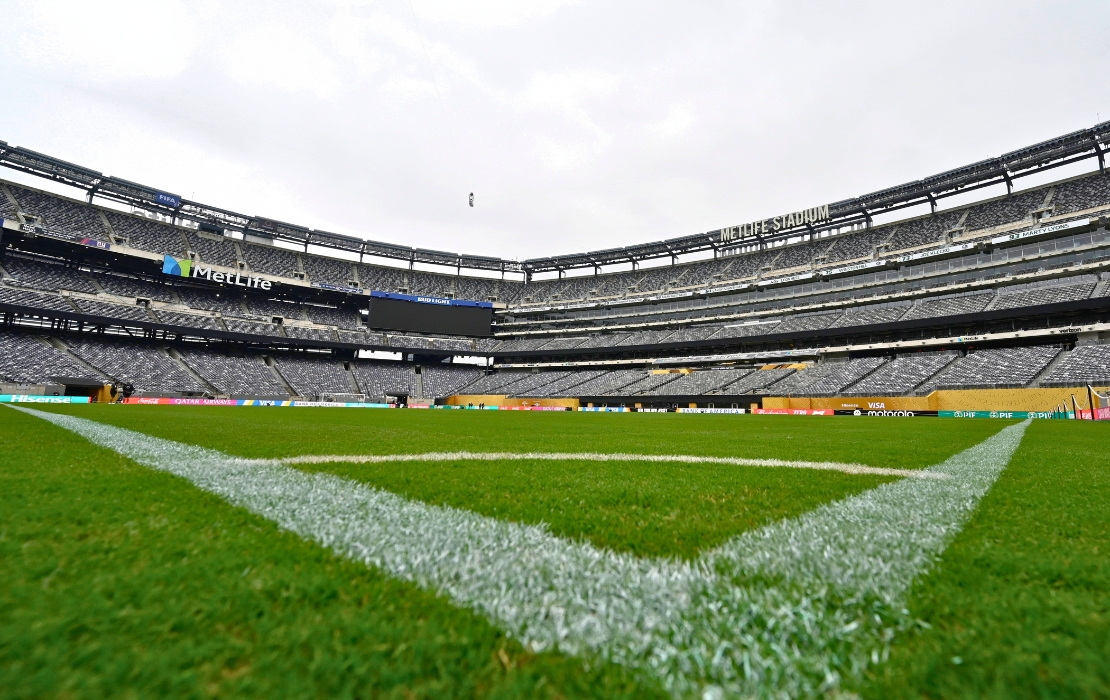
The 910x740 feet (277x225m) open-air, multi-purpose venue can host NFL games, major events and music concerts, with a seated capacity of 82,500.
It hosted the Super Bowl XLVIII in 2014 and the FIFA World Cup final in 2026.
Did you know …
-
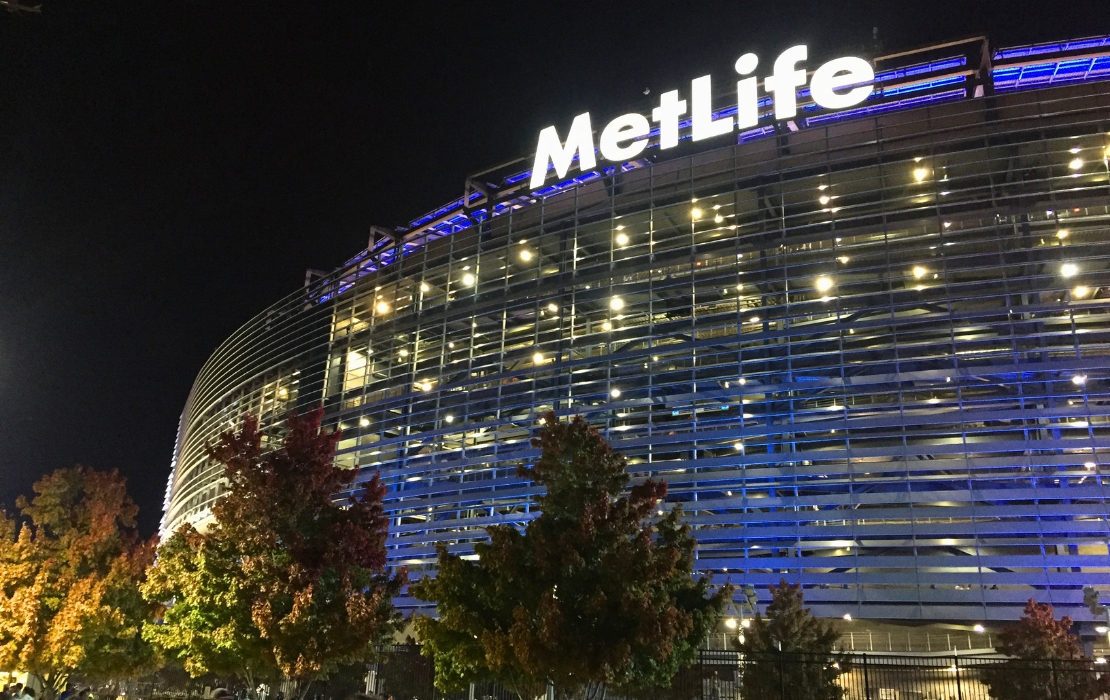
It features a vast network of lighting which enables the venue to change its appearance for the New York Giants, Jets or other events (a bit like a chameleon!).
-
With over 82,500 seats, it has the highest seated capacity out of any NFL stadium.
-
At the time, it was the most expensive stadium ever built in the US.
How was the MetLife built?
The stadium was built with sustainability in mind.
In June 2009, the Environmental Protection Agency and New Meadowlands Stadium Corporation made an agreement to do exactly that.
It involved using around 40,000 tonnes of recycled steel during the construction process, with 20,000 tonnes sourced from the previous stadium. It diverted 7,000 tonnes of debris from landfill.
It also features over 1,300 solar panels that were added in 2012 to help power the immersive LED lighting system.
They can change colour, depending on what team is playing at the stadium, or if there’s another entertainment event scheduled.
The project team used building information modelling (BIM) to speed up construction. They modelled the steel structure and other skeletal systems, allowing them to procure the materials they needed faster and more efficiently.
A golden opportunity - hosting the FIFA 2026 World Cup final
The MetLife is just one of sixteen other stadiums across the US, Canada and Mexico that hosted matches throughout the tournament.
In February 2024, FIFA announced that the MetLife stadium would host the final.
This posed a problem.
There are strict rules about the dimensions of the pitch for football (or soccer) games.
To fix this, Skanska announced that the stadium would be renovated in two phases across 2024 to 2025.
It involved demolishing four corners of current seating and replacing it with modular seating to expand the field to meet FIFA’s regulations. Making them modular means the dimensions can be readjusted to suit American football specifications after the tournament.
NFL games are also played on artificial grass, but FIFA regulations state that real grass must be used for World Cup fixtures.
It’s estimated that around 600 rolls of grass were transported in refrigerated units and then installed prior to the tournament.
Difference the project can make
Despite being just a visually stunning venue, it boasts several features aimed at creating an incredible fan experience.
A massive outdoor area known as FanFest offers a variety of amenities for attendees to enjoy before and after an event.
It’s seating structure is set at an angle that enables spectators to have a completely unobstructed view.
And perhaps its most striking feature is its outer layer.
It’s fit with over 50,000 linear feet of aluminium louvers (slats), and when paired with the interior LED lighting systems, its appearance can be transformed in a matter of hours.
People who made it happen
- New Meadowlands Stadium Company
- LLC Skanska USA
- HOK
- EwingCole