

Year
2007-2035Duration
OngoingCost
Estimated £737mLocation
SwedenProject achievements
Solved the problem
Protect the town from sinking into cracks in the ground
Conservation
Preserve historical landmarks like the church by moving them in one piece
Area improved
Re-imagine the city plan to make it more sustainable and intelligent
Relocate an Arctic city so the ground doesn’t swallow it whole
The arctic city of Kiruna in the Swedish Lapland and its iron ore mine have an interwoven history.
The Swedish state-owned LKAB mining company arrived in the region at the end of the 19th century, when it was largely uninhabited.
Kiruna grew as an urban settlement around the mine. Even to this day, the mine is its biggest employer, with around 1,800 employees living in the town, which has a population of 18,000.
The mine has been expanding over its almost 130 years of operation. It’s the largest underground mine in the world and has the purest iron ore.
Every day, it produces more than six Eiffel Towers worth of ore, providing 80% of the EU’s supply.
But this expansion has come at a cost – Kiruna is sinking.
As early as 2004, LKAB warned that subsidence from its operations would form cracks in the surface and destroy Kiruna’s buildings and infrastructure.
If its production was to continue, the city would have to relocate.
LKAB has since found the largest deposit of rare earth oxides in Europe outside of Russia next to the original mine.
These rare earth elements are essential to create electric cars and wind turbines, demand for which is expected to increase more than five-fold by 2030. Today, Europe mainly depends on imports from China.
It’s unlikely that the mine will slow its operations any time soon.
And so, the town had to move.
Did you know …
-
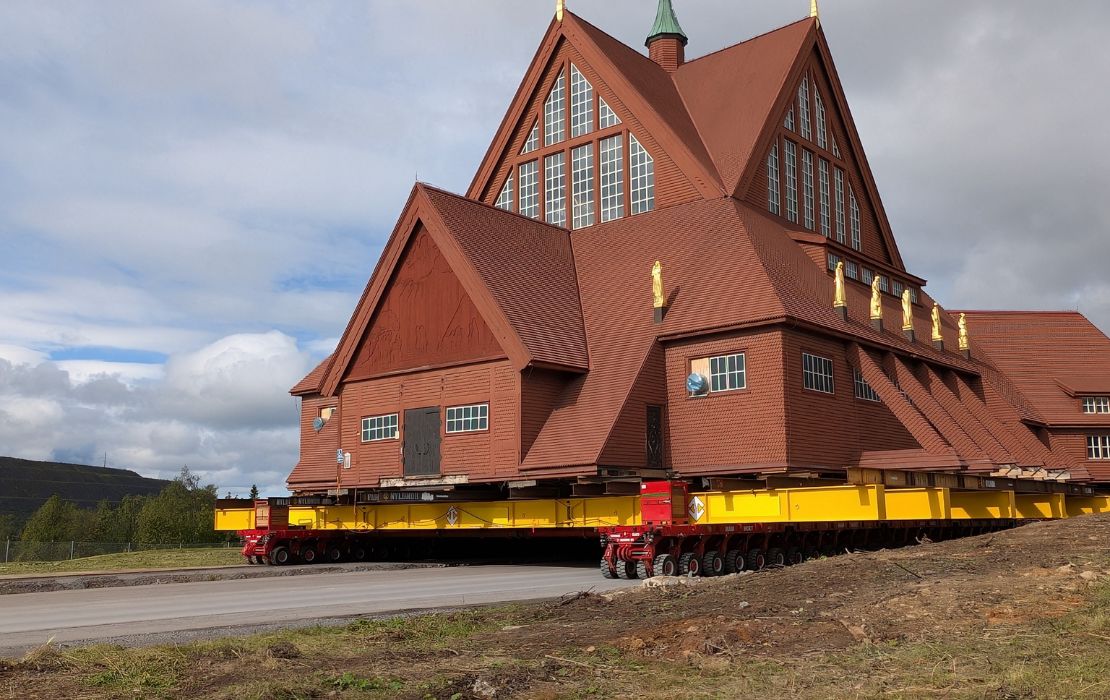
Large crowds gathered to watch Kiruna Church make its 5km trek to its new location over two days.
-
Safety barriers kept the crowds back, but the fit was so snug, onlookers said they felt they could reach out and touch the timber structure.
-
The move had to protect the church’s interiors, too. Its treasures include a great altar painting made by Prince Eugen and a 1,000-pipe organ.
How to move an entire town
All of Kiruna is moving 3km (1.9mi) east of the old town. About 6,000 people are due to be relocated.
That’s roughly 3,200 homes, 750 hotel rooms, 1,000 office jobs, as well as a shopping centre, two schools, a hospital, a library, a bathhouse, a church and several public buildings.
Work began in 2014, with the first buildings in the new town completed in 2018. Most are being demolished and rebuilt, but some landmarks are being moved in one piece.
This includes Kiruna Church, a 35m (115ft6), 40m (131ft) wide building weighing 672 tonnes.
To bring it to its new location, engineers loaded it onto self-propelled modular transporters, supporting it with steel beams.
It travelled at 500m an hour on a road that was widened for this exact purpose. Lamp posts and traffic lights also had to be removed, as well as a bridge, which was due to be demolished either way.
The 5km (3mi) move took eight years to plan.
Everyone knows it has to be relocated: we live in a mining community and depend on the mine. I'm grateful that we're moving the church with us to the new city centre but there is also sorrow in seeing it leave the ground where it became a church.
Vicar Lena Tjärnberg commenting on the Kiruna church relocation
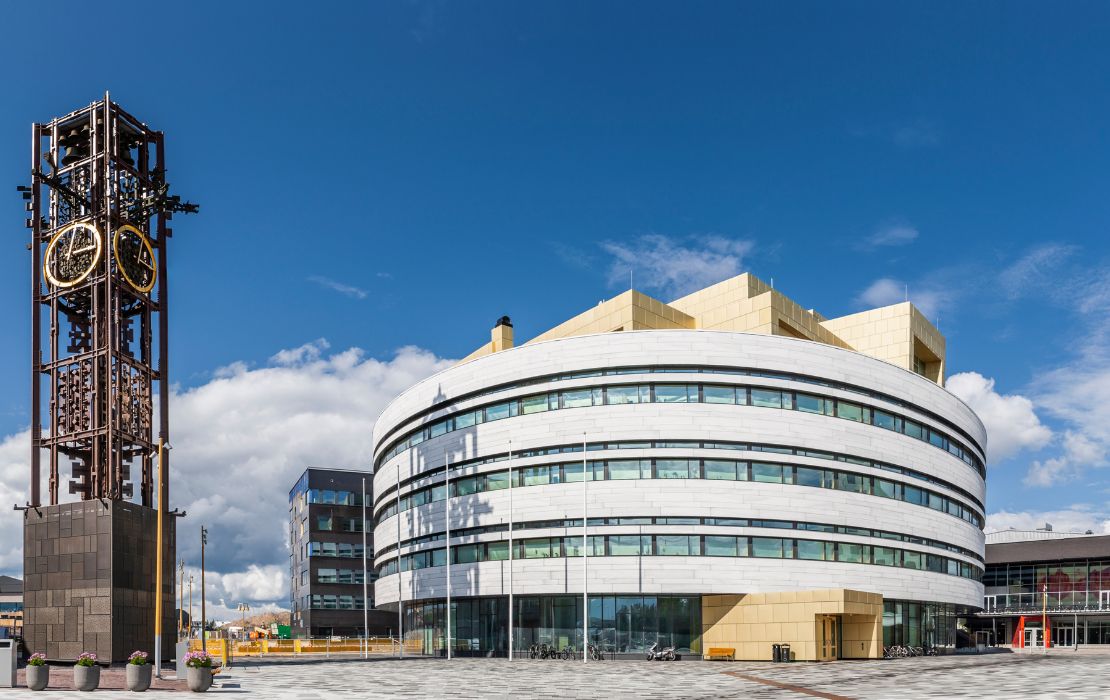
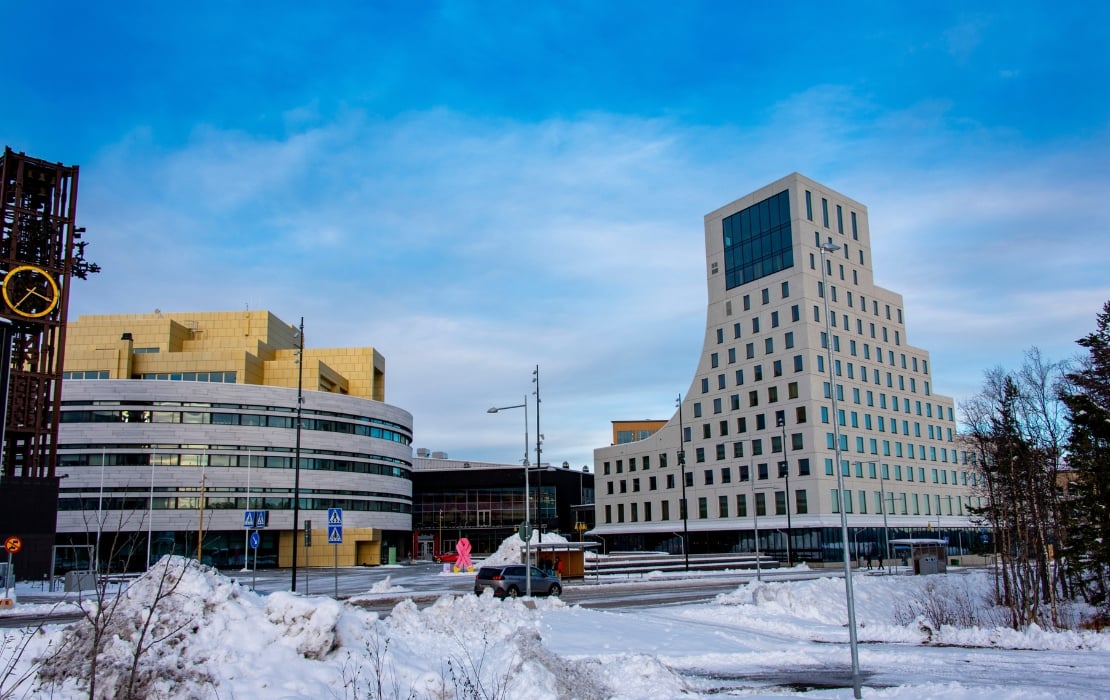
The first building to go up in the new town was the city hall, Kristallen (the Crystal). The old hall’s clock tower stands proudly next to it.
It’s since been joined by an art museum, conference centre, library, swimming pool, hotels, restaurants, shops, among other businesses.
Roads and railways have been redirected. Local buses run between the old and new towns.
It’s expected that the relocation will be completed by 2035, though there is no guarantee that future mining won’t lead to further changes.
Difference the project has made
The relocation project has been an opportunity to review the city’s urban plan from scratch.
The new city will have a denser city centre, prioritising good lighting to create a safe urban environment, a priority for the residents.
The masterplan aims to create a sustainable city with a diverse economy, one that doesn’t rely solely on the mine, but works with new industries and tourism.
Neighbourhoods branch out into the arctic landscape so that Kiruna residents are never more than three blocks away from nature.
The masterplan has also created meeting places and cultural amenities that didn’t exist in the old town. It has added 3,000 new homes to accommodate a growing population.
However, the town’s relocation has put increased pressure on Sami reindeer herders, who lived in the area long before LKAB arrived.
The Sami people had already been struggling with the climate crisis, which has made it harder for reindeer to find their main food source in the winter, lichen.
People who made it happen
- LKAB
- White Arkitekter and Ghilardi + Hellsten Arkitekter