

Year
Expected 2026Duration
7 yearsCost
Estimated £1bnLocation
WalesProject achievements
Connected communities
Facilitate travel from the valleys into Cardiff and beyond
Used engineering skill
Installing new signalling, overhead line equipment and railway tracks
Area improved
Trains will come more often and travel faster
Transform the way that people travel in South-East Wales
The South Wales Metro project is an exciting new transport system that will make it easier for people to travel from the valleys into Cardiff and beyond.
It aims to encourage people to use public transport instead of their cars by delivering more frequent, faster and environmentally friendly rail services.
To increase the number of trains that can run on the valley lines into Cardiff, and to introduce new electric ones, teams need to carry out significant upgrades to the railway lines.
Once all the infrastructure works are completed, and all the new trains are in service, the rail timetable will change.
This will deliver a train every 15 minutes from Merthyr, Aberdare and Treherbert to Cardiff, and a train every 3-4 minutes from Pontypridd to Cardiff.
Journey times from the top of each valley into Cardiff will also be reduced by around 15-20 minutes, making journeys faster.
Did you know …
-
Transport for Wales (TfW) launched the Pathways Programme, providing training and work experience to men from Prescoed Prison. The project has offered full-time employment to 12 people so far.
-
To prepare for the electrification of the valley lines, TfW has delivered safety talks to over 200 schools in the area to make young people aware of the increased danger of trespassing on the railway.
-
As well as upgrading signalling and electrifying the valley lines, teams have also installed over 200km of fibre optic cable. This will deliver super-fast Wifi on board trains and at railway stations.
How is the project being delivered?
Many of the lines were using infrastructure that was very old.
For example, on the Treherbert line, the train signalling system (which tells the driver when it’s safe to continue or if they need to stop) was a ‘token machine’. This system dates to the 1930s, nearly 100 years old.
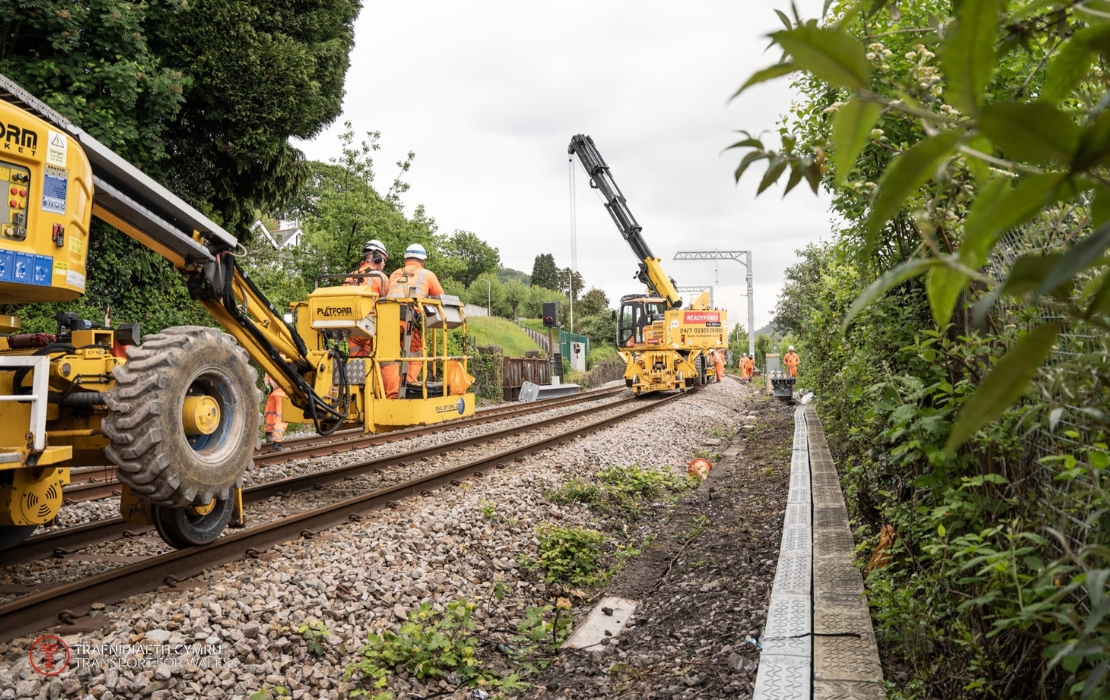
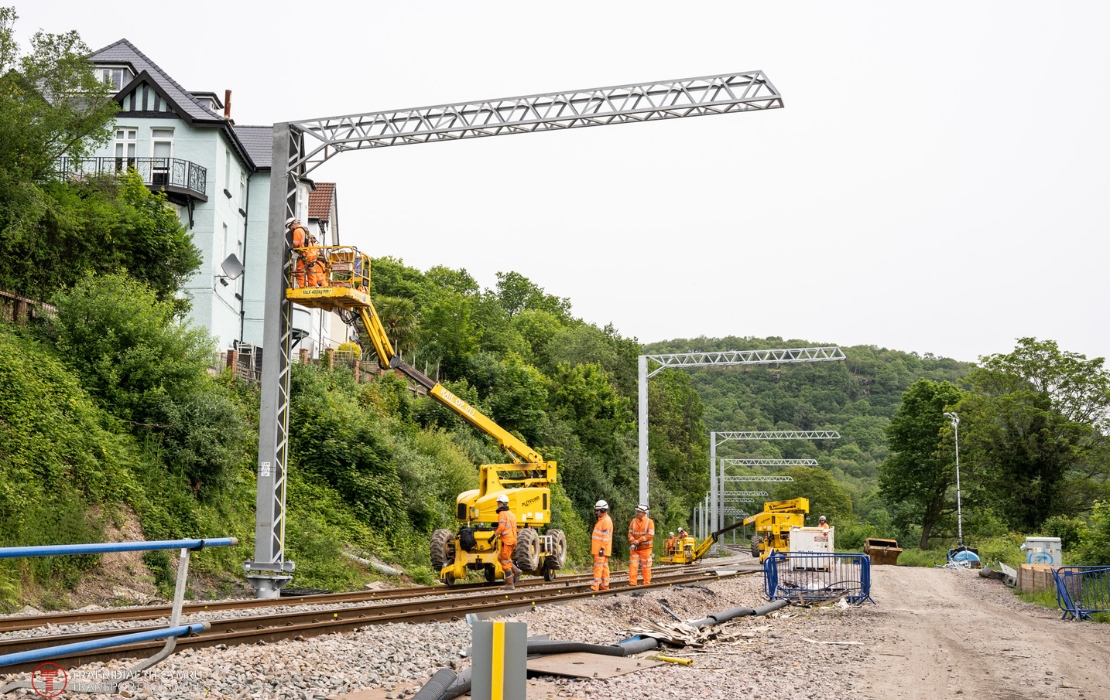
Infrastructure teams worked to:
- install brand new signalling and overhead line equipment
- cut back overgrown trees and vegetation
- install and replace new railway tracks
Railway stations were also upgraded, many with new platforms and bridges, alongside improved lighting, CCTV, customer information screens and waiting shelters.
As part of the project, 36 brand-new fully electric tram-trains will be introduced.
To house and maintain these new trains, a brand-new railway depot is being constructed in Taff’s Well.
The depot will be the home of 500 staff, including train drivers and crew, maintenance and cleaning teams, and a team of signallers who will control the South Wales Valleys network.
What has the project achieved?
Since construction started in early 2020, several milestones have been achieved, including:
- The new trains were inaugurated onto the Rhymney line in January 2023 – the first to have been introduced onto the South Wales valleys in over 30 years.
- The first tram-train was delivered to the Taff’s Well depot in March 2023.
- A nine-month closure of the Treherbert railway line took place to carry out significant upgrades, including replacing the token exchange signalling system. The line successfully reopened on Monday 26 February 2024.
- Merthyr Tydfil and Aberdare to Radyr lines were electrified in October 2023.
- The Treherbert line was electrified in May 2024.
- The first major timetable change on the valley lines took place in June 2024, including more trains between Pontypridd, Caerphilly, Rhymney and Cardiff.
- The new electric trains were introduced onto the Merthyr, Aberdare and Treherbert lines from November 2024.
Work to deliver the project will continue until the end of 2026.

People who made it happen
Transport for Wales (TfW) recognised that it could not deliver the whole of the project on its own and so teamed up with Amey Infrastructure Wales who became its main delivery partner.
TfW has been working with three other major infrastructure delivery partners to form the Craidd Alliance (Craidd stands for core in Welsh), made up of:
- Transport for Wales
- Amey Infrastructure Wales
- Alun Griffiths Ltd
- Balfour Beatty
- Siemens Rail
This partnership allowed the companies to come together, share expertise and collaborate to deliver this major project more effectively.