





Year
2019Duration
6 yearsCost
£5mLocation
United KingdomProject achievements
Conservation
Careful assessments and geotechnical design minimised archaeological impact
Connected communities
Connects the mainland with the island Tintagel Castle is on
Used engineering skill
The bridge was constructed off-site and installed with an innovative cable crane
Re-establish a historic crossing leading to Tintagel Castle
During the medieval period, those wishing to go to Tintagel Castle in Cornwall, UK could make their way over a narrow land bridge connecting the mainland to the island.
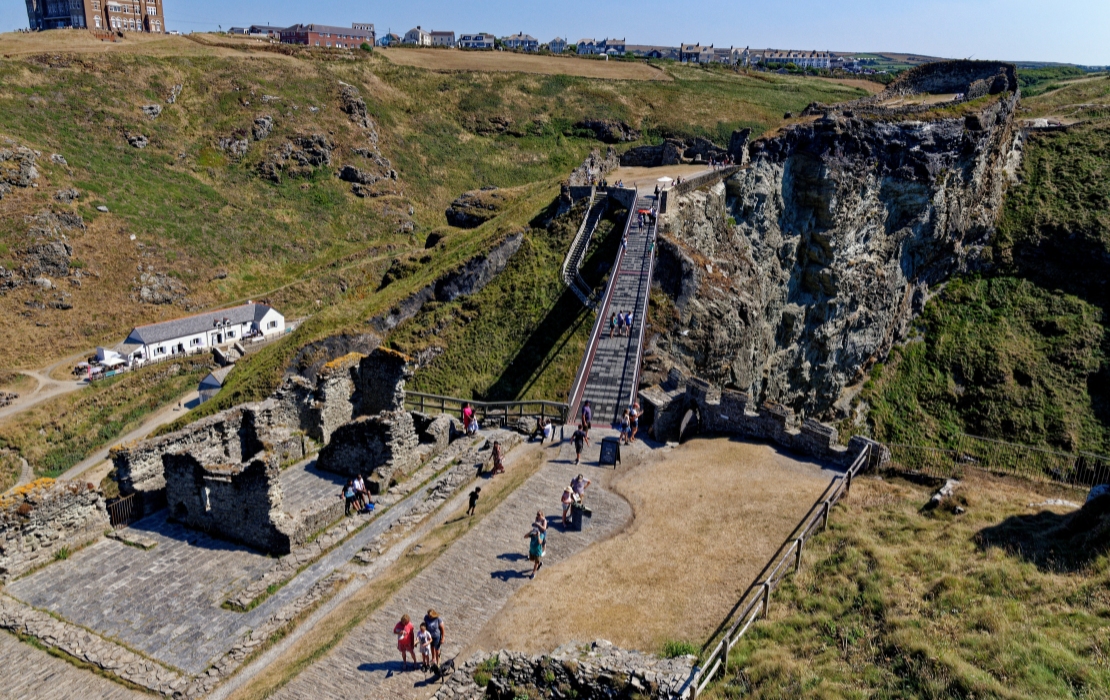
Over the centuries, the land bridge disappeared, a chasm setting the castle apart. The only route to visit the historic ruins became a set of winding stairs, climbing over 100 steps to reach the clifftop.
The ambition of the Tintagel Castle Bridge and Landscape project, now in the 21st century, was to re-interpret the site in an exciting and imaginative way.
The concept of a new bridge relinking a divided landscape perfectly answered this brief.
However, it was clear from the start that the project had to deliver more than a structure.
The bridge would have to be of the highest design quality in order to harmonise with the extraordinary setting of Tintagel.
A competition launched in 2015 to find the best team to achieve this. The winners: Ney & Partners Civil Engineers and William Matthews Associates.
Did you know …
-
The bridge replaces a land bridge that collapsed into the sea over 500 years ago.
-
Weighing just 50 tonnes, the structure is extremely lightweight.
-
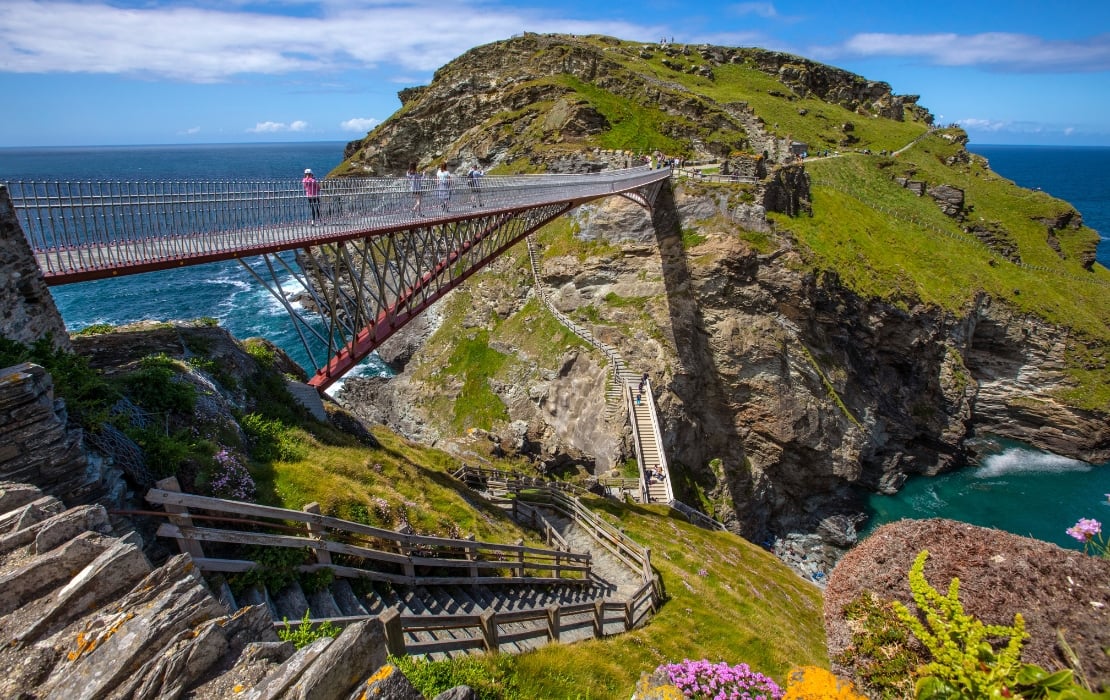
The 40mm gap in the middle of the bridge represents the transition from the mainland to the island and the present to the past.
How the work was done
Tintagel Castle is a Scheduled Ancient Monument, a Site of Special Scientific Interest, an Area of Outstanding Natural Beauty and a Special Area of Conservation.
As such, the development, design and delivery of the project required nearly six years of meticulous planning to ensure the project would not impact the site. This included careful archaeological assessment and geotechnical design.
The new footpath network was designed to lie over existing trampled paths, minimising the loss of protected grassland and nationally scarce plants. It also provides long-term protection to the fragile archaeology below.
The engineering of the bridge was pushed to the limit to create an extremely lightweight and slender design that sits in the landscape with minimal visual impact.
The bridge was constructed off-site and installed with the use of an innovative cable crane.
The design is relatively simple – two cantilevers which reach out from each abutment and don’t quite meet in the middle.
The central gap serves two functions. Technically, it allows each bridge half to expand and contract. Metaphorically, it creates a threshold between the mainland and the island.
Difference the project has made
Since opening, a third of visitors cited the new bridge as the reason for their visit.
Tintagel Castle became one of the English Heritage sites with the highest visitor ratings.
As one of Cornwall’s most popular visitor attractions, this project will bring more people to the north of Cornwall providing economic benefit to the wider community.
The project became an ICE South West Award winner.
People who made it happen
- Senior national project manager: English Heritage
- Lead consultant/engineer: Ney & Partners
- Lead consultant/architect: William Matthews Associates
- Quantity surveyor: Faithful & Gould
- Landscape architect: Nicholas Pearson Associates


