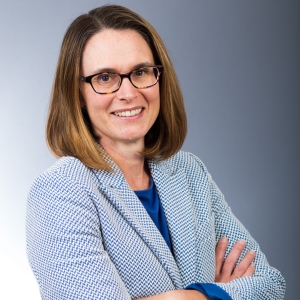


Jane Collins
Director, Arup
Expertise
Design, GeotechnicalLocation
North WestMy highlights
My first big project – Ponds Forge in Sheffield, an international standard sporting venue
Delivering Didsbury Flood Storage basin improvements and seeing it operate successfully
Being part of the Transpennine Route Upgrade from Manchester to Leeds and leading the way with geotechnical design
I would recommend a career in civil or infrastructure engineering because…
The constant variety of projects and technical challenges.
There are so many aspects to the built environment, and they all need civil engineers to make them happen and to look after them once they are built.
As a female leader, I'm visible and actively support the diversity and inclusivity of our industry.
What inspired you to become a civil engineer?
I can honestly say that I didn’t set out to become a civil engineer.
I still didn’t know what civil engineers did when I started my degree course. But I did know that what mattered was having a curious mind and a desire to make the world a better place, and this is still true today.
I was fascinated by the natural and built environment around me when growing up.
I was curious about how our landscape had been shaped by us and the role that engineers of all varieties had played in this.
I soon discovered that my educational background (maths, physics and geography) gave me the skills to play my part and that's how my career in civil engineering started.
We asked Jane…
A day in my life
An early start in the office before 8am to clear emails and catch up with colleagues before the daily round of meetings begins.
A mix of operational meetings (resourcing, bidding, commercial management, skills development) with project and technical reviews.
I find time to inspire and grow skills and talent in the team so that we can deliver great projects.
Complete this phrase: I’m a civil engineer, but I’m also...
I’m a civil engineer, but I’m also a customer. I’m contributing to the delivery of projects that make a difference to everyday lives including my own.
Roads, railways, flood defences and the buildings around us – I’ve worked on all of these during my career.
Name one civil or infrastructure engineering myth you’d like to bust.
It’s not all about calculations and computers.
It's about understanding what does and doesn’t work and often the key skill is just being able to observe what is happening and listen to what people are saying.
How does your role contribute to addressing climate change?
Climate change is putting increased pressure on how our infrastructure assets perform.
More flooding, more extreme temperatures, higher frequency of storm events - these all have an impact.
My role is to increase the resilience of existing and new assets to ensure that they can function despite this.
How does your role contribute to making the industry more diverse and inclusive?
I have been in this industry for 40 years and while the number of women in the industry has grown, the pace at which this is happening isn't fast enough.
As a female leader, I'm visible and actively support the diversity and inclusivity of our industry.
What role does digital technology play in your job?
Digital technology has played a part throughout my career.
From computer applications that support detailed technical analysis, data management tools and now artificial intelligence, the adoption of digital technology has allowed me to scale up my skills year on year.
What motivated you to become professionally qualified?
Quite simply, professional recognition and the desire to build on my education with a qualification that was based on my ability to put theory into practice.
Getting chartered was strongly encouraged by my employer and I chose to progress on this straight after starting my career as a graduate.
Upgrading to Fellowship was a personal choice and recognises my pride in my successful career.
I felt I had achieved something of significance and as a Fellow, this is recognised by my peers.
What does being professionally qualified with the ICE mean for your career?
My employer strongly encourages members to gain relevant professional qualifications.
As an engineer, a professional qualification is a pre-requisite for promotion to leadership grades in the firm.
It also opens up project opportunities as it demonstrates my ability when being nominated for project roles.
How did the ICE and your employer support you to become professionally qualified?
I became professionally qualified via the ICE training scheme operated by Arup.
This provided structured professional development during my early career and access to mentors (delegated engineer, supervising civil engineer).
Jane's career path
I attended the local state comprehensive school and followed a conventional route to A-levels.
After gaining a bachelor's degree in civil and structural engineering at university, I started working in a graduate role at Arup.
I dipped back into education to complete a master's in foundation engineering after a couple of years with Arup.
Six years after graduating I passed my professional review and became a Chartered Engineer. I am now a Fellow of the ICE.