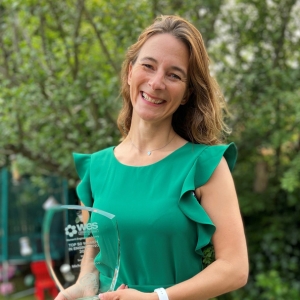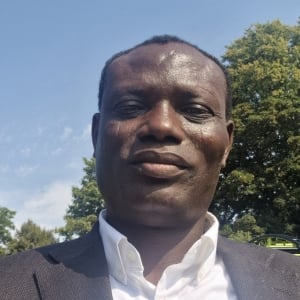


Richard Lee
Engineering director, Anglian Water’s @one Alliance
Expertise
Design, Construction, WaterLocation
East of EnglandMy highlights
Living and working in the UK, India, Hong Kong, China and New Zealand
Working on the Auckland Airport Expansion Feasibility Study
Becoming engineering director for Anglian Water's @one Alliance
A day in your life
I usually start my day by either walking my dog or going for a run.
As a leader, I dedicate most of my day to checking in with my team to understand their progress, achievements and challenges.
My main focus is developing and delivering our engineering strategy. It covers various changes and improvement initiatives, such as reducing carbon, driving recruitment, retaining staff, innovating and finding efficiencies.
This requires me to engage with many different non-engineering stakeholders on a daily basis.
When I can, I also like to get out onsite across the Anglian Water region to see our projects coming to life and hearing directly from the teams delivering and commissioning them.
Engineering is not just about technical problem solving, it’s about creating solutions that improve the quality of life for communities.
What inspired you to become a civil engineer?
As a child, I was always fascinated by how things work especially the structures and systems that shape our everyday lives.
I had a natural curiosity about the built environment and a deep appreciation for the natural world.
What really captured my imagination were large construction projects like bridges, dams, and tunnels.
Seeing how these massive structures were designed to overcome challenges and serve communities sparked a lasting interest.
We asked Richard…
I would recommend a career in civil or infrastructure engineering because…
I would recommend a career in civil or infrastructure engineering because it offers a unique opportunity to have a meaningful and lasting impact on society.
Engineering is not just about technical problem solving, it’s about creating solutions that improve the quality of life for communities.
Civil and infrastructure engineers design and build the essential systems that support everyday life, such as roads, bridges, water supply networks, and public transport.
These projects not only enhance safety, accessibility, and economic development, but also contribute to environmental sustainability when designed responsibly.
Complete this phrase: I’m a civil engineer, but I’m also...
I’m also interested in and enjoy project management and architecture.
Name one civil or infrastructure engineering myth you’d like to bust.
That we only dig holes and build roads!
How does your role contribute to addressing climate change?
Anglian Water has a goal to achieve net zero carbon.
The journey to that goal includes reducing embodied carbon by 70% and operational carbon by 30% by 2030, against a 2010 baseline.
As the @one Alliance engineering director, I am accountable for our capital programme achieving the carbon targets.
The East of England has the lowest rainfall, the highest economic growth and is at risk of flooding from rising sea levels.
A significant part of our capital programme includes addressing drought, providing sustainable water supplies and protecting our assets from climate change.
For instance, we are developing nature-based solutions as an alternative to traditional engineering.
How does your role contribute to making the industry more diverse and inclusive?
Over the next two years we need to grow our engineering team from approximately 400 to 550.
To achieve this, we’re supporting local STEM events to encourage people to join the sector.
We're also supporting apprentices and actively recruiting engineers from India and Europe.
We are developing new nature-based solutions and digital capabilities, which we hope will attract more diverse people to our team and industry.
What role does digital technology play in your job?
The @one Alliance data, digital and innovation (DDI) team form part of the overall engineering organisation.
This demonstrates the significance we place on digital and engineering working together.
We are on a journey to produce BIM models for all aspects of our delivery to achieve data efficiencies and improve collaboration.
We are actively exploring how we can automate some of our design and production activities.
What motivated you, or is motivating you, to become professionally qualified?
My main motivation to become a Chartered Engineer was professional recognition.
What I hadn’t appreciated at the time is how being a Chartered Engineer and a member of the ICE would allow me to work overseas and be affiliated with other institutions.
What does being professionally qualified with the ICE mean for your career?
Being professionally qualified with the ICE has supported me to live and work in other countries, including India, Hong Kong, China and New Zealand. It has also allowed me to fulfil certain roles to support my career progression.
How did the ICE and your employer support you to become professionally qualified?
My employer, Mott MacDonald, had an approved ICE training programme.
My employer and the ICE regional team actively supported my training and ensured I obtained the necessary experience to ultimately achieve chartership.
How has being a member helped your career?
Local, national and international networking, training and development and knowledge sharing.
What’s the biggest/most complex thing you’ve made out of Lego?
VW Camper Van – very fiddly and easily dismantled by a child!
Richard's career path
- GCSEs
- A-levels
- Master's degree
- Site engineer
- Design engineer
- Project design management
- Design director
Major projects
- Keldgate Water Treatment Works as design manager at Mott MacDonald Bentley
- Anglian Water AMP5 & AMP6 Biosolids Programme as civil design manager
- Hong Kong Organic Resources Treatment Facility II Feasibility Study as project manager
- Hong Kong Airport Third Runway, Automated People Mover and Baggage Handling System Design as assistant project manager
- Rotoiti | Rotomā Wastewater Treatment Plant, New Zealand as design manager
- Auckland Airport Expansion Feasibility Study, New Zealand as project manager