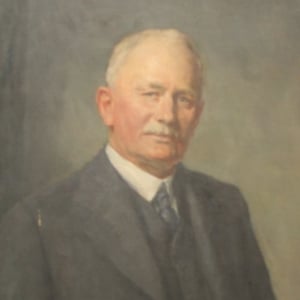


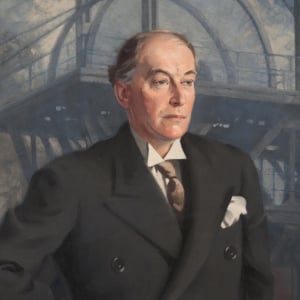
Sir Richard Redmayne
Mining engineer and ICE past president
Expertise
Bridges, Rail, GeotechnicalLocation
United KingdomMy highlights
First to hold the office of chief inspector of mines in Great Britain
Committee member for the enquiry into the economic effect of an eight-hour workday for coal miners
Worked on the Coal Mines Act of 1911, which enforced higher safety standards
Why you might have heard of Sir Richard Redmayne
Sir Richard Redmayne was a mining engineer who played an important role in shaping the coal mining industry in the UK in the early 1900s.
As professor of mining at the then new University of Birmingham, he pioneered teaching methods that he’d observed in North America. He set up a department that had an ore-dressing lab and a model underground coal mine for practical learning – a first in Britain.
He offered expertise on several government inquiries into the safety and management of collieries, or coal mines. For example, he was part of the committee which delved into the economic effects of implementing an eight-hour workday for coal miners, which led to the Eight Hour Act.
He then became the chair of the royal commission that studied the causes of accidents in mines, and made recommendations on how to prevent them, which were incorporated into law.
Sir Richard resigned from his post as professor in 1908 to join the UK government as the first chief inspector of mines, responsible for safety in the industry. To this end, he worked with Sir Malcolm Delevingne on the Coal Mines Act of 1911.
He was the 70th president of the Institution of Civil Engineers, the first time the role was given to someone from, in his words, “the Cinderella of engineering: coal mining”.
You may also recognise Sir Richard’s surname from pop culture or sports. Two of his great grandsons are Eddie Redmayne, actor, and James Redmayne, cricketer.
The future of the coal industry is bound up completely with the future of industry in general, and that future is becoming more and more an international question.
Are the nations of the world, having engaged in the greatest war in history, now so set in their ways that there must inevitably follow an equally disastrous economic war?
Or may we hope that the present welter of conflicting interests will in due time cease to confuse our world-politicians and masters, so that some way may be found of reverting by mutual consent to freer world-trade conditions, to the lasting benefit of the common men of all nations?
Sir Richard Redmayne, from his 1934 presidential address
Learn more about Sir Richard
Education
Sir Richard Redmayne was educated privately at the Durham College of Science in Newcastle.
He then became an apprentice to William Armstrong, a well-known mining engineer, and trained at Hetton Collieries (coal mines).
Career
After five years at Hetton Collieries, Sir Richard became under-manager of the Elemore Colliery, supervising mining operations.
In 1891, he moved to Natal, South Africa, where he worked as general manager of a coal mine. He also conducted surveys and wrote reports on mining properties in the area.
He returned to the UK in 1893 and managed Seaton Delaval Collieries in Northumberland, north-east England.
In 1902, he became professor of mining at the new University of Birmingham, receiving a Master of Science degree.
He pioneered practical ways of teaching that simulated working conditions so that students could become familiar with their future professional environments. His mining department included an ore-dressing (mineral processing) lab and a model underground coal mine.
While a professor, Sir Richard lent his expertise to several official inquiries into coal mining industry. He was appointed commissioner for several inquiries into colliery disasters, including those at Hamstead, Maypole, West Stanley, Wellington, among others.
In 1908, Sir Richard resigned from the university to join the UK government as the first chief inspector of mines. He supervised the work of district inspectors, advised the secretary of state, and conducted inquiries into mining disasters.
He was also:
- Chair of the Coal-mining Organization Committee (1015-1916)
- Chief technical assistant to the Controller of Mines (1916-1920)
- Vice-chair of the Coal Distribution Committee (1916-1920)
- Member of the Coal Conservation Committee (from 1917)
- Member of the Fuel Research Board (from 1917)
In 1919, he resigned as chief inspector or mines to dedicate his time to the Imperial Mineral Resources Bureau, which he chaired until 1935, when the bureau merged with the Imperial Institute. Today, it’s known as the Commonwealth Education Trust.
He also worked as a consulting mining engineer.
Personal life
Sir Richard was born on 22 July 1865 in Low Fell, County Durham, UK.
In 1898, he married Edith Rose and had one son and two daughters.
He was made a Companion of the Order of the Bath (CB) in 1912 and a Knight Commander of the order two years later.
In 1917, he was made a Companion of the Order of St John of Jerusalem, and in 1918, a Chevalier of the Legion of Honour by the French government.
He died at his home in Hertfordshire on 27 December 1955, aged 90.
He is also the great grandfather of actor Eddie Redmayne and cricketer James Redmayne.
Sir Richard was said to possess charm, a "keen" sense of humour and to be a "superb" storyteller.
Notable publications
Sir Richard wrote several articles for technical and professional journals as well as a few books on mining, notably:
- Colliery Working and Management (co-author, 1896)
- Modern Practice in Mining (five volumes, 1908-1932)
- Men, Mines and Memories (autobiographical, 1942)
Membership of societies
- Elected member of the ICE in 1908
- Member of the ICE Council in 1924
- Became vice president in 1931
- Was president from 1934 to 1935
- Member and later president (1916) of the Institution of Mining and Metallurgy (now the Institute of Materials, Minerals & Mining [IOM3])
- Fellow of the Geological Society
- First president of the Institution of Professional Civil Servants
- Honorary member of the Institution of Mining Engineers (now merged with IOM3)
- Honorary member of the Royal Institution of Chartered Surveyors