

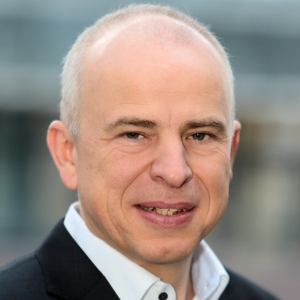
Ulrich Klotz
Managing partner, Smoltczyk & Partners
Expertise
Design, Geotechnical, Environmental ManagementLocation
GermanyMy highlights
Designing the drill and blast tunnel excavation of the largest motorway tunnel in Germany
Achieving my PhD at City University in London in 2000
Being awarded the Telford Medal by the ICE
I would recommend a career in civil or infrastructure engineering because…
Being involved in building and shaping our built environment provides plenty of technical challenges.
Being able to see the result of this work for years to come gives great satisfaction.
We also have a great responsibility regarding the sustainability of our projects and can contribute greatly to this area for the benefit of future generations.
What inspired you to become a civil engineer?
When I left school, I started an apprenticeship as a carpenter and have stayed in the construction industry ever since.
I moved on the study civil engineering as I always liked maths and sciences.
At the University of Applied Sciences in Stuttgart, I met Professor Hans-Henning Schmidt, who inspired me to do my thesis in geotechnics.
I've remained in this field to this day, obtaining a master’s degree and PhD along the way.
We asked Ulrich…
Complete this phrase: I’m a civil engineer, but I’m also...
A leader in our profession, as I’m responsible for the management of large corporate organisations in the construction industry.
Name one civil or infrastructure engineering myth you’d like to bust.
That in civil or infrastructure engineering you only do technical work.
How does your role contribute to addressing climate change?
We assess our design recommendations for their impact on climate change. We aim to reduce their carbon footprint as much as possible.
How does your role contribute to making the industry more diverse and inclusive?
At our company, we hire engineers based on their qualifications. Within our staff of 45 people we have around 10 nationalities.
What role does digital technology play in your job?
We collect data (from field and lab tests, borehole logs, etc) and make it accessible for all new projects.
We use 3D and 5D building information modelling (BIM) and geographic information systems (GIS) to integrate our data into the design process of every project.
How has being a member helped your career?
When I joined the ICE as student member in 1990, I always read the NCE magazine.
One day in 1995, I spotted a job advertisement for a position as research assistant at City St George's University in London. I applied and got the job.
Obtaining my PhD at the university changed my life and enabled my career to evolve as it did!
I also enjoy interacting with other ICE members in Germany. Reading the ICE's publications keeps me informed about interesting projects, the latest research and potential future challenges.
What’s the biggest difference you’ve noticed from studying to working in engineering?
There's a lot more pressure to get things done. You also feel the responsibility if you're involved in designing projects and carrying out calculations.
Also, the commercial aspect is new and very important for the success of every project and the entire company.
What’s the biggest/most complex thing you’ve made out of Lego?
I prefer working with wood. The largest thing I built was scale model of an entire roof structure of a house on a scale of 1:10 and a wooden staircase with a scale 1:5.
How has achieving Fellowship impacted your career?
It's certainly a great responsibility to move things forward in our profession!
Ulrich's career path
I started with an apprenticeship as a carpenter. I then studied a bachelor's degree in civil engineering, followed by a master's and PhD in geotechnical engineering.
I started work as a geotechnical engineer, taking the management corporate route to become director and board member of the largest construction group in Germany.
Major projects
- Engelberg Base Tunnel in Stuttgart, Germnay
- DTSS T-06 Deep Sewer Contract, Singpore
- Shell GTL Plant in Ras Lafan, Qatar
- Dubai Eye, Dubai
- Stuttgart 21, Main Station in Stuttgart