





Year
1963, 1980 & 1991Duration
4, 9 & 3 yearsCost
£133 millionLocation
United KingdomProject achievements
Connected communities
Enables thousands of people to cross the Thames in the east
Economy boosted
Local economy has benefited. Bridge itself generates cash through toll fees
Used engineering skill
Over time build tunnels and a bridge to cross the river Thames
Cross the River Thames and connect to one of the busiest motorways in Europe
The Dartford crossing – known as the Dartford Tunnel until 1991 – carries the A282 over the River Thames.
It conveys the road between Dartford to the south and Thurrock in the north, connecting the counties of Essex and Kent. It also links to the M25 London Orbital motorway, one of the busiest in Europe, at both ends.
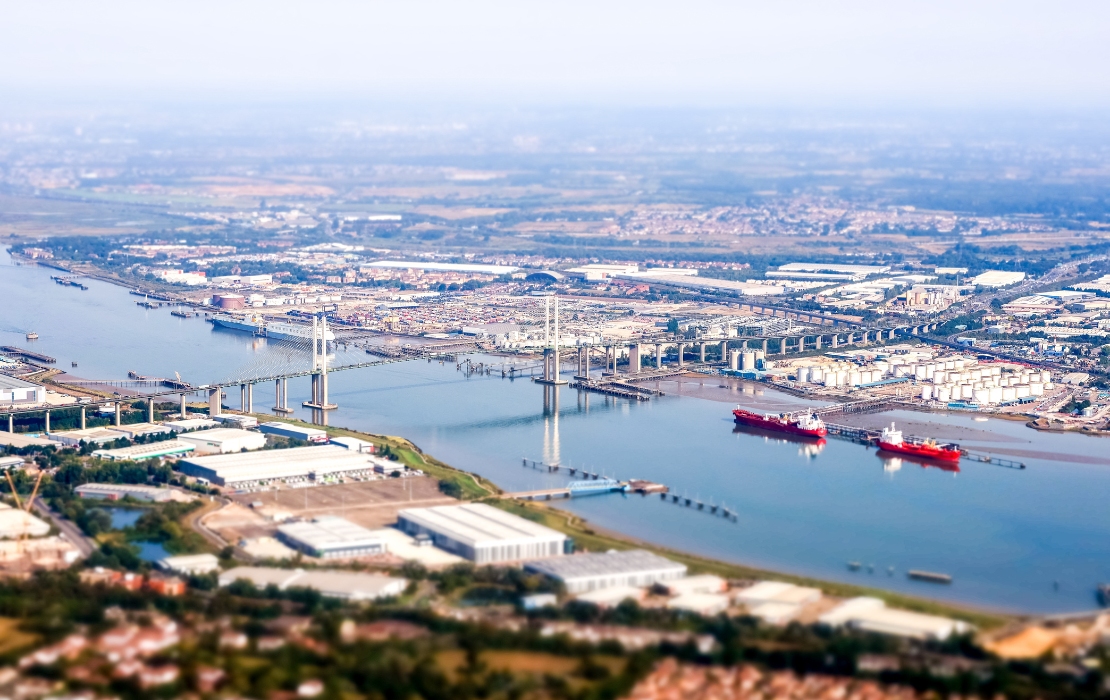
The crossing is made up of two tunnels and the Queen Elizabeth 2, or QEII Bridge.
It's the only fixed crossing of the Thames to the east of Greater London and the busiest estuarial crossing in the UK. Up to 180,000 vehicles use it every day.
The crossing opened in stages: the west tunnel in 1963, the east tunnel in 1980 and the bridge in 1991.
The two tunnels are 1,430m long. The QEII Bridge is 137m high with a main span of 450m. It's a cable-stayed bridge – one with towers with cables that support the bridge deck.
The crossing carries far more vehicles daily than the 135,000 it was designed for. This means it's often heavily congested, particularly when tunnel or bridge lanes are closed because of bad weather or accidents.
There's always been a toll to use the crossing. The toll booths were removed in 2014 and replaced with a number plate recognition system. Cars and other small vehicles currently cost £2.50 to cross. Motorbikes are free.
Did you know …
-
The Dartford crossing generates about £209m per year. About £73m came from fines issued for unpaid charges.
-
The crossing makes the most in toll revenues in the UK. The M6 toll road in the West Midlands is in second place with a revenue of £53.7m per year.
-
Motorist groups argue that there shouldn't be a charge for the Dartford crossing at all as the infrastructure was paid for years ago.
Difference the crossing has made
The Dartford crossing has made it much easier for vehicles in the area to get across the Thames. The nearest alternatives to Dartford are the Blackwall and Silvertown tunnels (about 9 miles west), and the Woolwich ferry (about 10 miles west).
High vehicles have even less choice than cars and small lorries. When the bridge is closed vehicles over 5m high are diverted round the M25 in the opposite direction.
The Dartford crossing has made the movement of goods and people easier in the area and contributed to the local economy.
How the work was done
Engineers started work on the west tunnel in 1936 but construction stopped with the outbreak of World War 2.
Digging restarted in 1959 with the project team using a tunneling shield to excavate the tunnel. A tunneling shield is a large circular steel frame with pockets. Each pocket had a man with a spade who dug out the earth in front of him.
Work was delayed on the east tunnel through lack of money until 1974 when the European Economic Community (now the EU) provided cash for the project.
The 2.87km long QEII Bridge has two steel and concrete masts that are 84m tall. The bridge's deck (roadway) hangs from 56 pairs of cables strung from the masts.
The project team used two reinforced concrete caissons to support the river piers. The caissons - prefabricated concrete structures – were built in the Netherlands and towed across the North Sea to the construction site.
Engineers sank the 85,000 tonne caissons into place and filled them with concrete as part of the bridge's permanent structure.
People who made it happen
- Client: the British government
- Bridge designer: Helmut Homberg
- Bridge project manager: Mott MacDonald


