





ICE President Professor Jim Hall explains the challenges that coastlines face and explores possible solutions.
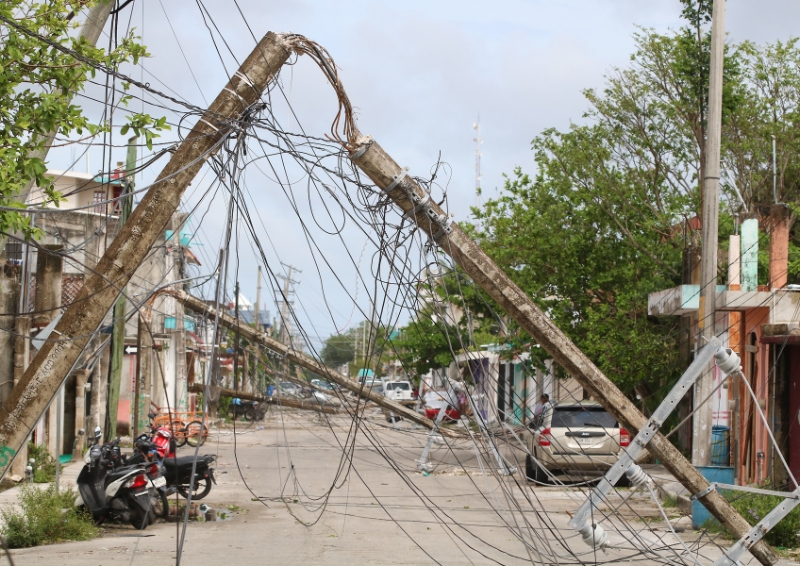
Many islands in the Caribbean were thrown into a frenzy as they declared a state of emergency in June last year.
Flights were cancelled, schools got shut down, and several people began to take shelter.
A storm was coming.
And it was early. The Atlantic hurricane season normally peaks around this time of year once the ocean heats up over the summer.
But the water on Hurricane Beryl’s path had been much warmer than usual, and as it picked up strength along its journey, it reached wind speeds of more than 257km/h (160mph).
It ripped through the Caribbean, destroying homes and businesses as it then made its way north towards parts of Mexico and the US.
It left devastation in its path, and many lives were lost.
Change how the industry works
Past ICE Coasts, Marine Structures and Breakwaters attendees have told us that they really value the lessons they're able to take into their roles.
Do you have insights you'd like engineers and other practitioners to start applying today?
Submit an abstract to present at the 2027 conference. The deadline is 18 September.
Share what you knowCoasts are on the frontline
Beryl wasn’t the only hurricane that reached the highest intensity classification last year (category 5) – with Milton bringing destruction to Florida in the US in October.
This year, Hurricane Erin also reached the fifth category unusually quickly.
The picture is clear: coasts are on the frontline when it comes to climate change.
And it comes down to a warming planet.
Climate scientists at Imperial College calculated that Hurricane Beryl was intensified by higher sea surface temperatures.
And it’s worth noting that climate change is also making rainfall more extreme, which can result in rapid flooding. This was the case during Hurricane Harvey in the US in 2017.
Watch Professor Jim Hall’s speech to the ICE Coastal Management conference
Coastal Management 2025 took place in Bristol on 16-18 September.
The event assembled professionals working for seaboard communities worldwide to share their insights on building and maintaining resilient coastal infrastructure.
Understanding coastlines
The coastline emerges from the interaction between sediments (solid materials, such as rocks and minerals) and the sea. Crucially, sediments offer a barrier between us and the ocean.
Coastlines are naturally resilient.
Their landforms and ecosystems ‘roll’ backwards away from the sea, and upwards.
Hard rock coasts adjust very slowly, while the ‘softer’ sedimentary coasts of sands, muds and gravels are very dynamic and adjust all the time.
Challenges arise when we restrict how much sediment can reach the coast (e.g. by building seawalls on eroding coasts, or dams on rivers).
We can starve beaches and make them steeper.
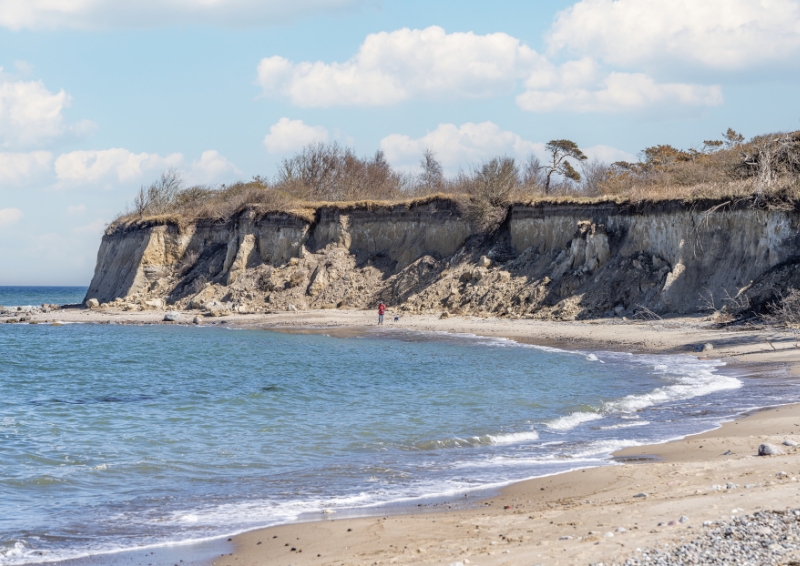
This is happening across 63% of the beaches in England and Wales, as the Committee on Climate Change (CCC) has reported.
This means that the natural protection to coastal communities and infrastructure is being eroded, and larger waves can get closer to the coast.
A look at sea levels
Sea levels have been rising since the coldest point in the last Ice Age.
21,000 years ago, sea levels were about 130m lower than they are now. As our planet emerged from the last Ice Age, sea levels rose. So 7,000 years ago, they were only about 3m lower than they are now.
All of human civilisation has existed in a period in the Earth’s history of relatively stable sea levels.
The world’s great deltas, where about 360 million people now live, were all naturally created over recent thousands of years.
Oceans are responding to global warming
You have to squint at a graph of sea level over the last couple of hundred years to see a slow acceleration this century.
That’s quite different to the famous ‘hockey stick’ graph of global temperatures which takes off in the latter part of the last century.
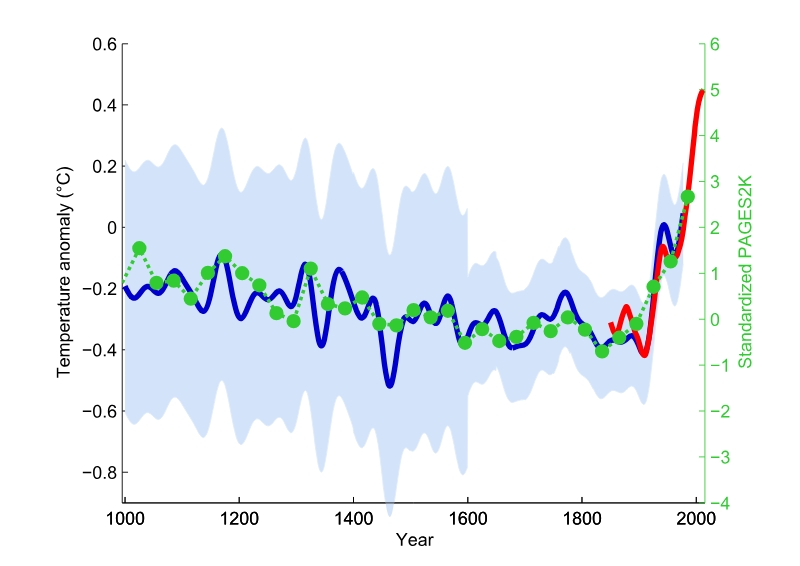
But the oceans are slow-responders to a warming atmosphere – it takes them a long time to absorb heat and expand, and for glaciers and ice sheets to melt.
But that melting is now surely taking place – you just need to go to glacier-covered mountains to see the sad sight for yourself.
Slow to start, but slow to stop
Projections of sea level rise during this century might also be considered undramatic.
The latest from the International Panel on Climate Change (IPCC) are for a rise of 0.5-1m by the end of the century.
However, the top end could be a lot higher if poorly understood processes of icesheet melting speed up quickly.
But the process of sea level rise is relentless and it’s as slow to stop as it’s been to start.
Even with dramatic cuts in greenhouse gas emissions to slow global warming, sea levels will still be increasing at the end of this century.
In the meantime, coastal communities will have to cope with more intense storms, waves and rainfall.
How are coastal communities around the world going to cope?
I think of the coast as falling into three categories: first, there are the natural and semi-natural coastlines. To allow these coasts to be naturally resilient, they need space.
We can remove the barriers that are blocking coasts from adjusting through far-sighted land use plans.
Then, there are the dense urban areas, where a lot of money is going to have to be spent to engineer higher and more resistant defences.
There are soft engineering solutions, such as recharging beaches and restoring naturally resilient ecosystems (such as mangroves).
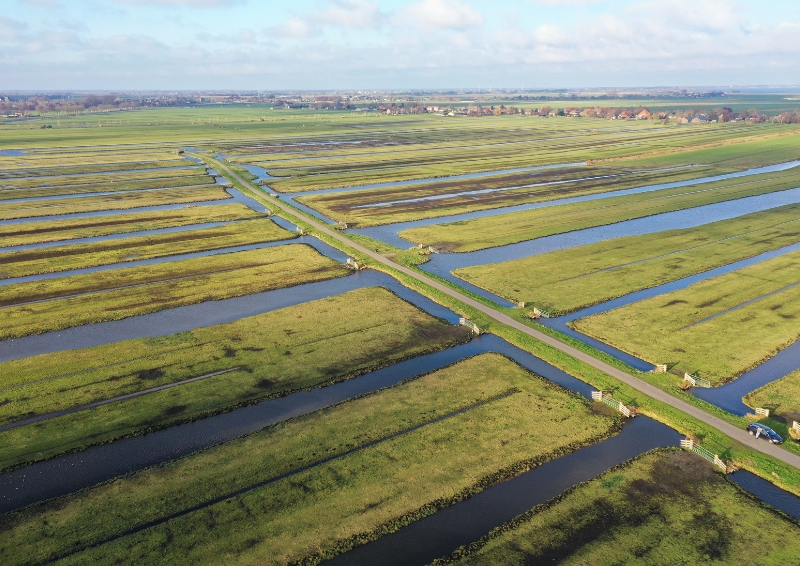
There are also hard engineering options, such as seawalls. But the cost of these is high and can only really be justified in highly populated spaces, such as the Netherlands, where the lowest land is 7m below sea level.
Choosing to build polders, as was done in the coastal zone of Bangladesh, can also lock-in patterns of development and commit future generations to the costs of ever-higher protection… or relocation.
Small towns and villages
The hardest decisions are faced in the case of small towns and villages, where there aren’t the resources to pay for protection in the long term.
A paper by my friends Paul Sayers, Andres Payo and colleagues estimates that on about 30% of England’s coastline, which is currently protected and where the policy is to ‘hold the line’ (not allow it to erode any further), it won’t be affordable to continue to do so.
There are between 120,000 to 160,000 properties on these stretches of coastline, whose householders will face growing uncertainty about the future.
Adapting the coast in these places will require honest conversations with them about what the future holds.
Thinking long-term about adaptation
Change doesn’t happen immediately and everywhere.
But politicians need to be ready to make long-term adaptation plans, so householders and businesses know what the future holds.
The greatest challenge is going to be maintaining the quality of life of these communities while they adapt to the inevitable.
Watch Professor Jim Hall's Presidential Address

You may also be interested in

- Type
- News
RAEng names 4 leading ICE members as Fellows
The Royal Academy of Engineering (RAEng) has announced 75 individuals who are making outstanding contributions to the profession.

- Type
- Awards and competitions
Accessibility-first railway revamp wins at the ICE London Awards 2026
Held on 30 September 2026 at the ICE headquarters, One Great George Street, the awards recognised impactful infrastructure projects across the city.

- Type
- ICE Community blog
When every consultancy looks the same, where does innovation go?
There’s no shame in making a name for yourself in a consolidated industry, writes Steven Yule, ICE country representative for the UAE.