


ICE Knowledge Hub
Access the very latest and best CPD content to help you grow your knowledge and skills.
Sign in now

Treating nature as critical infrastructure could transform the UK’s economy, writes Professor Anusha Shah and Jyoti Sehdev.

For far too long, nature has sat at the margins of economic policy and infrastructure delivery.
Every system we depend on relies on nature.
Clean water, healthy soils and thriving ecosystems underpin resilient growth, energy and food security, decarbonisation, climate adaptation and healthy communities.
Despite this, nature remains insufficiently embedded within the policies, investment frameworks and infrastructure decisions that will determine the resilience, prosperity and wellbeing of future generations.
While England’s biodiversity net gain policy has positioned the UK as a global leader in embedding nature within development, important lessons are already emerging.
Nature cannot be treated simply as a compliance exercise or a percentage target.
Ecosystem services must become integral to how we plan, design, build and maintain our built environment and infrastructure.
This presents a major opportunity for government, industry and the financial sector.
At a time when the UK is rightly focused on growth, embedding nature into development and investment decisions can unlock investment, reduce long-term costs and create healthier, more competitive places.
The record-breaking heat experienced across the UK in May, hot on the heels of the Climate Change Committee’s latest warnings on adaptation, reinforced how exposed our infrastructure is to a changing climate.
Investing in nature is essential to improving resilience and maintaining the services we rely on every day.
Flooding, overheating, water stress and biodiversity decline are placing increasing pressure on infrastructure networks across the country.
The impacts are already being felt across supply chains, public services and communities, with growing consequences for productivity, public finances and long-term prosperity.
Traditional approaches alone will not deliver the resilience needed for future generations.
But working with and alongside nature can.
Healthy catchments improve water resilience. Urban greening cools cities and improves public health. Wetlands reduce flood risk. Biodiverse and climate-resilient landscapes strengthen communities and local economies.
The challenge is that many investment and policy decisions still fail to fully recognise the long-term economic value of nature and the ecosystem services it provides.
In resource-constrained times, working with nature can be the smartest way to deliver multiple benefits from a single investment.

It is this opportunity and urgency that sits behind the work of the Cross Built Environment Climate & Nature Forum.
What began during Professor Anusha Shah’s ICE presidency has evolved into a powerful cross-sector coalition. It’s bringing together institutions, industry leaders and policymakers from across the built and natural environment professions to drive practical action and systems-level change.
Ahead of World Environment Day, the forum launched the #NatureIsGrowth campaign, which ran between 26 May and 2 June 2026.
The campaign united organisations, practitioners, policymakers and communities around a simple but urgent message: nature-positive infrastructure is essential for resilient growth, healthier communities and long-term national prosperity.
The campaign generated over 65,000 social media views and was brought to the attention of over 300,000 members across the PEIs that were involved.
Its true success, however, extended beyond these figures. The campaign attracted engagement from influential voices across business, engineering, sustainability and public life, creating valuable cross-sector dialogue and raising the profile of nature-positive growth with audiences both in the UK and internationally.
Growth that ignores nature is not sustainable.
It carries hidden liabilities: flooding, overheating homes, biodiversity decline, rising health pressures, food security risks and supply chain disruption.
These costs eventually emerge elsewhere through rising insurance premiums, increasing public expenditure, economic disruption and reduced quality of life.
Consequently, the financial sector is increasingly valuing nature-positive investment.
People often view nature as a constraint on growth, when in reality, it underpins it.
We tend to take nature for granted until it's damaged or gone. Yet every business, every community and every economy depend on healthy natural systems.
The real question isn't whether we can afford to invest in nature, but whether we can afford not to.
Deborah Meaden, entrepreneur, investor and environmental advocate
Natural assets are commonly expected to deliver public benefits without the investment frameworks routinely applied to traditional infrastructure.
Nature should be recognised as critical infrastructure and protected, restored and regenerated accordingly.
It should also be recognised as an asset, with its value reflected in financial balance sheets.
And like traditional infrastructure, such as roads, pumps and buildings, natural assets should be included on asset registers and backed by long-term investment and maintenance.
Encouragingly, organisations such as National Highways are already beginning to do this.
Nature-positive infrastructure – alongside nature-based solutions, ecological restoration, digital innovation and approaches inspired by nature, such as biomimicry – must become central to national infrastructure strategy.
The #NatureIsGrowth campaign demonstrated a shared recognition that nature recovery and economic growth are mutually reinforcing.
The campaign showed that project teams across the UK are already delivering nature-led and climate-resilient solutions.
Examples such as the Eden Project in Cornwall, the Clyde Waterfront regeneration programme in Glasgow and Belfast’s Connswater Community Greenway and the Barbican estate show how nature-based investment can support economic regeneration, attract visitors and improve quality of life.
So what we have learned is clear: nature is not at odds with growth. Nature enables growth.
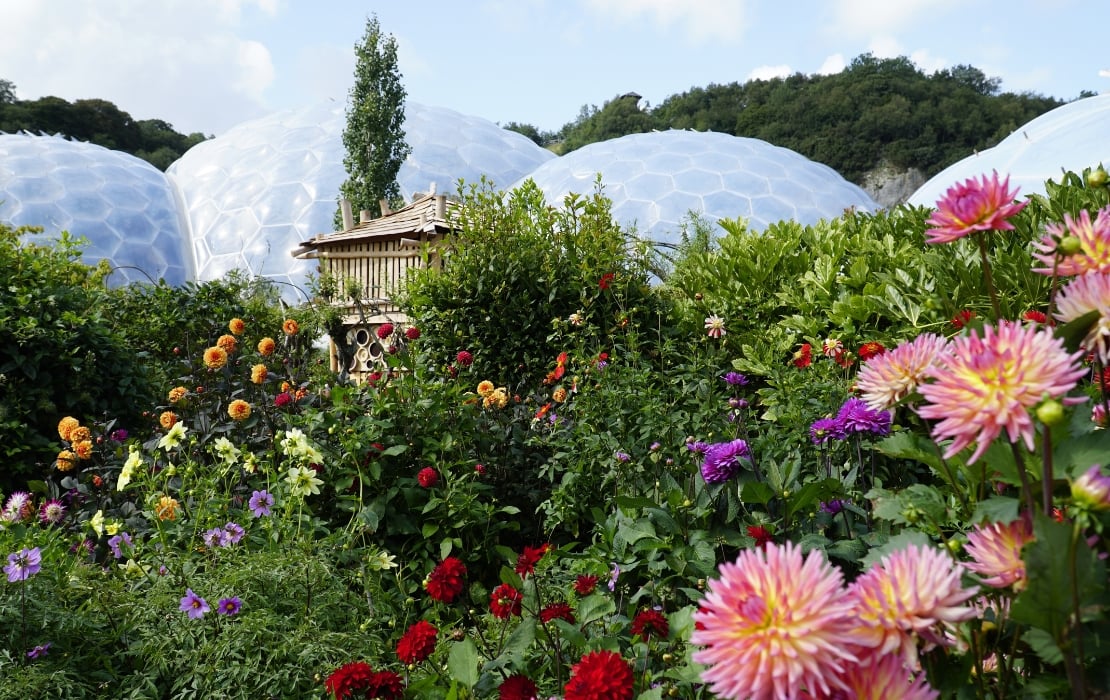
The momentum behind nature-positive infrastructure is real and growing.
The opportunity now is to scale existing innovation and delivery through joined-up policy, procurement and investment frameworks that reward long-term value, resilience and environmental performance.
Integrating nature into design and construction delivery from the earliest opportunity reduces risk, improves resilience and creates significant social value for communities.
At Costain, we have built this approach into our Nature Positive Plan, a practical commitment to embed environmental thinking into our design, project delivery and supply chain.
Alex Vaughan, CEO at Costain Group Plc
The decisions made in this decade will shape the resilience, prosperity and wellbeing of future generations.
The government now has an opportunity to speed up a new model of growth – one that recognises the vital role that nature plays.
Nature-positive solutions already exist. Scaling them will require policy, procurement and investment frameworks that work together to reward the long-term value, resilience and sustainability these solutions offer.
This work is already underway, including the ongoing development of the X29 clause within NEC contracts helping to turn nature-led delivery from aspiration to reality.
The built environment sector has the capability and responsibility to lead delivery on the ground.
The growing momentum behind the #NatureIsGrowth campaign shows that infrastructure professionals are willing and ready to support this transition.
The sector is not starting from scratch. The conditions for change are here.
We need to grab this opportunity with both hands and understand that nature is not holding growth back. It’s what makes it possible.
The review forms part of a wider programme to reform building safety following the Grenfell Tower Inquiry.
At the latest UK Real Estate Investment and Infrastructure Forum (UKREiiF), the ICE spoke about the need to stick to the plan and get on with delivery.
Giulia Cere, project manager at Hinkley Point C, explains how this sustainable source of energy works and explores the pros and cons.

