





What do romance novels, sticky rice and beer bottles have in common? Civil engineering, of course!
Look around any construction site and you'll probably spot plenty of familiar materials. Look through history, however, and things get much stranger.
Builders have experimented with all kinds of unexpected resources in their search for stronger, cheaper or more readily available materials.
The results include world-famous landmarks, record-breaking structures... and a few projects that sound almost too unusual to be true.
Here are nine of the weirdest materials ever used in construction.
Credit where credit's due
Do you know of a person or project deserving of recognition among the wider civil engineering community?
Why not nominate them for any of the 2026 ICE Awards? The nominations deadline has been extended to 11.59pm on Thursday 8 October 2026.
1. Chalk
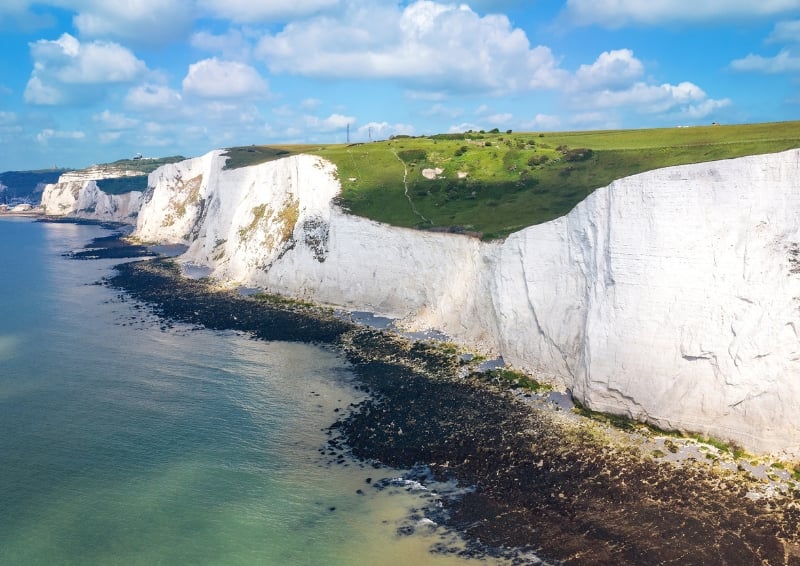
At first glance, chalk doesn’t sound like much of a construction material. It’s soft, crumbly and probably better known for its use in classrooms and cricket pitches.
But chalk has shaped some of Britain’s biggest engineering projects.
Millions of years ago, microscopic marine organisms settled on the seabed, eventually forming the vast chalk deposits that now stretch across southern England. Today, engineers regularly encounter chalk when building tunnels, railways and foundations.
The Channel Tunnel, for example, was bored through chalk marl beneath the English Channel. This is largely because it was stable enough for tunnelling but also relatively easy to excavate.
Engineers working on HS2 and London’s Crossrail project have also had to navigate complex chalk geology beneath the southeast of England.
Why does chalk still challenge engineers?
Hear leading experts discuss four decades of lessons learned from piling and foundation engineering in chalk at the ICE John Mitchell Lecture 2026.
2. Sticky Rice

Rice belongs in a bowl, not in a wall. Or so you’d think.
More than 1,000 years ago, builders in China discovered that mixing sticky rice soup with lime mortar produced an incredibly strong construction material. The resulting mortar was tougher and more water resistant than traditional lime mixtures.
The unusual recipe was used in city walls, bridges, pagodas and sections of the Great Wall of China.
Remarkably, some structures built with sticky rice mortar have survived centuries of use, weathering and even earthquakes.
3. Romance novels

Once upon a time, millions of romance novels found their happily ever after... beneath a motorway.
During construction of the M6 Toll in the early 2000s, around 2.5 million unsold Mills and Boon books were recycled and used as part of the road’s foundations.
The books were pulped and incorporated into embankments, helping to stabilise the route while giving the unwanted paper a second life.
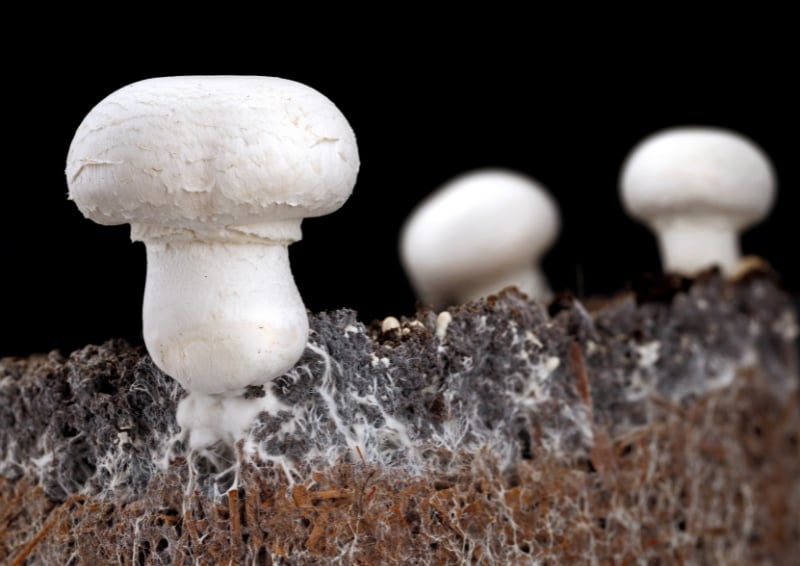
4. Mushrooms
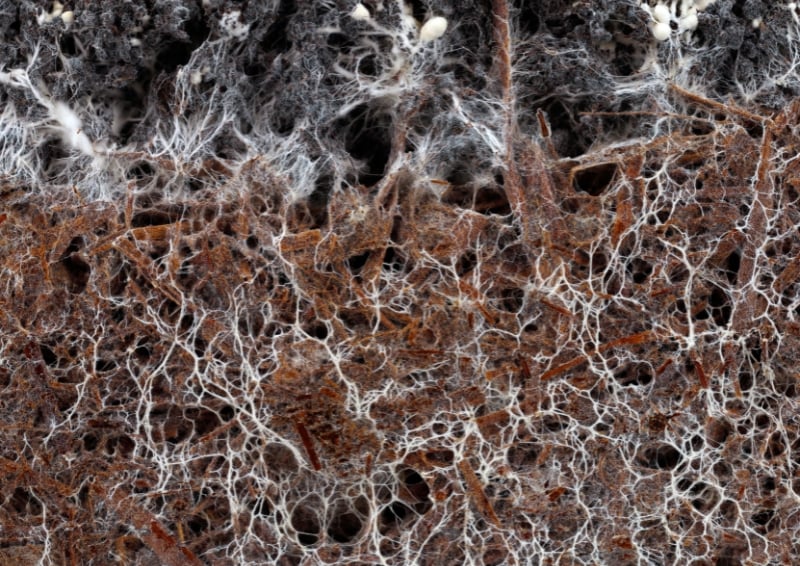
Researchers have been experimenting with mycelium, the root-like network that sits beneath mushrooms.
When grown in moulds, mycelium forms lightweight materials that are surprisingly strong and require very little energy to produce.
Experimental buildings and pavilions made from mycelium have appeared around the world. The Growing Pavilion in the Netherlands showcased walls and panels grown from natural materials.
Another notable example is a striking mycelium installation created by architects at MoMA PS1 in New York.
Researchers also continue to investigate its potential for insulation panels and low-carbon building products.
One day, parts of our buildings could literally be grown rather than manufactured... and some engineers think this will transform the future of construction.
5. Salt
At Bolivia's Palacio de Sal, everything—from the floors and walls to the furniture and ceiling—is made of salt: https://t.co/SDwlAAnwfx pic.twitter.com/ayCrckiVV4
— ForbesLife (@ForbesLife) November 7, 2018
On the edge of Bolivia's Salar de Uyuni, the world's largest salt flat, stands a hotel built from around one million blocks of salt.
The Palacio de Sal uses salt sourced from the surrounding landscape for its walls, floors and even some of its furniture.
While unconventional, salt blocks are surprisingly durable in the region's dry climate and provide natural insulation.
In a place where salt is one of the most abundant resources available, it proved to be a practical building material as well as a memorable one.
6. Bamboo

Across parts of Asia, Africa and South America, bamboo has been used in construction for centuries.
Despite being a grass rather than a tree, bamboo is remarkably strong. Its high strength-to-weight ratio and natural flexibility have made it a popular material for everything from homes and bridges to scaffolding.
It also grows incredibly quickly, making it a renewable alternative to more resource-intensive building materials.
The Arc at the Green School in Bali, Indonesia, is the world's largest bamboo arch structure, featuring a series of intersecting arches that stand 14m tall and span 19m. The project demonstrates how an ancient building material is being used to create ambitious modern architecture.
7. Beer bottles

In the 1980s, Buddhist monks at Wat Pa Maha Chedi Kaew in Thailand came up with an unusual solution to a growing waste problem: build with it.
Local communities were encouraged to donate their empty bottles, and the temple was eventually constructed using more than one million green Heineken and brown Chang beer bottles.
The glass was used throughout the complex, from the temple's walls and towers to decorative mosaics made from bottle caps.
The idea proved so successful that the monks went on to build additional structures, including a crematorium, prayer hall, water towers and living quarters.
It's a striking example of how a common waste material can be transformed into a durable construction resource.
8. Ice and snow

Every winter, builders in northern Sweden construct a hotel from a material that most of us spend the season trying to avoid.
The Icehotel is rebuilt each year using thousands of tonnes of ice harvested from the nearby Torne River. It also uses ‘snice’, a specially developed mixture of snow and ice that is strong enough to support the structure and many of its intricate designs.
The material provides both the structure and the design, with artists carving everything from bedrooms to bars directly into the ice.
Since opening in 1989, the Icehotel has become one of Sweden's most famous attractions, welcoming guests from around the world to sleep in rooms made entirely from frozen water.
By spring, the structure melts back into the river, before being rebuilt again the following winter.
9. Seaweed
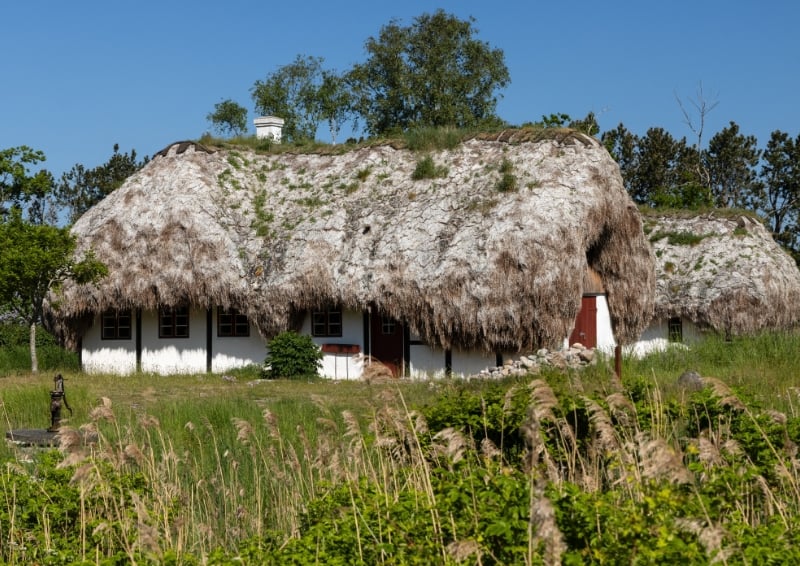
On the Danish island of Læsø, traditional houses were built with roofs made from eelgrass, a type of seagrass that was gathered from the shoreline.
Some of these seaweed roofs are hundreds of years old and remain remarkably well preserved. Their longevity is partly due to seaweed's natural resistance to rot, mould and pests.
Today, interest in seaweed as a construction material is growing again.
Designers and researchers are exploring its use in insulation products and low-carbon building materials because it is renewable, biodegradable and can help store carbon during its lifetime

Sustainable Development Goals:
You may also be interested in

- Type
- Civil Engineer blog
Linking data to value: 5 priorities from the ICG's data and digital benchmarking report
The Infrastructure Client Group's 2026 benchmarking survey shows progress, but greater focus is needed on value, data quality and delivery outcome.

- Type
- ICE Community blog
What's the foundation of flood resilience? Information
ICE President David Porter explains why being informed about flood risk is so important for the public and civil and infrastructure engineers.

- Type
- Awards and competitions
It’s electrifying! South Wales Metro track transformation bags top award
The electrification of the Core Valley Lines impressed the judges at the 2026 British Construction and Infrastructure Awards.