





As the M25 and QEII Bridge mark major milestones, we reflect on the lasting value of the connectivity these projects enable.
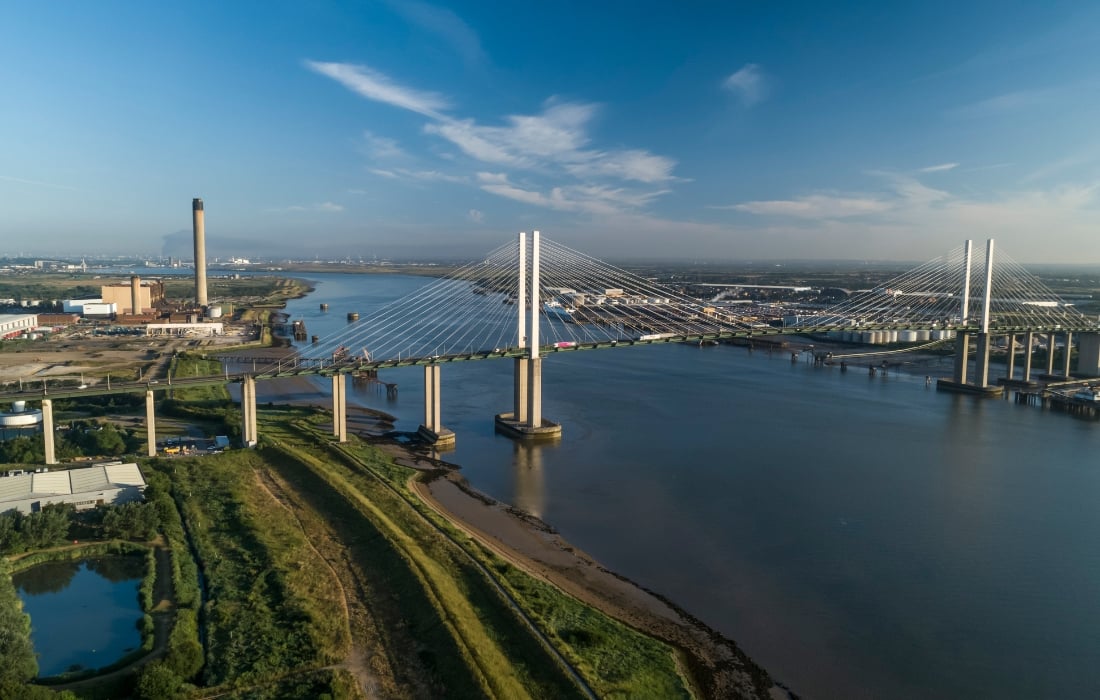
Forty years after the M25 was completed and 35 years after the opening of the Queen Elizabeth II (QEII) Bridge, both continue to keep the UK moving.
Yet their significance goes far beyond the roads and structures themselves: they show how well-planned infrastructure can deliver value for generations.
On 29 October 1986, the final section of the M25 opened, completing what was then the world's longest orbital motorway.
Five years later, on 30 October 1991, the QEII Bridge opened at the Dartford Crossing, adding much needed capacity to one of the UK's busiest transport routes.
Since then, population growth, travel patterns and more complex supply chains have piled on the pressure.
One of the biggest challenges in planning infrastructure is that demand often grows faster than anyone predicts.
Connectivity beyond geography
The M25 circles London and runs for 117 miles, while the QEII Bridge connects Essex and Kent across the River Thames. Rising 137m above the water and supported by 56 pairs of cables, the QEII Bridge remains one the UK’s most recognisable engineering landmarks.
Together, they form part of a strategic transport network that connects London, the east and the south-east of England with the rest of the UK.
At the heart of the network is the Dartford Crossing. Used by more than 150,000 vehicles a day, it provides a crucial route around London and links to major airports including Heathrow, Gatwick and Stansted.
For commuters, it means getting to work or university on time. For businesses, it provides access to customers, suppliers and skilled workers.
Goods travel through the crossing every day on their way between ports, warehouses and shops, supporting economic activity across the country.
Communities gain access to employment, education and opportunities that might otherwise be beyond reach.
During the Covid-19 pandemic, National Highways called it the ‘vital link’ because the crossing carried more food and goods than ever before.
Infrastructure is often measured by the number of vehicles it carries, or the miles people travel. But its real value lies in the opportunities and the connectivity it creates.
When successful infrastructure outgrows original expectations
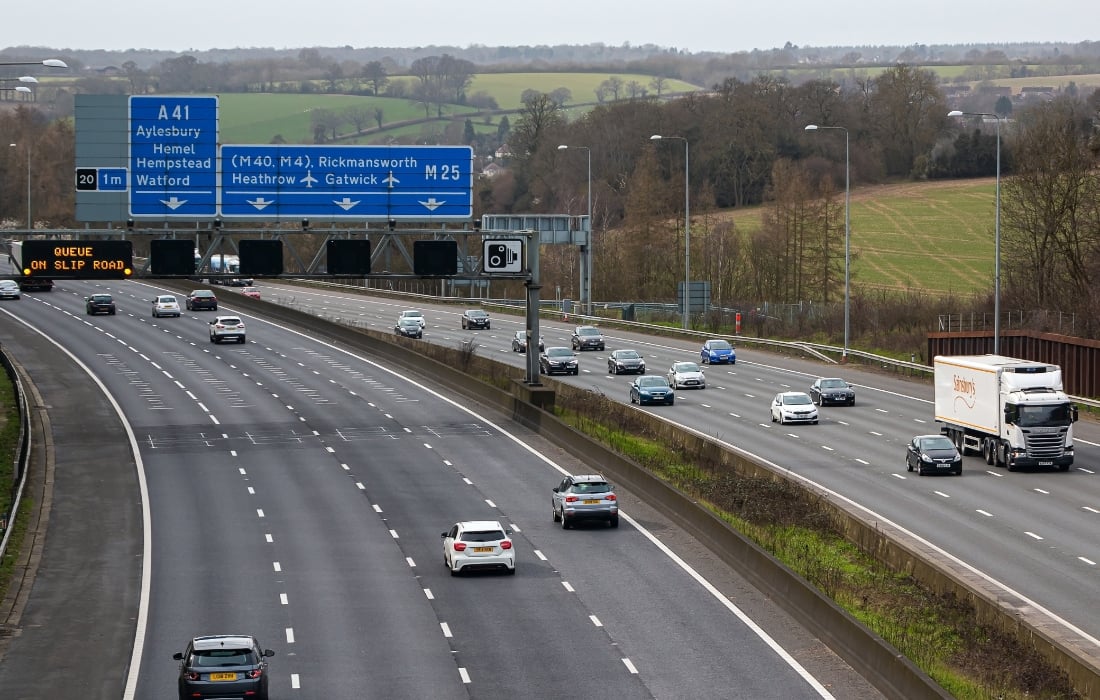
The M25 was designed for about 88,000 vehicles a day. By 1993, it was carrying around 200,000. Drivers nicknamed it 'Britain’s biggest car park'.
The Dartford story is similar. The first tunnel, opened in 1963, was expected to carry two million vehicles a year. By 1970, it was carrying more than eight million.
Rather than being replaced, both infrastructure projects have been adapted.
At Dartford, toll booths were replaced by number plate recognition in 2014, and a monitoring system on the QEII Bridge uses sensors to track vibration and wind so that engineers can spot problems early.
But when demand continues to grow, technology and maintenance alone cannot always provide the additional capacity a network needs. Sometimes, a new connection is required.
Designing for adaptability and resilience: The Lower Thames Crossing
That is the challenge the Lower Thames Crossing intends to address.
Planned east of Dartford, the new road will be about 14 miles, linking the A2 and M2 in Kent with the A13 in Thurrock and junction 29 of the M25.
At its heart will be two tunnels, each 2.6 miles long, carrying three lanes in each direction.
They will be the longest road tunnels in the UK, and they will run up to 60m below the river.
What it means for capacity
The Lower Thames Crossing will almost double road capacity across the Thames east of London.
It forecasts that it will take about 13 million vehicles a year away from Dartford and cut traffic on the QEII Bridge by around 20%.
Capacity is not just about lanes. A second crossing gives the network a back-up where today there is only one. It also gives freight and commuters a real choice of route between Kent and Essex.
The M25 and the QEII Bridge show how quickly demand can outgrow a forecast.
The Lower Thames Crossing will be judged on whether it leaves enough room for the traffic of the 2070s, not just the 2030s.
What should future engineers learn from the M25, QEII Bridge and Lower Thames Crossing
The M25, QEII Bridge and the Lower Thames Crossing represent different stages in the evolution of the UK's transport network.
Together, they illustrate the importance of long-term infrastructure planning.
No forecast can anticipate every change in population, technology, travel behaviour or the economy.
However, infrastructure decisions can account for uncertainty by:
- considering a range of future scenarios;
- investing in effective maintenance and monitoring; and
- assessing how individual projects contribute to the resilience of the wider networks.
This joined-up approach matters because roads, bridges, railways, ports and airports don’t operate in isolation. Their effectiveness depends on how well they connect and support one another.
Looking back, then forward
Anniversaries are a chance to celebrate achievements that have stood the test of time. But they also invite us to consider what today’s decisions will mean for future generations.
The M25 and QEII Bridge show that the most successful infrastructure projects are more than engineering. Their legacy can be seen in the connections they create between people, places and opportunities.
The Lower Thames Crossing is the next test of whether today’s planners can build in the capacity and resilience.
As the UK plans for the future, that may be the most important lessons that they leave behind.
Through its policy work, expert advice and professional networks, the ICE is helping to ensure that infrastructure decisions made today deliver value for decades to come.
The engineers shaping that future are already among us.

Sustainable Development Goals:
You may also be interested in

- Type
- Civil Engineer blog
‘We need to focus on shovel-worthy projects, not just shovel-ready ones’
The data produced by infrastructure assets and projects can help guide the decisions that will make our transport networks stronger and more reliable.

- Type
- Infrastructure blog
Can the government balance its long-term ambitions with the UK's financial reality?
There were some positive signs for infrastructure in today's Budget, but delivery will be the real test. The ICE breaks down the key takeaways.

- Type
- Infrastructure blog
How public-private partnerships can save governments $200bn a year in infrastructure damage
Climate-resilient PPPs and infrastructure projects are achievable with integrated planning and a willingness to change our familiar models, writes ICE Policy Fellow Alec Hay.