





During a visit to France and Belgium, ICE Hong Kong delegates explored sustainable building practices, underground transit networks and cutting-edge material science.
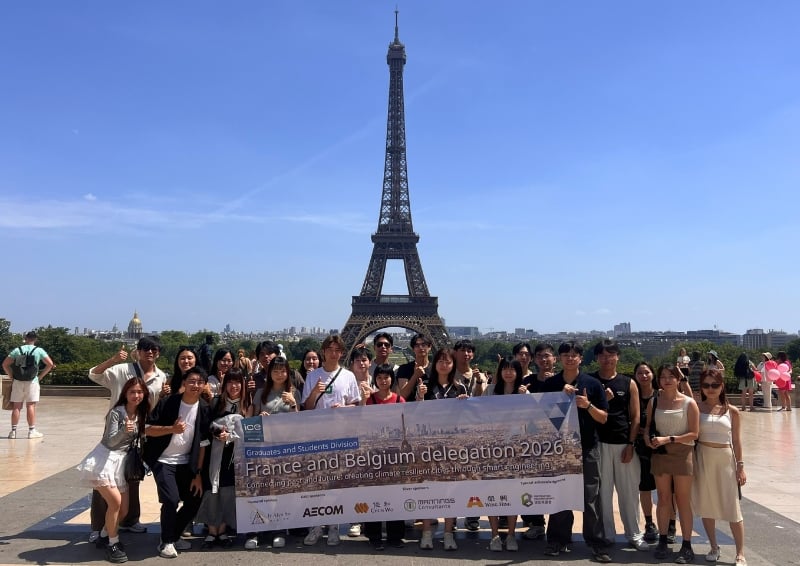
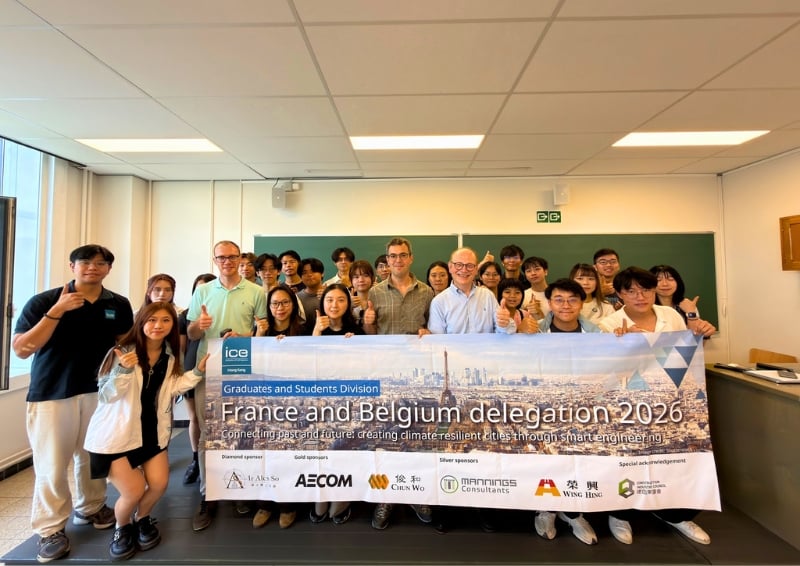
A delegation of students and graduates from the ICE Hong Kong Association left France and Belgium impressed after witnessing some of their leaps in decarbonisation and circularity.
Organised by the Graduates and Students (G&S) Division, the visit to Paris and Brussels was designed to foster global exchange and broaden the professional horizons of young engineers.
Faced with the shared global challenges of decarbonisation, urban density and resource scarcity, the visit provided a captivating environment to learn how technical excellence can be adapted across geographies.
Pioneering whole-life decarbonisation
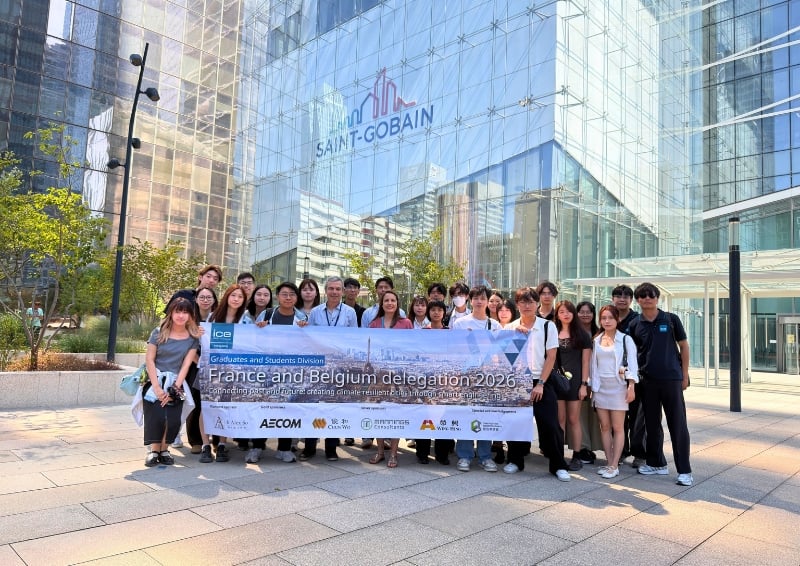
At the Saint-Gobain Tower in Paris, delegates gained insights into how advanced material sciences are actively driving light construction and whole-life decarbonisation in buildings.
The young engineers observed firsthand how innovative structural solutions optimise energy efficiency, lower embodied carbon and promote resource conservation. These strategies offer critical parallels for building a climate-resilient future in dense urban environments like Hong Kong.
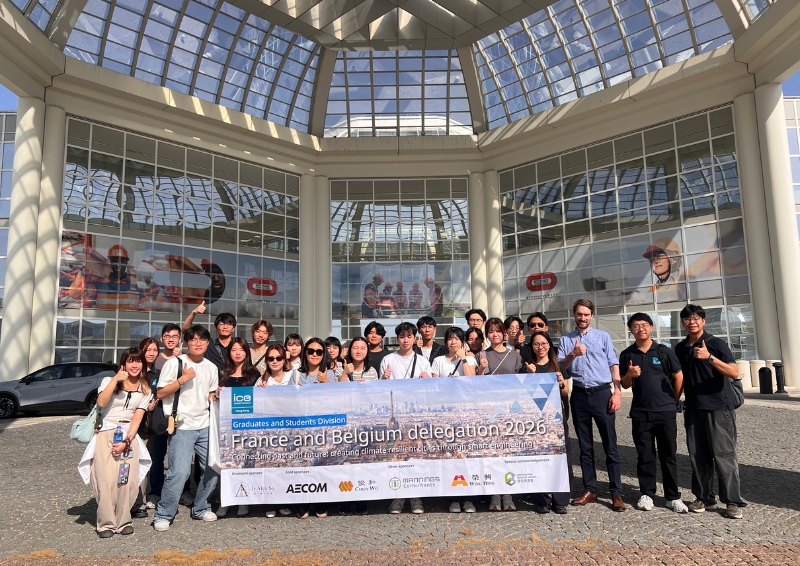
Complementing this perspective, the delegation visited Bouygues Construction headquarters, known as Challenger.
The campus itself served as a real-world case study, impressing delegates with its net-positive energy ecosystem.
Young engineers studied the extensive use of solar panels and natural water treatment gardens for onsite wastewater recycling, illustrating how major corporate hubs can successfully achieve circularity.
Keeping mega-cities moving
Technical site visits formed the backbone of the trip, offering delegates a firsthand look at the massive engineering required to keep mega-cities moving and sustainable.
The delegation delved into underground engineering at the Grand Paris Express Line 15 East (Northern Section) project.
Observing a tunnel boring machine (TBM) shaft and studying the complex design and layout of tunnel linings provided vital technical insights into navigating highly dense and sensitive urban environments.
Witnessing how the project team manages heavy excavation alongside strict environmental standards offered invaluable lessons for Hong Kong’s own ongoing and future underground transit networks.
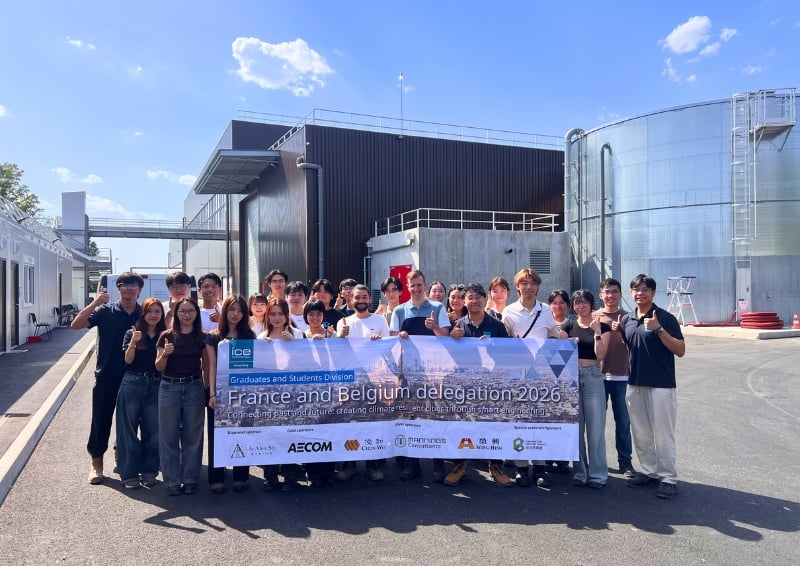
The focus shifted to waste management during a visit at Veolia’s recycling sorting facility in Vaux-le-Penil.
The visit provided a deeply educational look into the systems and engineering needed to process household waste efficiently.
Delegates explored some of the key challenges involved, including:
- removing contaminated materials from recycling streams;
- using advanced optical technology (using cameras, lasers, sensors) to sort waste; and
- balancing processing speed with the need to maintain high-quality outputs.
The experience allowed the young engineers to draw meaningful comparisons to the critical waste-to-energy projects managed by Veolia back in Hong Kong, such as T·PARK.
Academic innovation and material science
The delegation also prioritised institutional exchange, exploring how cutting-edge research is shaping the next generation of civil engineering.
At Université Paris-Saclay, delegates engaged with faculty at CentraleSupélec to see how doctoral innovations are overcoming traditional engineering limitations.
They were particularly captivated by advanced digital methodologies, including the application of digital image tracking to evaluate and monitor structural safety in real time.
Crossing into Belgium, the academic exploration continued at the Université libre de Bruxelles (ULB). Seminars introduced delegates to Belgium's rich construction history and the engineering evolution of reinforced and post-tensioned concrete.
Delegates toured the university's testing laboratories and explored pioneering research into material durability, focusing most notably on how aged concrete can be engineered to naturally self-heal its own cracks.
Going digital and the future of site operations
The delegation concluded with a comprehensive look at how industry representation and technical innovation work hand in hand to transform modern construction methodologies.
In Belgium, delegates met with ADEB-VBA and Buildwise, gaining perspective on the Belgian construction market. Learning about ADEB-VBA’s role as the unified voice of major contractors demonstrated how the sector collectively pushes for higher industry standards.
The visit concluded with an interactive tour of the Buildwise Experience Centre, where live demonstrations of digitalisation, smart automation and advanced sustainability tracking provided an inspiring glimpse into the future of site operations.
A commitment to sustainability
To commemorate these meaningful exchanges and offset the carbon footprint of their journey, the ICE HKA G&S planted a series of native trees in Madagascar, reinforcing the young engineers' commitment to global environmental stewardship.
For many participants, the delegation served as a powerful reminder that while geographies and local contexts may differ, engineering remains a global language.
For more highlights from the visit, read the delegates' study report.

You may also be interested in

- Type
- Awards and competitions
Future engineers rise to seismic challenge in 2026 Model Building Competition
The ICE Hong Kong Association Graduates and Students Division (HKA G&S) challenged undergraduate student teams to design earthquake-resistant buildings.

- Type
- Webinar
HKA webinar: research and application of high strength steel structures in Chinese mainland
This webinar presents recent advances in high‑strength steel, highlighting composite structures, design codes, landmark projects and future directions for safe, efficient use.

- Type
- Webinar
HKA webinar: study and mitigation of natural terrain hazards in Hong Kong
This talk outlines Hong Kong’s natural terrain hazards, assessment frameworks, and new techniques that improve the accuracy and reliability of risk mitigation.