





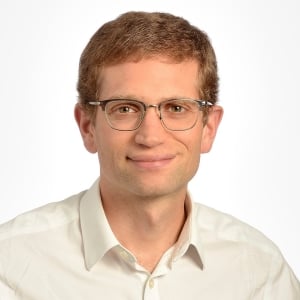
Frederick Levy
Associate director, KPMG
Expertise
Project Management, DigitalLocation
LondonMy highlights
Working as a field engineer for Crossrail at Liverpool Street Station
Taking responsibility as a Mott MacDonald project manager on HS2
Being a seconded geotechnical lead on the Four Lines Modernisation programme for Transport for London
A day in my life
My day often starts on the move, heading to a client site or their headquarters. These clients span roads, rail, utilities, and even defence.
First up, I meet the team and make sure we’re aligned on the workshop plan.
Then we dive into the detail: analysing workflows, spotting pain points, and figuring out how to mobilise their projects effectively.
It’s about setting the right foundations, so capital investments start in the right way.
Once we’ve shared practical fixes and left a clear debrief on next steps, I might pivot to portfolio optimisation conversations, helping clients prioritise investments and make best use of their resources.
Later, I’ll switch hats and plan the next ICE committee event as London regional chair. Or, I'll collaborate with the Major Projects Association to share insights and best practice.
Every day blends problem-solving, collaboration, and knowledge sharing to keep major projects moving and delivering value.
When people feel included, they’re empowered to contribute, challenge assumptions, and ask the tough questions.
That’s how we break away from the mindset of “this is how it’s always been done” and move towards better, smarter ways of working.
Which individual project or person inspired you to become a civil engineer?
I’ve always had a fascination with railways and building things.
Growing up, I regularly travelled on the London Underground, and that sparked a desire to create something lasting, something visible.
At school, I attended a two-week civil engineering workshop, which opened my eyes to the world of design and problem-solving.
That experience was the turning point. I knew civil engineering was the path for me.
Initially, I considered specialising in water or structural engineering because I’ve always been intrigued by dams.
But as I explored further, I realised geotechnical engineering was where my real interest lay, and that’s where I decided to focus, completing a doctorate in it and spending five great years at Mott MacDonald.
We asked Frederick…
I would recommend a career in civil engineering because…
You get to find out how things work. It gives you an opportunity to leave a legacy on this planet - a very visible one.
Complete this phrase: I’m a civil engineer, but I’m also…
A dad to my nine-year-old son, who’s been to the Smeaton Lecture, and my eight-month-old daughter, who likes playing with my NCE magazine.
Name one civil or infrastructure engineering myth you’d like to bust.
It’s not all muddy boots.
Engineers have the power and the influence to inform how we build, we need to use our voice.
How does your role contribute to addressing climate change?
I work with clients across the UK and global infrastructure who are thinking about how they’re going to spend their money and improve their asset base.
You can create a framework which is sustainable rather than an afterthought.
How does your role contribute to making the industry more diverse and inclusive?
My role sits right at the front end of the project life cycle, which means it must be inclusive by design.
At this stage, there are countless options to explore, risks to address, and plans to shape.
To do this well, we need to tap into a wealth of knowledge – lessons learned from past projects and fresh ideas for doing things differently.
In today’s world of increasing complexity, that means finding the right people and bringing them into the conversation.
These individuals come from diverse backgrounds, each offering unique perspectives and experiences.
My job is to create an environment of psychological safety with openness and transparency.
When people feel included, they’re empowered to contribute, challenge assumptions, and ask the tough questions.
That’s how we break away from the mindset of “this is how it’s always been done” and move towards better, smarter ways of working.
What role does digital technology play in your job?
Technology’s role is twofold: to create and to cut through complexity.
It helps synthesise data, bringing it together in a way that supports clear, informed decision-making.
By leveraging AI, we can accelerate this process – turning vast amounts of information into actionable insights faster than ever before.
But humans must always 'book-end' the process
What does be professionally qualified with the ICE mean for your career?
It gives me credibility to make design decisions.
How did the ICE and your employer support you to become professionally qualified?
My employer at the time, Mott MacDonald, provided me the time to study and funding to go on courses.
What do you value most about being an ICE member?
It’s given me a big network that I can turn to for advice.
Other benefits include a place to learn, a community, and a library to sit in and work.
Where do you get your engineering inspiration?
My son, who wants to be an inventor.
Also, the 99% Invisible podcast, which talks about all the urban planning and design decisions that are deeply impactful but rarely recognised.
Any hobbies?
Running marathons – Tokyo, Boston, and across the north face of the Eiger mountain in the Alps.
Frederick's career path
- Civil engineering bachelor's degree, University of Southampton (three years)
- Engineering doctorate, University of Southampton, sponsored by National Grid (four years)
- MBA, University of Southampton, (part-time over four years)
- Chartered Engineer while at Mott MacDonald (five years)
- Associate director at Turner & Townsend, project management and then programme advisory (5 years)
- Associate director at KPMG Major Projects Advisory (ongoing)
- ICE Fellow in October 2025



Related Content

- Type
- ICE Community blog
What's the foundation of flood resilience? Information
ICE President David Porter explains why being informed about flood risk is so important for the public and civil and infrastructure engineers.

- Type
- Awards and competitions
It’s electrifying! South Wales Metro track transformation bags top award
The electrification of the Core Valley Lines impressed the judges at the 2026 British Construction and Infrastructure Awards.

- Type
- Civil Engineer blog
The long-term consequences of a really good idea
Good decisions made at speed can lead the industry down unintended paths, writes Steven Yule, ICE country representative for the UAE.