





Resilient Transport 2026 will be held at the Manchester Deansgate Hotel, in the heart of a city whose transport networks have shaped its growth for centuries and continue to evolve today.
Location information
Address
Contacts
- Email: [email protected]
- Phone: +44 (0)20 7665 2226
Manchester: built around transport
If you’re attending Resilient Transport 2026, you’ll be meeting in a city where the challenges the conference explores – network integration, local transport governance and delivering better journeys – are already playing out in practice.
The conference will cover these themes, and more, in depth. Manchester lets you see them in action: on the Bee Network’s Metrolink and buses, on the motorway network encircling the city, or simply moving around a place that puts transport at the heart of its future.
Reinventing transport, generation after generation
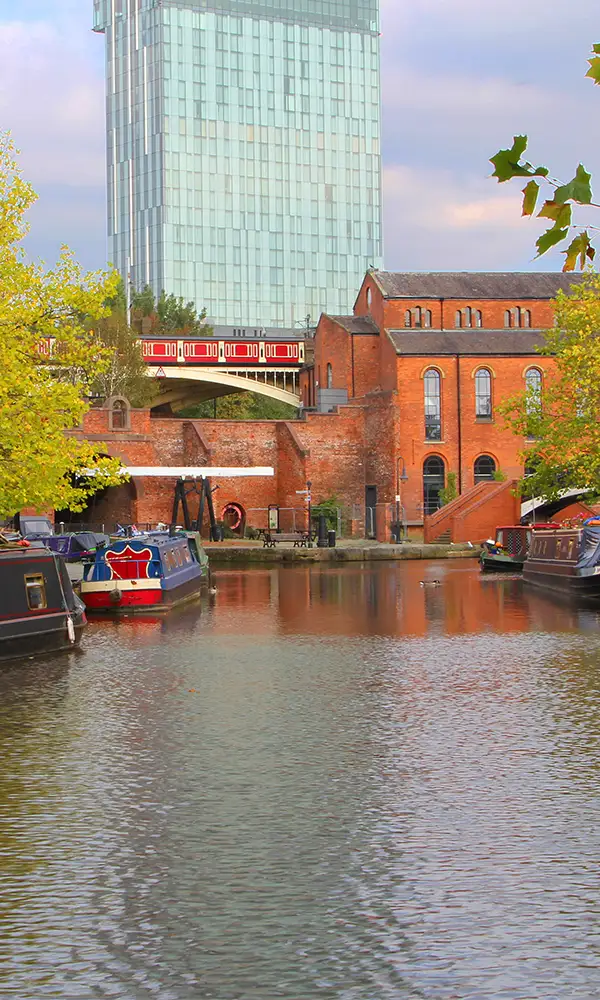
Manchester's growth has always been tied to transport and rebuilt every time the demands on it changed. The Bridgewater Canal transformed the movement of goods during the Industrial Revolution. The Liverpool and Manchester Railway helped prove the potential of passenger rail. The Manchester Ship Canal connected the city to international trade routes.
Manchester hasn’t just built transport infrastructure once. It has reinvented it, generation after generation, to meet the moment; canals, then rail, then road, then tram, and now an integrated network built for the demands of today.
And many of the networks and connections that shaped modern transport can trace part of their story back to Manchester.
Roads built for growth, roads built for now
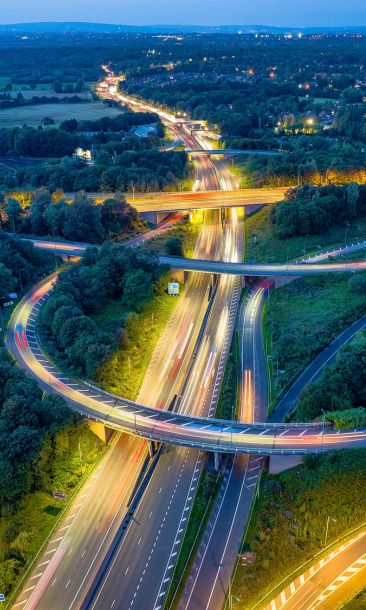
Manchester’s transport story isn’t just public transport. The Mancunian Way, opened in 1967, was one of the UK’s first urban motorways- an elevated road cut straight through the city centre to keep pace with a boom in car use.
It’s a product of its era: a solution few would design the same way today, a shift that is exactly what the conference is about – not discarding the infrastructure of the past but adapting it for a sustainable, resilient future.
The M60 orbital motorway followed, encircling Greater Manchester and still carrying some of the heaviest traffic volumes in the country.
Today the M60/M62 corridor is a live testbed for smart motorway technology and active traffic management, much of it run by National Highways whose chief capital delivery officer Nicola Bell will deliver a closing keynote - National Highways, resilience and the strategic road network
Transport in transition
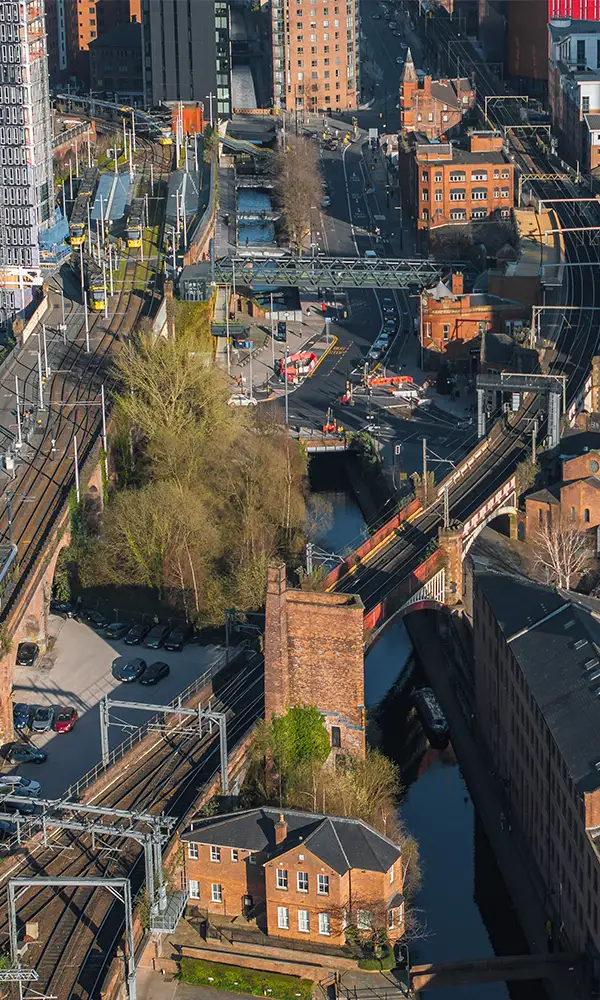
Manchester is in the middle of a major transport transformation right now. The Bee Network brings together buses, trams, local rail, and active travel routes under a single, joined-up system - one of the most significant changes to public transport governance and integration outside London in decades.
Integrated ticketing, bus franchising, rail integration and investment in active travel are changing how journeys are planned and made across Greater Manchester, alongside the ongoing improvement to the road network that keeps the wider region moving.
All of this makes Manchester the ideal location for Resilient Transport 2026 and Manchester’s own transport network makes the venue easy to reach.
Getting here
The Manchester Deansgate Hotel (located at 303 Deansgate, M3 4LQ)
is easily reached by train, tram, bus, or car.
By Train
- Nearest major station: Manchester Piccadilly.
- Transfer: Take a direct regional train from Manchester Piccadilly to Deansgate station (takes about 5 minutes).
- Walking: The hotel is a short walk from Deansgate station, or about a 20-minute walk straight from Piccadilly.
By Tram (Metrolink)
- Nearest stops: Deansgate-Castlefield or St Peter's Square.
- Details: Trams run frequently through the city centre zones, and both stops are a short 5-to-10-minute walk to the entrance on Deansgate.
By Bus
- Operator: Bee Network buses run frequent services from Manchester Piccadilly Rail Station and Piccadilly Gardens directly toward the Deansgate area (such as line 1 or line 30), taking about 10 to 12 minutes.
By Road
- Address: 303 Deansgate, Manchester, M3 4LQ.
- Drop-off: There is a kerbside drop-off point adjacent to the main entrance.
- Parking: Nearby public parking is available at the Great Northern NCP on Watson Street (M3 4EE).