





ICE Knowledge Hub
Access the very latest and best CPD content to help you grow your knowledge and skills.
Sign in now

ICE President David Porter explains why being informed about flood risk is so important for the public and civil and infrastructure engineers.
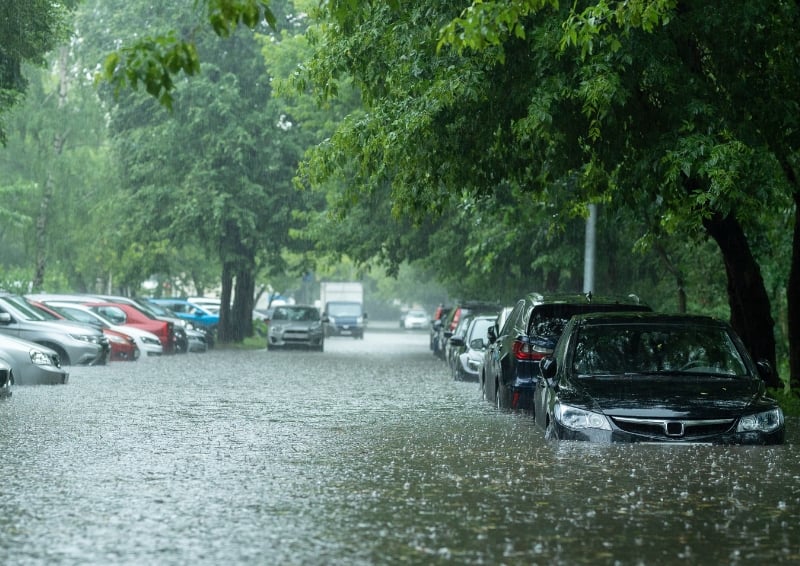
Flooding is one of the most significant climate-related risks facing communities across the globe.
In Wales around 275,000 properties are identified at risk in assessments by Natural Resources Wales, and some 6.3 million homes and businesses in England are at risk of flooding, but many people are not aware of this risk and are not adequately prepared.
The recent images from the shocking events in Nepal and Tibet, are a sober reminder of how the consequences of flooding can be devastating. Spain has also recently faced disruption from flooding.
The goal of this week’s Environment Agency’s Flood Action Week is to raise awareness of three simple, but critical messages: know your flood risk, create a flood plan, and sign up for flood warnings.
For the public, having accurate information at the right time can help protect lives, homes and businesses. Timely warnings and practical guidance enables people to act quickly, protect property, and stay safe when flooding occurs.
For civil and infrastructure engineers, good information is equally vital.
It helps us understand risks, identify potential mitigation measures, and design solutions that will improve resilience in response to a rapidly changing climate.
We rely on accurate data to understand how the existing infrastructure is performing, how risks are changing and where future resources will have the greatest impact.
Clients also need accurate information to be able to make the best decisions. They need to understand their river catchments, coastal vulnerabilities along with the performance of their drainage networks, and flood defences. Decisions need to be informed and can only be as good as the information available to support them.
This is particularly important as climate change alters established patterns of rainfall, river flows, and coastal hazards. The knowledge that guided infrastructure planning in the past can no longer be relied upon as weather patterns are changing.
We increasingly need access to real-time monitoring, long-term datasets, and advanced analytical tools to understand emerging risks and design infrastructure fit for future conditions.
The Environment Agency is working to improve the information it uses to make decisions, as its asset health programme is already building a clearer picture of the state of flood and coastal risk management assets. This supports more strategic maintenance, renewal, and investment decisions.
Better information about assets does not simply improve operational management today. It provides the evidence base needed to improve resilience tomorrow.
The civil engineering community, in the UK and around the world, is also working to advance its understanding of how to mitigate flood risks by sharing knowledge across the sector.
The ICE plays an essential role in making this happen.
Its events bring together practitioners, policymakers, researchers and asset owners to discuss solutions that reduce flood risk, improve resilience and help communities adapt to our changing climate.
In November, the ICE and the Chartered Institution of Water and Environmental Management (CIWEM) will co-host two flooding conferences; one in Yorkshire and the other in Wales.
Next year, the ICE's Coasts, Marine Structures and Breakwaters conference will be again taking place. This is an international forum for sharing expertise on coastal risk, flooding, climate adaptation and emerging technologies.
Data capture, digital tools and innovative engineering approaches that support more resilient infrastructure systems will be key topics at all these events.
The knowledge shared at such conferences support important progress, but there’s still a broader challenge: ensuring that the information needed is collected, shared, and used effectively.
In the UK, lots of data already exists, but it’s fragmented. There are significant gaps in our understanding of climate impacts, infrastructure interdependencies, and the benefits of potential investment.
This is why the ICE has called for the government to commission a comprehensive economic review of climate adaptation and resilience.
Such a review would help establish a clearer understanding of the value created by investing in infrastructure’s resilience.
It would help us identify what data exists, who owns it, and what additional information is needed to support better decision-making. It would also help strengthen the evidence base for future investment and improve our understanding of how risks cascade between interconnected systems.
Flooding, and the consequences it can have, is a powerful example of why this matters.
Better information helps communities prepare. It helps asset owners manage infrastructure more effectively. It helps engineers identify solutions. And it helps policymakers make informed choices about where investment can deliver the greatest benefit.
As climate risks continue to grow, our resilience will increasingly depend on our ability to turn data into insight, and insight into action.
Flood Action Week is a great opportunity to remember that information is not simply a technical resource.
It is a critical part of public safety, effective infrastructure management, and long-term resilience.
By urgently investing in better data and in-depth analysis, we can enable informed decisions to be made, that will help ensure that communities are safer and more resilient in the years ahead.


The electrification of the Core Valley Lines impressed the judges at the 2026 British Construction and Infrastructure Awards.

Good decisions made at speed can lead the industry down unintended paths, writes Steven Yule, ICE country representative for the UAE.

The annual award celebrates outstanding ideas, research and best practice.