





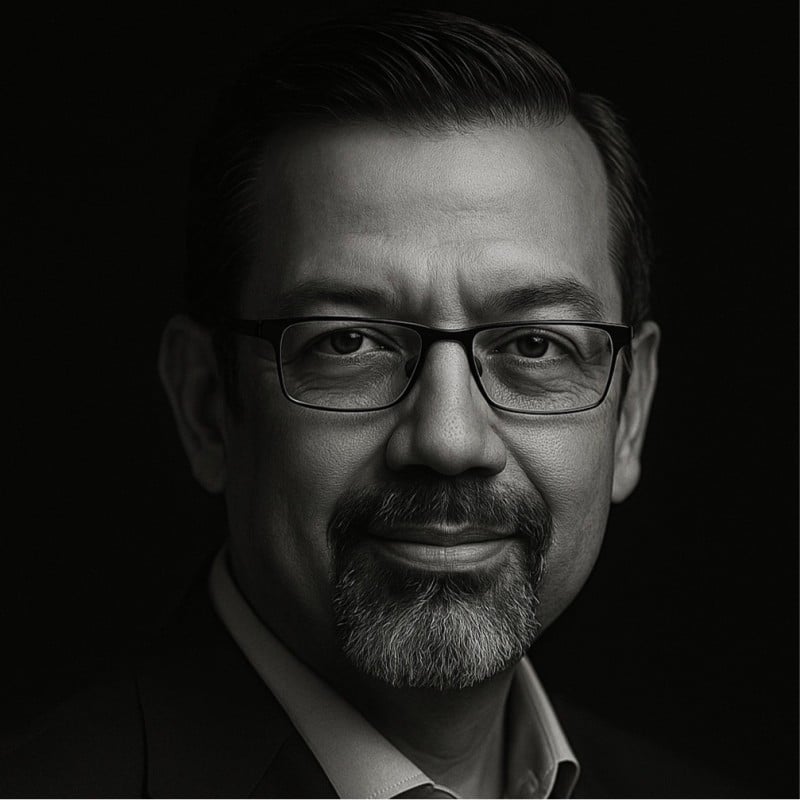
Joaquin Flores
Project director for UK&I and the Middle East, AtkinsRéalis
Expertise
Design, Project Management, StructuralLocation
LondonMy highlights
Lead civil engineer for Bank Station Capacity Upgrade
London Underground interface manager for the Nova development in London, Victoria
Project manager/director on several over-station developments for Transport for London
A day in my life...
No two days are ever the same, and that’s one of the things I love about my job.
One day, I might be onsite at a major transport hub, checking in with engineers and contractors, and the next I’m in a design review meeting with architects and engineers helping shape the future of a city.
I spend a lot of time solving problems — whether it’s how to build safely above a live railway or how to help clients make their schemes more viable.
I also mentor younger engineers, which is one of the most rewarding parts of my day.
There’s a real buzz in working with people from different backgrounds and seeing ideas come to life.
And yes, sometimes I even swap my hard hat for roller skates — I like capturing city views on skates.
Becoming professionally qualified gave me confidence, credibility, and a clear structure for my development. It also opened doors to more senior roles and allowed me to support others on their own journeys.
What inspired you to become a civil engineer?
It all started when I was a teenager, driving under the Humber Bridge.
I remember looking up and wondering how the concrete in the very middle stayed up — it just didn’t seem possible!
That moment sparked a curiosity about how things are built and stay standing.
Later, during a career advice session at school, I was introduced to civil engineering and realised it was exactly what I’d been looking for — a way to turn my technical abilities and that curiosity into a career.
I’ve been hooked ever since.
We asked Joaquin…
I would recommend a career in civil or infrastructure engineering because…
…it’s a career where you can genuinely shape the world around you.
From designing residential or office schemes above stations to helping cities grow sustainably, civil engineering gives you the chance to solve real problems that affect millions of people.
It’s technical, creative, collaborative, and constantly evolving — no two projects are the same.
You get to work with brilliant people, learn every day, and leave a lasting legacy.
Plus, there’s something incredibly satisfying about walking (or skating) past a building or station and thinking, “I helped make that happen”.
Complete this phrase: I’m a civil engineer, but I’m also...
…I’m also a mentor, an awards judge, a school governor, a Liveryman and – believe it or not – an online skating TikToker!
I love helping others grow, whether that’s guiding young engineers through their careers or supporting students in schools.
And when I’m not on a construction site or in a meeting, you might find me on skates somewhere in London, skating past interesting spots and indeed some projects I worked on.
Engineering is a big part of who I am, but it’s not all I am – and that’s what keeps life interesting.
Name one civil or infrastructure engineering myth you’d like to bust.
That it’s all about maths and concrete!
While technical knowledge is important, civil engineering is just as much about people.
Building strong relationships – with clients, communities, contractors, and colleagues – is key to delivering successful projects.
You need great communication skills, emotional intelligence, and the ability to bring people together.
Soft skills like listening, negotiating, and mentoring are just as valuable as knowing how to read a drawing.
And building a strong internal and external network can open doors, solve problems faster, and make the job a lot more rewarding.
How does your role contribute to addressing climate change?
As engineers, we have a huge responsibility – and opportunity – to design a more sustainable future.
In my role, I help shape projects that reduce carbon emissions, improve energy efficiency, and support greener ways of living and moving around cities.
Whether it’s integrating low-carbon materials, designing for active travel, or making public transport more accessible, sustainability is always front of mind.
I also work closely with clients to align projects with net zero goals and ensure long-term environmental value.
Every decision we make can have a positive impact – and that’s incredibly motivating.
How does your role contribute to making the industry more diverse and inclusive?
I believe that diversity makes teams stronger and solutions better.
I actively mentor engineers from underrepresented backgrounds, including through Women in Transport’s Advance programme, where I’ve supported female professionals for several years.
I also serve as a STEM governor, helping to inspire young people from all walks of life to consider careers in engineering.
Within my teams, I champion inclusive leadership, making sure everyone feels heard, supported, and able to thrive.
Building a more diverse industry isn’t just the right thing to do – it’s essential for innovation and progress.
What role does digital technology play in your job?
Digital tools are essential to how we design, plan, and deliver projects.
From 3D modelling and BIM (building information modelling) to data analytics and digital twins, technology helps us make smarter decisions and collaborate more effectively.
It allows us to visualise complex designs, test ideas before they’re built, and reduce risks.
I also use digital platforms to stay connected with teams across regions – whether I’m working on a metro project in Dublin or a development in London.
Embracing digital isn’t just about efficiency, it’s about unlocking better outcomes for people and the planet.
What motivated you to become professionally qualified?
I wanted to be recognised for the skills and experience I’d built up over the years – and to show that I could deliver to the highest professional standards.
Becoming professionally qualified gave me confidence, credibility, and a clear structure for my development.
It also opened doors to more senior roles and allowed me to support others on their own journeys.
I’ve always believed in leading by example, and chartership was a key part of that.
What does being professionally qualified with the ICE mean for your career?
It’s been a game-changer.
Being professionally qualified with the ICE has opened doors to leadership roles and given clients and colleagues confidence in my abilities.
It’s a mark of trust and professionalism that carries weight across the industry.
It’s also helped me give back. As a supervising civil engineer I now mentor others through their own qualification journeys, which is incredibly rewarding.
How did the ICE and your employer support you to become professionally qualified?
My employer at the time provided a structured training agreement and access to experienced mentors, which made a huge difference.
The ICE also offered clear guidance and resources, especially around the alternative routes to chartership.
I had great support from colleagues who had been through it themselves. Their advice and encouragement helped me stay on track and focused.
How has being a member helped your career?
Being a member of the ICE has connected me to a wider professional community and opened up opportunities I wouldn’t have found otherwise.
It’s helped me stay up to date with industry developments, build a strong network, and give back through mentoring and volunteering.
The ICE has also supported my professional growth – from chartership to speaking opportunities to opportunities to join regional committees.
It continues to be a platform where I can share knowledge, learn from others, and help shape the future of our industry.
Where do you get your engineering inspiration?
The New Civil Engineer magazine is a great source of inspiration.
This is where sometime in 2014 I read about the Bank Station Capacity Upgrade and actually thought to myself that I didn’t envy the engineers working on such a ridiculously complex scheme.
A few months later, through fate and luck, I was working as the lead civil engineer on the scheme.
Anything else? i.e. personal causes, hobbies
It was my role at Bank Station Capacity Upgrade and the contribution to the City of London that led to me being invited to join The Worshipful Company of Paviors as a Liveryman and become part of the city archives forever.
My London skate videos can be found on Tik Tok’s Skate360City channel.
Joaquin's career path
I studied civil engineering in Leeds and took part in an Erasmus year in Santander, Spain, which gave me a great international perspective early on. I became chartered five years after graduating.
Later, I completed an MSc in Project Management at Reading University, which helped me bridge the gap between technical delivery and leadership.
I started my career as a design and resident engineer and gradually moved into design and project management roles, working across the UK and internationally.
Over time, I’ve led major infrastructure and development projects, and now work as a project director at AtkinsRéalis.
My journey shows that civil engineering can take you in many directions — from site to boardroom, and even onto the ice rink for industry networking events!


Related Content

- Type
- ICE Community blog
Mentor a refugee and help someone build hope for a better future
Joaquin Flores and Professor Sabih Khisaf share what it was like to leave their home countries as refugees and what helped them feel at home abroad.

- Type
- News
RAEng names 4 leading ICE members as Fellows
The Royal Academy of Engineering (RAEng) has announced 75 individuals who are making outstanding contributions to the profession.

- Type
- ICE Community blog
When every consultancy looks the same, where does innovation go?
There’s no shame in making a name for yourself in a consolidated industry, writes Steven Yule, ICE country representative for the UAE.