





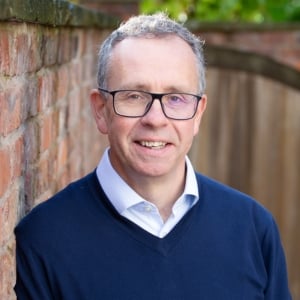
Patrick Waterhouse
Director, Bowdon Consulting Limited
Expertise
ConstructionLocation
North WestMy highlights
Becoming a Fellow of the ICE
Working on construction sites helping to create diverse infrastructure
Supporting projects with difficulties, working with the parties to resolve disputes about payment, delays and costs
A day in my life...
If I’m working in dispute resolution, I will always be reading and trying to understand who did what, when and why before assessing the legal basis of those actions.
I may be holding a meeting where disputing parties sit opposite one another and I’m guiding them towards a solution.
I also run training courses on NEC contracts. I hope to prepare participants for their roles running projects and that they'll learn from the mistakes I learn about in my disputes work.
It would have been impossible to succeed in dispute resolution without professional qualification.
What inspired you to become a civil engineer?
One of my grandfathers was a mechanical engineer and I was encouraged down that path.
At a university open day, I found the civil engineering department more interesting than the mechanical engineering one, so the decision was made.
I was always interested in engineering and recall following major projects in the news and close to home.
We asked Patrick…
Tell us about your career path
I went to City University London after A-levels to take a ‘thin sandwich’ course that saw me graduate with two years work experience under my belt.
I became a member of the ICE three years after graduation and a Fellow 11 years after that.
I gained an MBA from Durham University when I was 30 which was a good time to use that qualification.
Since then, I have continued to develop my CPD including a diploma in construction adjudication.
I would recommend a career in civil or infrastructure engineering because…
There are few other jobs where you can point at something and say: 'I did that'.
Complete this phrase: I’m a civil engineer, but I’m also...
I’m a civil engineer but I’m also a member of the society that relies on the infrastructure that we develop and maintain.
Name one civil or infrastructure engineering myth you’d like to bust.
That’s it’s only for men. The profession is less imbalanced than it once was, but more progress is needed.
How does your role contribute to addressing climate change?
Dispute resolvers have a massive role in keeping disputes away from court with the attendant costs, travel and printing bills.
The ICE dispute register members have to agree to work with digital documents wherever possible and to avoid unnecessary travel for the participants.
How does your role contribute to making the industry more diverse and inclusive?
Since joining the ICE’s Dispute Resolution Committee, I have helped to establish the adjudicators’ mentoring scheme.
It aims to assist all prospective adjudicators, but it addresses the issues that tend to exclude the people who traditionally are poorly represented in our ranks.
I also act as a mentor for the Adjudication Society and the Worshipful Company of Engineers.
I provide ad-hoc support to younger engineers seeking ICE qualification.
What role does digital technology play in your job?
It is vital.
Dispute resolvers work with huge amounts of complex documents and we have to get to grips with them in limited timescales.
Working with word and pdf documents is essential and, depending on the nature of the dispute, Excel, MS Project/P6 are also very helpful.
AI is becoming more prevalent.
What motivated you to become professionally qualified?
I was ‘told’ from an early age that I needed to get chartered (thanks to my dad’s friend Leonard, a chartered electrical engineer).
This advice was reinforced by my first employer, Wimpey Construction.
It has turned out to be excellent advice.
What does being professionally qualified with the ICE mean for your career?
It would have been impossible to succeed in dispute resolution without professional qualification.
I am dual qualified and can boast that I'm a member of the Royal Institution of Chartered Surveyors (MRICS), and a Fellow of the Chartered Institute of Arbitrators (FCIArb) and the Chartered Institution of Civil Engineering Surveyors (FCInstCES).
People in that business want some indication that the individuals they use to advise or decide disputes are assessed and regulated.
How did the ICE and your employer support you to become professionally qualified?
Wimpey, my first employer in civil engineering, supported my development and even arranged a secondment into engineering consultancy (thank you to Posford Duvivier/Royal Haskoning for your hospitality) to ensure I was properly prepared for my ICE review.
Local ICE staff helped at every stage of the way.
How has being a member helped your career?
It's been invaluable. CPD meetings, NCE and recognisable qualifications all have boosted my career.
How has achieving Fellowship impacted your career?
It's recognisable throughout the profession and industry. Without Fellowship, I wouldn't have been eligible to join the ICE’s dispute registers.
What’s the biggest/most complex thing you’ve made out of Lego?
I remember competing with my daughter in her toddler years to build the tallest tower. Inevitably the laws of physics would win.
My so-called engineering expertise counted for little and she would often win.
Anything else? i.e. personal causes, hobbies
Most weekends are spent watching my sons play hockey, walking a fox red Labrador and worrying about Leeds United’s ability to hang on through added time.
Holidays with the family tend to involve the Llyn Peninsula, Murcia and occasionally further afield admiring engineering infrastructure abroad which the family loves.




Related Content

- Type
- Civil Engineer blog
PFIs more likely to go for adjudication rather than litigation
Excluded from the Housing Grants Act, private finance initiative agreements have a surprisingly high uptake of adjudications.

- Type
- Civil Engineer blog
How IPD helps the transition from academia to the workplace
The transition from the world of academia to the workplace can be challenging for university graduates. Patrick Waterhouse, author of Initial Professional Development for Civil Engineers, explores the issue.

- Type
- ICE Community blog
What's the foundation of flood resilience? Information
ICE President David Porter explains why being informed about flood risk is so important for the public and civil and infrastructure engineers.